If you have read my earlier story about our second son, you know how we eventually discovered his dairy allergy. By the time we received answers, he was almost one year old and nearly weaned. I was only nursing him to sleep.
I truly believed our dairy-free breastfeeding journey was behind us.
I was wrong.
Welcoming Our Third Baby and Watching for Early Signs
In 2025, we welcomed our third child, another sweet baby boy.
Because of our history, I knew there was a possibility he could also have a dairy allergy or cow’s milk protein intolerance. This time, I was not going in blind.
From the very beginning, I paid attention.
At first, everything seemed perfect.
No excessive eczema.
No obvious reflux.
And he slept. Really slept.
After what we experienced with his older brother, it felt like a gift.
Still, in the back of my mind, I had that familiar mother’s intuition telling me to stay alert.
The Rash That Changed Everything
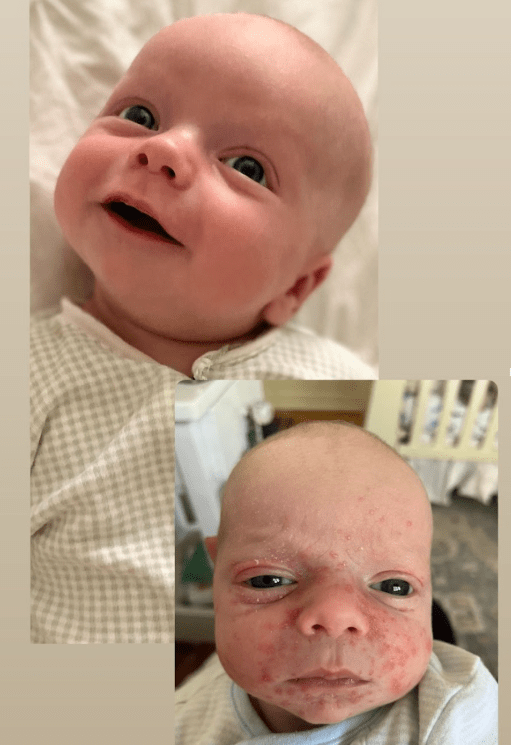
Around four weeks old, he began developing a rash. It escalated quickly. His tiny face became inflamed and irritated, and it broke my heart to see his delicate newborn skin struggling.
Everyone reassured me.
“It’s just baby acne.”
“He’ll grow out of it.”
But this time felt different.
With my second son, I had been reactive. This time, I wanted to be proactive.
Because of what I had learned before, I decided to try a simple dairy-free breastfeeding test. I removed dairy from my diet to see whether his symptoms would improve.
Why Cow’s Milk Protein Intolerance Can Appear Early
Cow’s milk protein intolerance can present within the first few weeks of life in breastfed babies.
When a mother consumes dairy, small amounts of milk protein can pass into breast milk. In sensitive infants, this can trigger inflammation that shows up as:
Rash or eczema
Reflux and spit-up
Excessive crying
Gas or digestive discomfort
Blood or red streaks in stool
Many parents assume these symptoms are normal newborn adjustments. Sometimes they are. But when multiple symptoms appear together, dairy protein intolerance is worth considering.
If you want a full overview of the common warning signs, you can read my guide on the signs of a dairy allergy in breastfed babies.
Before You Panic and Throw Out All the Dairy
Let me pause here, because this part is important.
I did not overhaul my entire kitchen overnight. I did not immediately replace every product with expensive dairy-free alternatives after one blemish or one fussy night.
I simply tested it.
If you suspect dairy intolerance in your breastfed baby, start simple:
Adjust your meal plan for one to two weeks.
Swap your coffee creamer.
Avoid obvious dairy sources like milk, cheese, yogurt, and butter.
That is it.
Going completely dairy-free can feel overwhelming. But watching your baby struggle with inflamed skin or digestive discomfort feels far worse.
How Long Does It Take to See Improvement?
Many experts suggest that some improvement may appear within 48 hours of eliminating dairy. Within approximately two weeks, milk proteins should largely clear from breast milk.
In our case, I noticed changes quickly.
Within 48 hours:
His rash began calming.
He seemed more comfortable.
His skin looked less inflamed.
I felt empowered.
This time was different because I had experience. My second son had already taught me more than I ever expected. I recognized the pattern sooner.
Starting Dairy-Free Breastfeeding Early
The biggest difference this time was timing.
I was only one month into breastfeeding.
That meant I had to relearn how to cook, grocery shop, and plan meals while caring for a newborn. It was not effortless. There were mistakes and moments of frustration.
But it was far less chaotic than waiting nearly a year for answers.
Through trial and error, we found our rhythm with dairy-free breastfeeding much earlier. Instead of operating in confusion, I operated in confidence.
What I Learned from Having Multiple Dairy-Sensitive Babies
Having more than one child react to dairy shifted my perspective.
First, it taught me that milk protein intolerance can look different in each baby.
Second, it showed me that early observation matters.
Third, it reinforced that a short elimination test can provide clarity without immediate medical intervention.
I am not a medical professional, and every situation is unique. Always consult your pediatrician or qualified healthcare provider before making significant dietary changes while breastfeeding.
But I am a mother who has walked this road more than once.
And this time, we did not wait for things to spiral.
We responded early.
That made all the difference.




 Dairy-Free Breastfeeding
Leave a comment