
I did not realize my breastfed baby was reacting to dairy until milk touched his skin and red welts appeared within minutes.
That was the moment everything shifted for me.
Until then, we had been living in a cycle of confusion, exhaustion, and constant doctor visits without clear answers.
How It Started
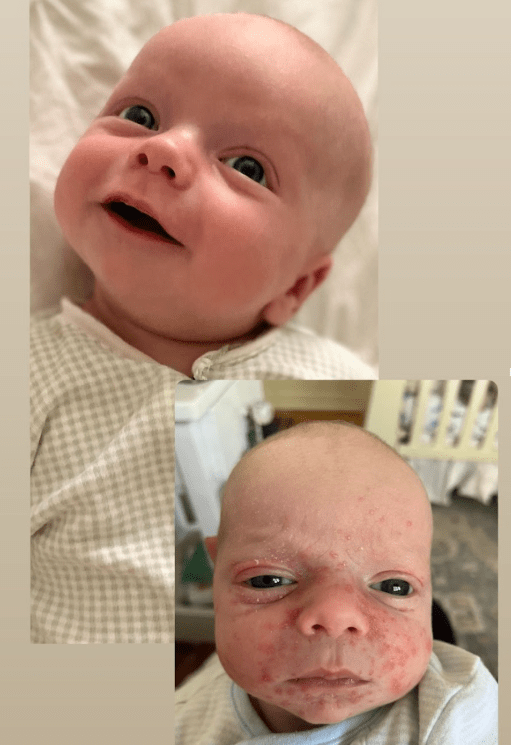
When our first son, Stevie, was a baby, he struggled constantly with coughs, recurring ear infections, and severe eczema that would sometimes crack and bleed. We were told by many people that he would grow out of it. So we waited.
At the same time, feeding him solid food felt nearly impossible. We tried everything. Different textures, different flavors, homemade foods, store-bought options. He refused most of it.
Mealtimes usually began with positivity and ended in stress. We encouraged him, tried gently pushing a little harder, and eventually distracted him with the television just to get a few bites in. Most days ended with me breastfeeding him instead.
Breast milk remained his primary source of calories, even at over eleven months old. He was a growing boy, and I felt the pressure both emotionally and physically. We truly believed we were doing everything right.
What we did not realize was that his body was reacting to dairy proteins all along.
The Moment I Knew Something Was Wrong
It was a warm Southern afternoon. Stevie was about a year old, running around in nothing but his Mickey Mouse diaper while playing with his big sister.
She accidentally spilled a little milk from her sippy cup onto his leg.
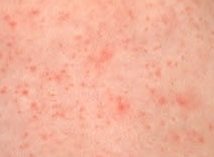
Within minutes, red splotches appeared exactly where the milk had touched his skin. Some were slightly raised. My heart dropped.
I immediately put him in the bath and washed him off. Then I called our pediatrician. She told me he would likely be fine but encouraged us to monitor him closely and consider allergy testing.
The reaction disappeared fairly quickly. He was happy again. But I knew something had changed. My mental list of questions just got much longer.
Getting an Allergy Test Is Not Always Simple
One thing I wish someone had told me is that food allergy testing is not always straightforward.
Many insurance plans require a referral from your pediatrician before you can see an allergist. In some cases, you may even need a referral from a specialist.
We had already seen multiple doctors for his eczema and ear infections, but I had never specifically asked for an allergy referral.
If you are currently seeing a specialist and they ask whether your child has allergies, it may be wise to say you are unsure and request a referral for testing. It is much easier to have that process started before you are in panic mode.
Even after you secure a referral, the process can still feel overwhelming.
What to Expect from a Blood Allergy Test
If you choose blood allergy testing, it can provide helpful information. However, it may require more blood than you expect. This is not a simple toe prick. It often involves one or two vials and can take time.
If you are squeamish, plan ahead. Do not go alone if possible. And if you can avoid bringing other children, that may make the experience less stressful.
A helpful tip is to ask whether blood can be drawn during a scheduled procedure such as ear tube placement or adenoid removal. Combining procedures can sometimes make the process more manageable.
After testing, you wait for answers.
The Results That Changed Everything
When the results came in, everything finally made sense.
Stevie was allergic to dairy.
Suddenly the eczema, stomach discomfort, fussiness, and feeding struggles connected. His little body had been reacting all along.
Dairy allergies in babies are typically caused by a reaction to milk protein, not lactose. Even breastfed babies can react to dairy proteins that pass through breast milk after a mother consumes milk, cheese, yogurt, or other dairy products.
That realization changed everything.
Signs of a Dairy Allergy in Breastfed Babies
If you suspect dairy may be affecting your baby, here are some common symptoms to watch for:
Persistent eczema or unexplained rashes
Frequent ear infections
Chronic cough or congestion
Excessive fussiness
Stomach discomfort, gas, or unusual stools
Difficulty tolerating solid foods
Slow weight gain or feeding challenges
Every baby is different. However, if several of these symptoms are present, dairy may be worth discussing with your pediatrician.
Why Dairy-Free Breastfeeding May Help
Looking back, I wish I had tried eliminating dairy from my diet sooner while breastfeeding.
Even a short elimination period of one to two weeks can provide valuable insight. If dairy protein is the trigger, many babies show noticeable improvements in skin, digestion, and overall comfort within that time.
Trying a dairy-free breastfeeding approach does not mean you are committing forever. It simply gives you information.
For us, removing dairy helped reduce inflammation, improve skin flare-ups, and bring more peace into our home.
Encouragement for the Overwhelmed Breastfeeding Mom
If you are in the middle of stressful mealtimes, constant doctor visits, unexplained rashes, or lingering doubt, I want you to know this:
You are not failing.
You are not imagining things.
And you are not alone.
Sometimes the answer is simpler than we expect. Sometimes removing one common trigger like dairy can make a significant difference.
In the coming weeks, I will be sharing the exact dairy-free swaps, brand recommendations, simple meal ideas, and practical guidance that made this transition manageable for our family.
If you are walking this road, I hope this gives you clarity, confidence, and a starting point.


 Dairy-Free Breastfeeding
Leave a comment