If you are breastfeeding and wondering whether cow’s milk protein could be affecting your baby, you are not alone.
One of the most common questions moms ask is:
How long does dairy stay in breastmilk, and how fast does it get there?
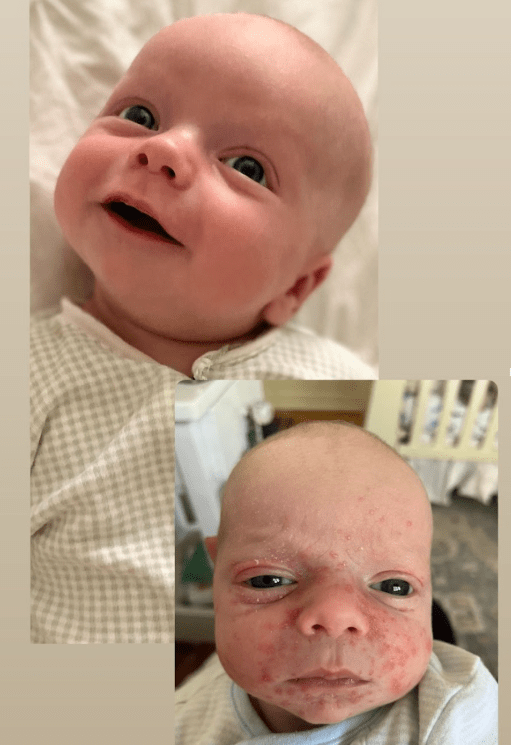
If your baby is experiencing reflux, eczema, blood or mucus in stool, or extreme fussiness, understanding the timeline of cow’s milk protein in breastmilk can help you make informed decisions about a dairy free breastfeeding diet.
Let’s look at what research actually says.
How Does Cow’s Milk Protein Get Into Breastmilk?
When you consume dairy products such as milk, cheese, yogurt, or butter, your body digests the proteins found in cow’s milk. The two primary proteins are casein and whey.
During digestion, small protein fragments can pass from your bloodstream into your breastmilk. One protein that researchers commonly measure is beta lactoglobulin. It does not naturally occur in human milk, which makes it easy to detect when dairy has been consumed.
Research shows that cow’s milk protein can be detected in breastmilk within 1–2 hours after ingestion.
Studies published in Pediatric Research detected beta lactoglobulin in breastmilk as early as 1–2 hours after maternal dairy consumption, with peak levels typically occurring between 3–6 hours after ingestion.
This means dairy can enter breastmilk relatively quickly.
How Long Does Dairy Stay in Breastmilk?
This is where confusion often arises.
Many mothers are told that dairy stays in breastmilk for two to three weeks. However, scientific studies do not support the idea that intact cow’s milk protein remains in breastmilk for weeks after a single exposure.
Research measuring beta lactoglobulin shows:
- Levels peak within several hours
- Concentrations decline significantly within 24 hours
- In many cases, the protein becomes undetectable within 24–48 hours after stopping dairy
Studies in The Journal of Allergy and Clinical Immunology found that beta lactoglobulin concentrations in breastmilk decreased substantially within one day after maternal dairy consumption stopped.
From a biological standpoint, cow’s milk protein does not remain in breastmilk for weeks.
Why Do Baby Symptoms Take 2–4 Weeks to Improve?
If dairy clears from breastmilk in 24–48 hours, why do pediatricians recommend eliminating dairy for two to four weeks?
The answer involves your baby’s immune response and gut healing.
In infants with cow’s milk protein allergy, even very small amounts of protein fragments can trigger inflammation in the digestive tract.
According to the American Academy of Pediatrics, symptoms of food protein induced allergic proctocolitis may take 2–4 weeks to fully resolve after the offending protein is removed from the mother’s diet.
The extended timeline is due to intestinal inflammation needing time to heal, not because dairy is still present in breastmilk.
What Research Says About the Timeline
Transfer Timeline
- Detectable in breastmilk within 1–2 hours
- Peak levels around 3–6 hours
Clearance Timeline
- Significantly reduced within 24 hours
- Often undetectable within 24–48 hours
Symptom Resolution Timeline
- Improvement may begin within 72–96 hours
- Full resolution can take 2–4 weeks in sensitive infants
A 2017 review in Nutrients emphasized that the amount of cow’s milk protein transferred into breastmilk is extremely small and measured in nanograms per milliliter. However, in susceptible infants, even trace amounts can provoke symptoms.
Should You Pump and Dump After Eating Dairy?
Research does not support pumping and discarding milk to speed up elimination.
Dietary proteins are metabolized naturally by the body. Because levels typically decline within 24 hours, continuing to breastfeed is generally recommended unless advised otherwise by your healthcare provider.
The World Health Organization supports continued breastfeeding when food sensitivities are suspected, with maternal dietary modification when needed.
What Happens If You Accidentally Eat Dairy?
If you accidentally consume dairy while following a dairy free breastfeeding diet:
- Symptoms may appear within 4–24 hours
- Some babies show temporary reflux, fussiness, or stool changes
- Most reactions are short lived
The protein itself is typically cleared from breastmilk within 24–48 hours. One exposure does not restart the entire healing process, although symptoms may temporarily flare.
Key Takeaways
If you are wondering how long dairy stays in breastmilk, here is what evidence shows:
- Cow’s milk protein appears in breastmilk within 1–2 hours
- Levels peak around 3–6 hours
- Protein fragments typically clear within 24–48 hours
- Baby symptoms may take 2–4 weeks to fully resolve due to gut healing
Understanding this distinction can reduce unnecessary stress and help you approach elimination diets with confidence.
Medical Disclaimer
This article is for educational purposes only and is not medical advice. Always consult your pediatrician or qualified healthcare provider regarding food allergies or dietary changes while breastfeeding.
References
Axelsson, I., Jakobsson, I., Lindberg, T., & Benediktsson, B. (1986). Bovine beta lactoglobulin in human milk. Acta Paediatrica Scandinavica, 75(5), 702–707.
Chirdo, F. G., Rumbo, M., Añón, M. C., & Fossati, C. A. (1998). Detection of bovine beta lactoglobulin in human breast milk. Pediatric Research, 43(5), 613–616.
Host, A., Husby, S., Hansen, L. G., & Osterballe, O. (1990). Bovine beta lactoglobulin in human milk from atopic and non atopic mothers. Journal of Allergy and Clinical Immunology, 85(3), 597–602.
Munblit, D., Peroni, D. G., & Warner, J. O. (2017). Food allergens in human milk and development of food allergies. Nutrients, 9(7), 723.
American Academy of Pediatrics. Clinical reports on food protein induced allergic proctocolitis and breastfeeding guidance.
World Health Organization. Breastfeeding recommendations and maternal dietary considerations.


 Dairy-Free Breastfeeding
Leave a comment