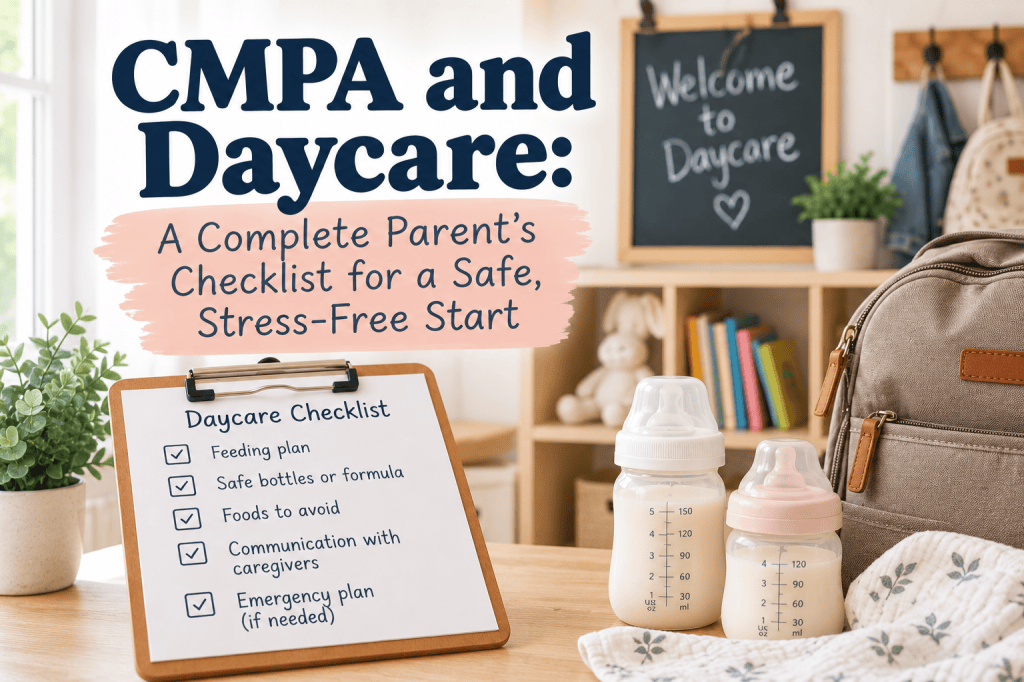
Starting daycare is a big milestone for any family, but when your baby has cow’s milk protein allergy (CMPA), it can bring an entirely new set of worries. You’ve probably spent weeks or even months figuring out which foods your baby can tolerate, learning to recognize symptoms, and establishing a feeding routine that works. Now you’re preparing to trust someone else to follow that same routine while you’re away.
Will the daycare teachers understand CMPA? What if someone accidentally gives your baby regular formula? How can you make sure your baby isn’t exposed to dairy during meals or snack time? These are completely reasonable questions, especially if this is your first experience navigating daycare with a food allergy.
The good news is that babies with CMPA can absolutely attend daycare safely when the right precautions are in place. The key is preparing ahead of time, communicating clearly with caregivers, and making sure everyone responsible for your baby understands their individual needs. Whether you’re breastfeeding, pumping, using hypoallergenic formula, or introducing solids, this guide will walk you through everything you should consider before that first day.
Can a Baby With CMPA Attend Daycare?
Yes, babies with cow’s milk protein allergy can attend daycare. Having CMPA doesn’t automatically mean your child needs a specialized facility or that everyone around them must avoid dairy. What matters is whether the daycare can reliably follow your baby’s dietary restrictions and respond appropriately if an accidental exposure occurs.
CMPA is an immune system reaction to proteins found in cow’s milk. It is different from lactose intolerance, which occurs when the body has difficulty digesting lactose, the sugar naturally found in milk. Some babies with CMPA experience delayed digestive symptoms such as diarrhea, vomiting, or blood in their stools, while others may develop immediate symptoms such as hives, swelling, or breathing difficulties. Because reactions can vary significantly, the precautions your daycare needs to follow should be based on your child’s diagnosis and recommendations from their healthcare provider.
Before enrolling your baby, ask whether the daycare has experience caring for children with food allergies. A daycare doesn’t necessarily need extensive experience with CMPA specifically, but staff should be comfortable following written feeding instructions, preventing accidental food exposure, and implementing an emergency allergy action plan when one is needed.
1. Talk to Your Daycare Before the First Day
One of the most important steps you can take is scheduling a conversation with the daycare director and the teachers who will be responsible for feeding your baby. Ideally, this should happen before your child’s first day so there is enough time to answer questions, review procedures, and make any necessary arrangements.
Start by explaining what CMPA means for your particular baby. Some caregivers may have experience with lactose intolerance or general food allergies but may not understand that cow’s milk protein allergy is a different condition. Explain which foods and formulas your baby must avoid, whether you’re providing expressed breast milk or specialized formula, and what symptoms your baby has experienced in the past.
It’s also important to ask how allergy information is communicated among staff members. Your baby’s primary teacher might understand the feeding instructions perfectly, but what happens when that teacher is absent? Does the daycare have a system for notifying substitute caregivers about allergies? Are feeding restrictions documented somewhere staff can easily access?
These details matter because preventing accidental exposure requires consistency, not simply one successful conversation. Whenever possible, request that your baby’s dietary restrictions be documented in writing and confirm that all caregivers who may feed your child have access to the information.
2. Create a Written CMPA Daycare Feeding Plan
Even if you’ve explained everything in person, a written feeding plan is essential. Daycare teachers care for multiple children throughout the day, and having clear instructions available reduces the likelihood of misunderstandings or mistakes.
Your feeding plan should include your baby’s full name, date of birth, parent contact information, and pediatrician’s contact information. It should also explain exactly what your baby is allowed to eat or drink, which ingredients must be avoided, and how bottles or meals should be prepared. If your baby receives breast milk, specify that expressed breast milk will be provided. If your baby uses hypoallergenic formula, include the exact formula name and preparation instructions.
For babies who have started solids, include a list of approved foods and any additional allergies or restrictions. It’s helpful to specify that caregivers should contact you before introducing an unfamiliar food, rather than assuming something is safe simply because it doesn’t obviously contain milk.
Your baby’s healthcare provider should also determine whether an individualized allergy action plan is needed. This is particularly important for children who have experienced immediate allergic reactions or who may require emergency medication. A general daycare feeding plan is useful for everyday routines, but it should never replace medical instructions for recognizing and treating an allergic reaction.
3. Preparing Breast Milk for Daycare With CMPA
If you’re breastfeeding a baby with CMPA, sending expressed breast milk to daycare may feel like the simplest way to maintain your baby’s established feeding routine. However, there are still a few important details to work out before the first day.
First, remember that a CMPA diagnosis does not automatically mean every breastfeeding mother needs to eliminate dairy from her diet. Some babies react to cow’s milk proteins that pass into breast milk, while others tolerate breast milk without the breastfeeding parent needing dietary restrictions. If your pediatrician has recommended a dairy-elimination diet, continue following that individualized guidance and discuss any changes with your healthcare team.
When preparing bottles, follow your daycare’s labeling requirements. Most facilities require each bottle to include your baby’s name and the date the milk was expressed, and some may request additional information. Ask how expressed milk will be stored, warmed, and handled throughout the day. Breast milk should be stored according to current safe-storage recommendations, and caregivers should never microwave bottles to warm them.
It’s also worth discussing your baby’s usual feeding schedule. Let teachers know approximately how much milk your baby drinks at each feeding, how frequently they eat, and whether there are any feeding difficulties they should be aware of. Although babies don’t always follow identical schedules every day, having a general routine helps caregivers recognize when something seems unusual.
Finally, ask how the daycare prevents bottle mix-ups. In a room with several infants receiving expressed breast milk or formula, clear labeling and careful feeding procedures are especially important. You want to feel confident that your baby is receiving only the milk you’ve provided and that their bottles won’t accidentally be confused with another child’s.
4. What If Your Baby Drinks Hypoallergenic Formula?
For some families, managing CMPA involves using specialized infant formula rather than, or in addition to, breastfeeding. Depending on your baby’s medical needs, a healthcare professional may recommend an extensively hydrolyzed formula or an amino acid-based formula. These formulas are designed for babies who cannot tolerate intact cow’s milk proteins, although the appropriate choice depends on the child’s individual condition.
If your baby uses a specialized formula, provide daycare with the exact product name and written preparation instructions. Make it clear that caregivers should never substitute regular cow’s milk formula, a different hypoallergenic formula, or another milk product without your approval and appropriate medical guidance. Even formulas marketed as gentle or partially hydrolyzed are not considered suitable treatments for cow’s milk protein allergy.
You should also discuss what happens if the daycare runs out of your baby’s formula. Some facilities prefer parents to supply prepared bottles each morning, while others may allow parents to leave a labeled container of formula on-site. Either arrangement can work as long as staff follow safe preparation, storage, and feeding procedures.
Another important consideration is that ordinary plant-based beverages, such as almond milk or oat milk, are not appropriate substitutes for breast milk or infant formula during a baby’s first year. If you’re considering any feeding changes, speak with your child’s healthcare provider first.
5. Preventing Accidental Dairy Exposure During Meals and Snacks
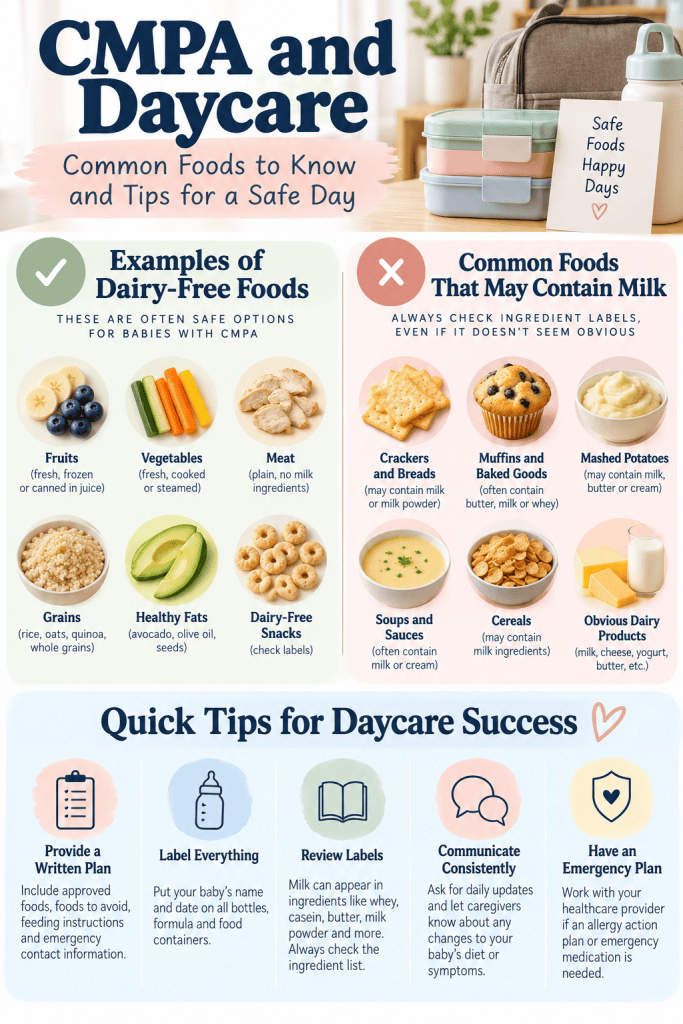
Once your baby begins eating solid foods, daycare allergy management becomes a little more complicated. Dairy ingredients can appear in foods that don’t immediately look like they contain milk, including certain crackers, breads, muffins, cereals, mashed potatoes, and prepared meals. Ingredients such as whey, casein, milk powder, butter, and cheese can all be sources of cow’s milk protein.
In the United States, milk is recognized as a major food allergen, and packaged foods containing milk-derived ingredients must follow applicable allergen-labeling requirements. However, daycare staff should still review ingredient information carefully and follow your baby’s documented dietary restrictions. Product ingredients can change, and foods prepared in kitchens or served without individual packaging may require additional verification.
Before your baby starts daycare, ask whether meals are prepared on-site or delivered by an outside food service. Find out who is responsible for checking ingredient labels and how meals for children with allergies are identified. You should also ask whether parents are allowed to provide all meals and snacks from home, particularly while their baby is adjusting to daycare.
Food sharing is another important topic. Babies and toddlers are naturally curious, and as they grow, they may reach for another child’s food or drop food onto shared surfaces. Daycare teachers should have age-appropriate procedures for supervising meals, preventing food sharing, and cleaning tables, utensils, and feeding equipment.
Some families find that sending clearly labeled meals from home makes the transition easier, while others are comfortable using daycare-provided meals once appropriate safeguards are established. Neither approach is automatically better. The right choice depends on your child’s allergy, the daycare’s procedures, and your comfort with how those procedures are followed.
6. What Happens If Your Baby Is Accidentally Given Dairy?
Even with careful preparation, it’s important to have a plan for what happens if your baby accidentally receives something containing cow’s milk protein. This is a conversation to have before daycare begins, rather than waiting until an incident occurs.
CMPA reactions vary depending on the child and the type of allergy involved. Some babies experience delayed digestive symptoms, while others may develop immediate symptoms such as hives, vomiting, swelling, or respiratory problems. Because the severity of a future reaction cannot always be predicted from previous symptoms, caregivers should follow an individualized plan from your baby’s healthcare provider rather than making assumptions.
For children at risk of anaphylaxis, daycare staff must know how to recognize a severe allergic reaction, administer prescribed emergency medication when indicated, and contact emergency services. Signs such as difficulty breathing or throat or tongue swelling require immediate emergency care. Parents should confirm that caregivers have any necessary training and understand the facility’s emergency procedures.
For less severe or delayed reactions, the healthcare provider’s plan should explain what symptoms to monitor, when to contact parents, and when medical evaluation is necessary. Any suspected exposure should be documented and communicated to you so that you and your baby’s healthcare team can determine whether follow-up is needed.
7. How to Communicate With Daycare About CMPA
Good communication can make an enormous difference in how comfortable you feel leaving your baby at daycare. You don’t need to give caregivers a lengthy explanation every morning, but establishing a simple routine for sharing important information can help everyone stay on the same page.
Before the first day, consider providing a short written note explaining your baby’s allergy and reminding staff not to offer unapproved foods or formula. You might write something like, “Our baby has cow’s milk protein allergy and must follow the feeding instructions we’ve provided. Please don’t introduce new foods, substitute formula, or offer snacks without checking the approved feeding plan. If you have questions or concerns, please contact us.”
At pickup, ask for a brief update about how feeding went that day. This might include how many bottles your baby finished, which meals or snacks were eaten, and whether caregivers noticed any digestive discomfort, skin changes, or feeding difficulties. If you’re still working with your pediatrician to identify possible food-related symptoms, keeping a consistent record may be especially helpful.
As your baby grows, remember to update the daycare’s instructions. Feeding needs can change significantly between infancy and toddlerhood, and your child’s healthcare provider may eventually recommend a supervised process for evaluating whether CMPA has resolved. Daycare should always follow the current written plan rather than relying on instructions from several months earlier.
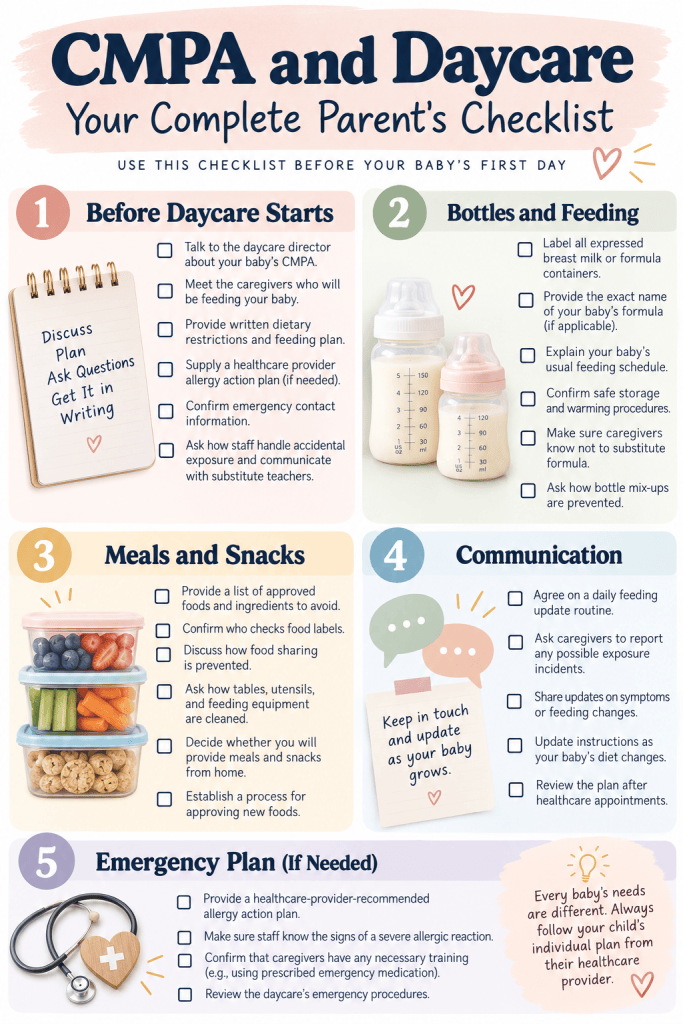
8. Your Complete CMPA Daycare Checklist
Preparing for daycare is much easier when you have everything organized in one place. Use this checklist before your baby’s first day, and revisit it whenever their feeding routine or medical instructions change.
Before Daycare Starts
- Speak with the daycare director about your baby’s CMPA.
- Meet the caregivers who will be responsible for feeding your baby.
- Provide written dietary restrictions and feeding instructions.
- Supply a healthcare-provider-recommended allergy action plan, if applicable.
- Confirm that emergency contact information is current.
- Ask how staff handle accidental food exposure.
- Verify that substitute teachers receive allergy information.
Bottles and Feeding
- Label all expressed breast milk or formula containers.
- Provide the exact name of your baby’s approved formula, if applicable.
- Explain your baby’s usual feeding schedule.
- Confirm safe bottle storage and warming procedures.
- Make sure caregivers understand that formula substitutions are not allowed.
- Ask how the daycare prevents bottle mix-ups.
Meals and Snacks
- Provide a list of approved foods and ingredients to avoid.
- Confirm who is responsible for reviewing ingredient labels.
- Discuss how food sharing is prevented.
- Ask how tables, utensils, and feeding equipment are cleaned.
- Decide whether you’ll provide meals and snacks from home.
- Establish a procedure for approving new foods.
Ongoing Communication
- Agree on a daily feeding update routine.
- Ask caregivers to document and report possible exposure incidents.
- Update feeding instructions whenever your baby’s diet changes.
- Review the daycare plan after relevant healthcare appointments.
9. Frequently Asked Questions About CMPA and Daycare
Does My Baby Need a Completely Dairy-Free Daycare?
Not necessarily. Many children with CMPA can safely attend daycare facilities where other children consume dairy, provided appropriate precautions are in place. The level of protection your baby needs depends on their individual allergy and the daycare’s ability to prevent accidental exposure. Your child’s healthcare provider can help you determine whether additional restrictions are necessary.
Can Daycare Give My Baby Lactose-Free Formula?
Generally, no. Lactose-free cow’s milk formula can still contain the cow’s milk proteins that trigger CMPA. Removing lactose does not make a milk-based formula suitable for a baby with cow’s milk protein allergy. Only use formula recommended by your baby’s healthcare professional.
Should I Send All of My Baby’s Food From Home?
Sending food from home can make it easier to control ingredients, especially when your baby is first starting daycare or beginning solid foods. However, daycare-prepared meals may also be appropriate if the facility has reliable allergy procedures and can verify that the meals meet your baby’s dietary restrictions. Discuss your options with the daycare and your child’s healthcare provider.
What If My Baby Has a Reaction While I’m at Work?
The daycare should follow your baby’s individualized allergy action plan and contact you according to the instructions provided. For a suspected severe allergic reaction, staff should follow emergency treatment instructions and call emergency services immediately rather than waiting for a parent to arrive. Before your baby starts daycare, confirm that caregivers understand their responsibilities and have the necessary training.
Will My Baby Eventually Outgrow CMPA?
Many children with cow’s milk protein allergy eventually develop tolerance to cow’s milk, although the timing varies considerably. Your child’s healthcare provider can help determine when and how to evaluate whether the allergy has resolved. Depending on the type of CMPA and your child’s reaction history, this may involve a structured reintroduction plan or a medically supervised food challenge. Dairy should never be reintroduced at daycare without appropriate medical guidance and an updated feeding plan.
Final Thoughts: You Can Make Daycare Work With CMPA
Starting daycare with a baby who has CMPA may require more preparation than you originally expected, but it doesn’t have to become an overwhelming experience. The most important thing is making sure the people caring for your baby understand their allergy, know exactly what they can eat or drink, and have a clear plan for responding to potential problems.
Taking the time to communicate with caregivers, organize feeding instructions, and establish reliable routines can help make the transition smoother for everyone. As your baby grows and their dietary needs change, you can continue adjusting the plan with guidance from your healthcare team.
Above all, remember that CMPA is something your family can learn to manage, even when someone else is caring for your baby. With thoughtful preparation and a daycare team that takes your child’s needs seriously, you can feel more confident about this exciting new chapter.
Medical disclaimer: This article is intended for educational purposes only and does not replace professional medical advice. Always consult your child’s pediatrician or qualified allergy specialist regarding CMPA diagnosis, dietary restrictions, formula selection, and emergency treatment.
References and Further Reading
- Centers for Disease Control and Prevention (CDC): Food Allergies in Schools and Early Care Programs
- National Health Service (NHS): Food Allergies in Babies and Young Children
- National Health Service (NHS): Types of Infant Formula







Leave a Reply