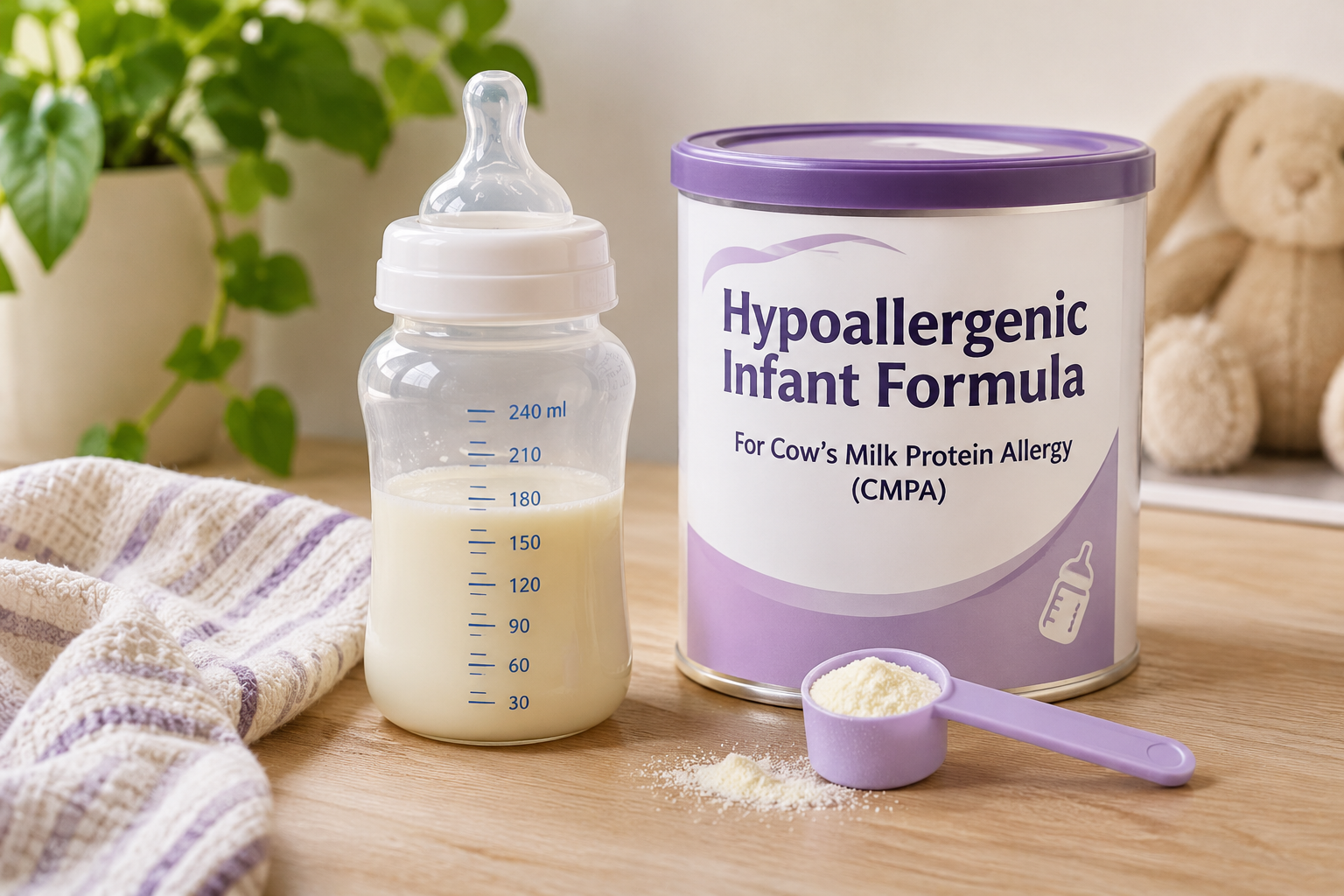
Switching from breastfeeding to formula can feel like a big decision, especially when your baby has cow’s milk protein allergy (CMPA). After spending weeks or months eliminating dairy, reading ingredient labels, and trying to understand your baby’s symptoms, the thought of introducing something new can bring up a whole new set of questions. Will your baby tolerate formula? Which kind is safe? And what happens if you’ve finally gotten their symptoms under control?
Babies with CMPA can often transition from breastfeeding to an appropriate hypoallergenic formula, but choosing the right formula and making the transition safely are important. Standard cow’s milk-based formulas are generally not suitable for babies with confirmed CMPA, and the best alternative depends on your baby’s allergy history, symptoms, and nutritional needs.
The reassuring part is that a CMPA diagnosis doesn’t automatically mean breastfeeding has to end. Some families continue breastfeeding while supplementing with formula, while others transition completely. Whether you’re returning to work, struggling with milk supply, or simply ready for a change, understanding your options can help make the process less overwhelming.
Can You Switch From Breastfeeding to Formula if Your Baby Has CMPA?
Yes, but not every formula is appropriate for a baby with cow’s milk protein allergy. Most standard infant formulas contain intact cow’s milk proteins, which can trigger symptoms in babies with CMPA. This is why pediatricians often recommend specialized hypoallergenic formulas instead of regular formula.
The transition itself may look different depending on your baby’s age, feeding habits, and allergy history. Some babies adapt quickly to bottle feeding, while others need more time to adjust to a different taste and feeding method. If your baby has experienced severe or immediate allergic reactions, their healthcare professional may recommend additional precautions before introducing a new formula.
It’s also important to remember that switching to formula isn’t a requirement for managing CMPA. Many babies can continue breastfeeding successfully, sometimes with dietary adjustments for the breastfeeding parent when medically indicated. If breastfeeding is working for your family, there’s no need to stop simply because your baby has a milk allergy.
What Formula Is Best for Babies With CMPA?
Choosing formula for a baby with CMPA can be confusing because so many products are labeled gentle, sensitive, or easy to digest. Unfortunately, those descriptions don’t necessarily mean a formula is appropriate for cow’s milk protein allergy. The most commonly recommended options are extensively hydrolyzed formulas and amino acid-based formulas.
Extensively hydrolyzed formula (eHF) contains milk proteins that have been broken down into much smaller pieces, making them less likely to trigger an allergic reaction. These formulas are commonly recommended as a first option for many babies with CMPA and are tolerated by most affected infants.
Amino acid-based formula (AAF) contains individual amino acids rather than intact milk proteins. It may be recommended for babies with more severe allergies, certain gastrointestinal allergic conditions, poor growth associated with CMPA, or symptoms that persist despite using an extensively hydrolyzed formula.
Parents sometimes wonder whether lactose-free, soy, or goat’s milk formula would be an easier alternative. However, lactose-free cow’s milk formula still contains the proteins responsible for CMPA, and goat’s milk proteins are similar enough to cow’s milk proteins that allergic reactions can occur. Soy formula may be an option for some older infants, but it isn’t appropriate for every baby, particularly those who also react to soy.
Your pediatrician or allergist can help determine which formula is appropriate rather than leaving you to experiment with different products.
Related reading: What Milk Can a Baby With CMPA Drink? Formula, Breast Milk & Milk Alternatives Explained
How to Transition From Breastfeeding to Hypoallergenic Formula
Once you’ve chosen a formula with your baby’s healthcare professional, the next step is figuring out how to introduce it. For many families, a gradual transition is more manageable than replacing every breastfeeding session at once. However, the timing should depend on your baby’s medical needs, particularly if feeding changes are being made because of significant allergic symptoms or growth concerns.
When a gradual transition is appropriate, some parents begin by replacing one breastfeeding session with the recommended formula and adjusting the remaining feedings over time. This gives the baby an opportunity to become familiar with bottle feeding while allowing the breastfeeding parent’s milk supply to adjust. If you’re planning to continue breastfeeding part-time, a lactation consultant can help you develop a schedule that supports your goals.
One thing that surprises some parents is how different hypoallergenic formula can taste and smell compared with breast milk. Extensively hydrolyzed formulas may have a distinctive flavor, and a baby who has been exclusively breastfed might initially refuse the bottle. That doesn’t necessarily mean the formula is causing a reaction. Sometimes the unfamiliar taste, bottle nipple, or milk flow is the bigger challenge.
Responsive, paced bottle feeding can help some babies adjust more comfortably. Offering the bottle when your baby is calm, following their hunger and fullness cues, and allowing time to become familiar with the feeding method may also help. If your baby consistently refuses formula or isn’t drinking enough, contact their pediatrician rather than changing formulas repeatedly or altering the preparation instructions.
Some families also ask whether they can combine breast milk with hypoallergenic formula. In certain situations, this may be possible, but powdered formula must first be prepared exactly as directed using the required amount of water. Breast milk should not replace the water specified in the formula instructions. Your baby’s healthcare professional can help you decide whether combining feedings is appropriate.

What to Expect After Switching to Formula
Even when a formula is appropriate for CMPA, you may notice changes in your baby’s feeding habits and digestion. Stool color, consistency, and frequency can change after switching formulas, and some babies need time to adjust to a different feeding routine. These changes don’t automatically indicate an allergic reaction, but they should be considered alongside your baby’s overall health and feeding patterns.
One of the biggest questions parents have is how long it takes for symptoms to improve. Unfortunately, there isn’t one timeline that applies to every baby. The expected response depends on the type of CMPA, the symptoms your baby was experiencing, and whether another condition may be contributing. Some symptoms may improve relatively quickly, while others require a longer period of observation and medical follow-up.
Rather than analyzing every diaper or fussy evening, focus on the symptoms your pediatrician has recommended monitoring. Persistent vomiting, blood in the stool, worsening feeding difficulties, poor weight gain, or signs of dehydration should be discussed with a healthcare professional. Severe or rapidly developing symptoms, such as breathing difficulty or significant swelling, require emergency medical care.
If your baby continues experiencing symptoms despite using a recommended hypoallergenic formula, don’t automatically assume you need to switch brands. Your pediatrician may need to reassess the formula, the original diagnosis, or other possible causes before recommending changes.
Related reading: When Will My Baby Feel Better After Going Dairy-Free? What to Expect Week by Week
Can You Continue Breastfeeding While Using Hypoallergenic Formula?
Absolutely. For some families, combination feeding offers a practical balance between breastfeeding and formula feeding. You might breastfeed in the morning and evening while using formula during the day, or develop another arrangement that fits your family’s schedule.
If you’ve been avoiding dairy because your baby reacts to cow’s milk protein transferred through breast milk, introducing hypoallergenic formula doesn’t automatically mean you can resume eating dairy. As long as you’re continuing to breastfeed, follow the dietary recommendations established with your baby’s healthcare professional.
Reducing breastfeeding sessions can also affect milk production, so it’s worth thinking about whether you want to maintain your current supply or gradually wean. If you decide to stop breastfeeding completely, making changes gradually when medically appropriate may help reduce breast discomfort.
There’s also an emotional side to this transition that doesn’t always get discussed. After months of managing CMPA, breastfeeding might feel like the one feeding routine you’ve finally figured out. Changing it can bring both relief and uncertainty, especially when you’re worried about your baby’s symptoms returning. But choosing formula, continuing breastfeeding, or combining the two doesn’t change the care you’re providing your baby. What matters is that your baby receives safe, adequate nutrition and that your feeding arrangement is sustainable for your family.
When Can Babies With CMPA Switch to Regular Formula?
Many children eventually outgrow cow’s milk protein allergy, but the timeline varies considerably. Some develop tolerance during infancy, while others continue reacting to milk proteins into their toddler years or beyond.
A baby doing well on hypoallergenic formula doesn’t necessarily mean their allergy has resolved. It may simply mean the formula is successfully avoiding the proteins that previously caused symptoms. For this reason, parents shouldn’t switch to regular cow’s milk formula just because their baby has reached a certain age or seems more comfortable.
Your pediatrician or allergist can determine when reassessment is appropriate. Depending on your baby’s allergy type and reaction history, this may involve a medically supervised oral food challenge or another carefully planned approach.
Related reading: When Do Babies Outgrow CMPA? Signs Your Baby May Be Developing Tolerance
Frequently Asked Questions
Can I Give My Baby Regular Formula Just Once?
If your baby has confirmed CMPA, avoid intentionally offering standard cow’s milk formula unless their healthcare professional has determined that reintroduction is appropriate. Even a small amount of milk protein can trigger symptoms in a child who remains allergic.
Is Hypoallergenic Formula Completely Dairy-Free?
Not always. Extensively hydrolyzed formulas are often made from cow’s milk proteins that have been extensively broken down, while amino acid-based formulas use individual amino acids. The important distinction is whether the formula is appropriate for managing your baby’s particular allergy, not simply whether it contains ingredients originally derived from milk.
What if My Baby Refuses Hypoallergenic Formula?
Some babies initially resist the unfamiliar taste or bottle-feeding experience. If your baby continues refusing feeds or isn’t drinking enough, contact their pediatrician for guidance. Avoid adding sweeteners, diluting formula, or changing the recommended preparation instructions.
Can I Start Eating Dairy Again After Switching to Formula?
If you’ve completely stopped breastfeeding and your dairy restriction was recommended solely to manage your baby’s CMPA, you may no longer need to avoid dairy for that reason. However, if you’re continuing to provide breast milk, follow your baby’s existing allergy-management plan until their healthcare professional advises otherwise.
Will Hypoallergenic Formula Cure My Baby’s CMPA?
No. Hypoallergenic formula provides nutrition while avoiding or reducing exposure to the proteins responsible for allergic symptoms. It doesn’t cure the allergy itself. Many children naturally develop tolerance over time, but this should be assessed with appropriate medical guidance.
Final Thoughts
Switching from breastfeeding to formula with CMPA doesn’t have to mean starting over. You’ve already learned a great deal about your baby’s symptoms, feeding habits, and individual needs, and that knowledge can help you navigate the next stage. The most important step is choosing an appropriate formula with your baby’s healthcare professional and creating a transition plan that supports safe, adequate feeding.
Some babies adapt quickly, while others need additional time or support. You may decide to transition completely, continue breastfeeding part-time, or explore different arrangements as your baby’s needs change. There’s no single feeding approach that works for every family, and the goal isn’t to make the transition perfectly. It’s to find a safe, sustainable way forward that works for both you and your baby.
Medical Disclaimer: This article is for educational purposes only and does not replace individualized advice from your baby’s pediatrician, allergist, or other qualified healthcare professional. Formula selection and feeding transitions for babies with confirmed or suspected CMPA should be guided by a healthcare professional. Seek emergency medical care for severe or rapidly developing allergic symptoms.


Leave a Reply