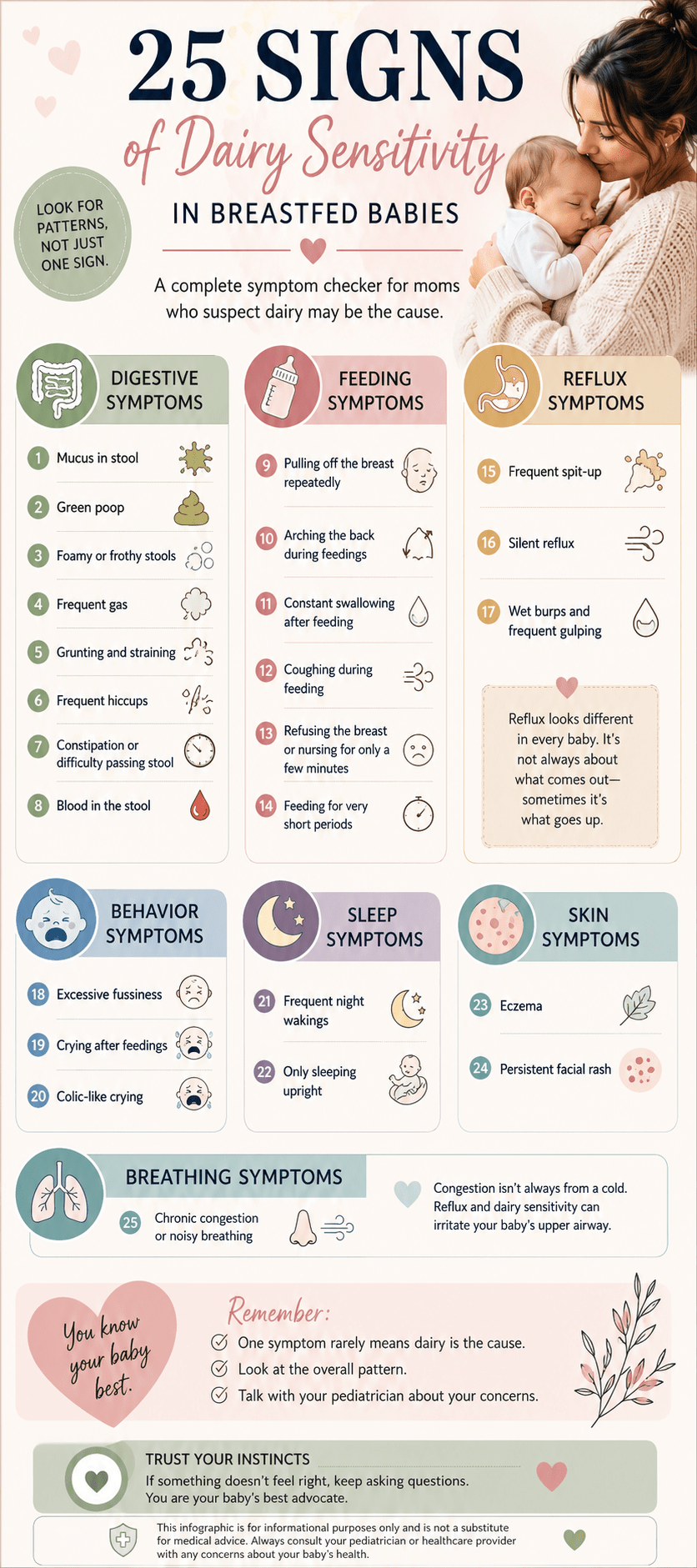
The Complete Dairy Sensitivity Symptom Checker for Breastfed Babies (25 Signs Every Parent Should Know)
Contents
- Digestive Symptoms
- Feeding Symptoms
- Reflux Symptoms
- Behavior Symptoms
- Sleep Symptoms
- Skin Symptoms
- Breathing Symptoms
- Printable Checklist
- When to Call Your Pediatrician
- FAQ
Could Dairy Really Be Causing All of This?
Most moms don’t begin their dairy-free journey because of one obvious symptom. Instead, it starts with a handful of little things that don’t seem connected. Maybe your baby spits up after nearly every feeding. They’re fussier than other babies you know. They wake constantly throughout the night. You notice mucus in their diaper one day. The next week they start arching their back while nursing. Someone tells you: “It’s just colic.” Another person says: “All babies spit up.” Someone else insists: “You’ll know if it’s a dairy allergy because there would be blood in the diaper.”
But something inside you keeps whispering that there has to be more to the story. If you’re reading this, chances are you’ve already spent hours searching Google. You’ve probably read dozens of articles. Maybe you’ve even started questioning yourself. Am I overreacting? Is this normal? Could dairy really cause all of these symptoms? The truth is that dairy sensitivity rarely looks exactly the same from one baby to the next. Some babies struggle mostly with digestion. Others have feeding problems. Some develop skin issues. Others simply seem uncomfortable all day long. That’s what makes dairy sensitivity so confusing. No single symptom tells the whole story. Instead, it’s the overall pattern that matters. This guide was created to help you step back and look at the bigger picture. Rather than focusing on one symptom, you’ll learn about the 25 most common signs that may be associated with dairy sensitivity in breastfed babies. My hope is that this article helps you connect the dots, ask better questions, and feel a little less alone on your breastfeeding journey.
Before You Start
It’s important to remember that this is not a diagnostic tool. Many of these symptoms can happen in perfectly healthy babies. They can also occur with reflux, tongue ties, viral illnesses, oversupply, fast letdown, or other feeding challenges. This checklist is simply designed to help you recognize patterns. If several of these symptoms occur together, it’s worth discussing your concerns with your pediatrician or another qualified healthcare provider.
👉 One of the biggest fears for new moms is accidentally eating dairy. Read _I Accidentally Ate Dairy While Breastfeeding—Do I Need to Start Over?_ to learn why one mistake doesn’t erase your progress.
👉 Many parents are surprised to learn that CMPA doesn’t always begin at birth. Symptoms often appear gradually over the first few weeks or months of life, making the connection to dairy easy to miss.
Can a Breastfed Baby Suddenly Develop a Dairy Allergy? (Why Symptoms Sometimes Appear Weeks Later)
Digestive Symptoms
For many families, digestive issues are the very first clue that something isn’t quite right.
👉 Hives are one of the less common skin symptoms of CMPA, but they can happen. Learn how to recognize them and when to seek medical care. Can Dairy Cause Hives in Breastfed Babies? What Every Parent Should Know
1. Mucus in Stool
One of the most searched dairy sensitivity symptoms is mucus in a baby’s diaper. Parents often describe it as:
- jelly-like
- stringy
- slimy
- shiny
- clear or white streaks
Occasional mucus can happen for many harmless reasons. However, frequent mucus appearing alongside reflux, gas, or feeding struggles may suggest irritation somewhere within the digestive tract. Many breastfeeding moms first begin researching dairy sensitivity after repeatedly seeing mucus in their baby’s diapers. Can Dairy in Breastmilk Cause Mucus in Babies (What It Really Means and What to Do)
2. Green Poop
Green poop can send parents into a panic. The good news is that green stools are not automatically a sign of dairy sensitivity. They may occur because of:
- normal digestion
- foremilk and hindmilk imbalance
- illness
- iron supplements
However, when green poop appears alongside several other symptoms in this checklist, it becomes another piece of the puzzle. Patterns matter far more than one diaper. Can Dairy Cause Green Poop in Breastfed Babies?
3. Foamy or Frothy Stools
Foamy stools often make parents wonder whether something is irritating their baby’s digestive system. Some babies with dairy sensitivity develop stools that appear:
- bubbly
- frothy
- airy
- unusually loose
Again, this symptom alone doesn’t confirm dairy sensitivity. But combined with mucus, reflux, and gas, it becomes much more meaningful. Foamy Poop in Breastfed Babies: Could Dairy Be the Cause?
👉 Many parents worry that dairy sensitivity may return after their child outgrows it. Learn what symptoms deserve attention and what pediatricians typically expect. Can Cow’s Milk Protein Allergy Come Back After It Goes Away? (What Parents Should Know)
4. Frequent Gas
Almost every newborn has gas. That’s normal. The difference is when gas seems excessive.
Some babies:
- pull their legs toward their stomach
- scream while passing gas
- seem uncomfortable after every feeding
- wake frequently because of trapped gas
Many parents notice these symptoms improve after removing dairy from their own diet.
Can Dairy Cause Gas in Breastfed Babies (How to Tell and What Actually Helps)
5. Grunting and Straining
Does your baby sound like they’re working incredibly hard just to pass gas or have a bowel movement? Many babies grunt. That’s part of learning how to coordinate their abdominal muscles. However, babies experiencing digestive discomfort often grunt far more than expected. Parents frequently describe:
- grunting all night
- grunting after every feeding
- constant straining
- loud noises while sleeping
This symptom often appears alongside reflux and gas.
Baby Grunting and Straining While Breastfeeding: Could Dairy Sensitivity Be the Cause?
Back arching during feeding is one symptom that often appears alongside reflux, stool changes, or eczema. Learn what it may mean and what pediatricians look for. Baby Arching Back While Breastfeeding: Could Dairy Sensitivity Be the Cause?
6. Frequent Hiccups
Most babies get hiccups occasionally. Some babies seem to have them constantly. Frequent hiccups may occur because reflux repeatedly irritates the diaphragm. Parents often notice hiccups:
- after every feeding
- several times each day
- immediately after burping
By themselves, hiccups usually aren’t concerning. But when they occur alongside reflux, spit-up, and feeding struggles, they become another important clue.
Excessive Hiccups in Breastfed Babies: Could Dairy Sensitivity Be the Cause?
7. Constipation or Difficulty Passing Stool
While many breastfed babies rarely become constipated, some babies with digestive irritation seem to struggle every time they try to have a bowel movement. Parents often describe:
- hard pushing
- crying while passing stool
- obvious discomfort
- infrequent bowel movements
This symptom deserves a conversation with your pediatrician, especially if it’s persistent.
👉 Reflux is one of the most common symptoms parents notice, but not every baby with reflux has a dairy sensitivity. Learn the seven signs that can help you tell the difference.
How to Tell If Dairy Is Causing Your Baby’s Reflux (7 Signs Most Parents Miss)
8. Blood in the Stool
Blood in the stool is one symptom that should never be ignored. Although there are many possible causes, blood can sometimes occur with cow’s milk protein intolerance. Always contact your pediatrician promptly if you notice blood in your baby’s diaper. This is one symptom that deserves immediate medical attention rather than internet research alone.
👉 Painful gas is one of the earliest symptoms many parents notice, but it’s often only one piece of the puzzle. Learn how to recognize when sudden gas may be connected to dairy sensitivity.
Why Is My Breastfed Baby So Gassy All of a Sudden? Could Dairy Be the Reason?
👉 Stool changes are one of the most common clues parents notice. Our complete baby poop guide explains what different colors and textures may mean: Milk Allergy Baby Poop: Pictures, Colors, and What Each Type Could Mean
Feeding Symptoms
One of the biggest clues that dairy sensitivity may be involved is how your baby behaves while eating. Many parents notice feeding difficulties weeks before they recognize digestive symptoms.
9. Pulling Off the Breast Repeatedly
Does your baby latch… Then suddenly pull away? Then latch again… Only to pull away a second later? Many moms assume their baby is distracted. Others worry about milk supply. But repeated unlatching can sometimes happen because feeding has become uncomfortable. If reflux or digestive irritation is causing discomfort, babies often pull away even though they’re still hungry.
Baby Pulling Off the Breast Repeatedly: Could Dairy Sensitivity Be the Cause?
10. Arching the Back During Feedings
This is one of the symptoms parents describe most often. The feeding starts normally. Then suddenly your baby:
- stiffens
- arches backward
- cries
- refuses to continue nursing
Back arching is commonly associated with reflux because babies instinctively react to discomfort. If you’ve noticed arching combined with spit-up, swallowing, or fussiness, it’s worth looking at the full symptom picture
Baby Arching Back While Breastfeeding: Could Dairy Sensitivity Be the Cause?
11. Constant Swallowing After Feeding
Some babies continue swallowing long after nursing has ended. Parents describe:
- gulping sounds
- repeated swallowing
- lip smacking
- discomfort after feeds
This is one of the hallmark signs of silent reflux. Unlike traditional reflux, milk doesn’t always come out. Instead, it comes up the esophagus before being swallowed again. Why Does My Baby Keep Swallowing After Feeding? Could Dairy Sensitivity Be the Cause?
12. Coughing During Feeding
Frequent coughing during nursing isn’t always caused by a fast letdown. Sometimes throat irritation from reflux contributes to coughing episodes. When coughing happens together with swallowing, arching, and fussiness, silent reflux may be part of the picture Baby Coughing During Breastfeeding: Could Dairy Sensitivity Be the Cause?
13. Refusing the Breast or Nursing for Only a Few Minutes
One of the most heartbreaking experiences for a breastfeeding mom is when a baby who once nursed happily suddenly begins refusing the breast. Sometimes it happens gradually. Other times it seems to happen overnight. Your baby may:
- latch for only a minute or two
- pull away crying
- refuse one side
- seem hungry but become frustrated quickly
- calm down once the feeding stops
Parents often assume the baby is weaning early or that milk supply has dropped. In reality, some babies begin associating nursing with discomfort rather than comfort. If reflux, gas, or digestive irritation causes pain during or immediately after feeding, your baby may begin avoiding the breast even though they are still hungry. This doesn’t necessarily mean breastfeeding is the problem. It may simply mean your baby has learned that eating makes them uncomfortable. Baby Pulling Off the Breast Repeatedly: Could Dairy Sensitivity Be the Cause?
14. Feeding for Very Short Periods
Some babies seem to snack all day long. Instead of nursing for 15 to 20 minutes, they may only nurse for:
- two minutes
- three minutes
- five minutes
Then they pull away. An hour later, they’re hungry again. This pattern may happen because they are trying to avoid becoming too uncomfortable during longer feedings. When feeding discomfort is involved, babies sometimes prefer many short nursing sessions rather than one full feeding.
Reflux Symptoms
Reflux is one of the biggest reasons parents begin researching dairy sensitivity. In fact, several of your highest-performing articles already revolve around reflux, which tells us this is exactly what parents are searching for.
15. Frequent Spit-Up
Some babies spit up occasionally. Others seem to spit up after nearly every feeding. Although spit-up is common in infancy, excessive spit-up combined with several other symptoms may point toward digestive irritation.
Parents often notice:
- soaking burp cloths
- milk coming up long after feeding
- discomfort after spitting up
- crying before or after spit-up
Many babies improve naturally with time, while others benefit from identifying an underlying trigger. Excessive Spit-Up in Breastfed Babies: Could Dairy sensitivity Be the Cause?
16. Silent Reflux
Silent reflux is one of the most overlooked symptoms in babies. Unlike traditional reflux, there may be very little visible spit-up. Instead, parents notice:
- swallowing
- gulping
- coughing
- arching
- throat clearing
- fussiness after feeding
Because the milk is swallowed again instead of coming out, many parents never realize reflux is occurring. This is why silent reflux is so frequently mistaken for colic or simply “a fussy baby. Silent Reflux vs Normal Baby Reflux (How to Tell the Difference)
17. Wet Burps and Frequent Gulping
Some babies don’t spit up much. Instead, they constantly burp up small amounts of milk. Parents often hear:
- wet swallowing sounds
- tiny burps
- repeated gulping
- clicking noises
This can happen when stomach contents repeatedly travel upward but never fully leave the mouth. Many parents describe this symptom long before they ever hear the phrase “silent reflux.”
Behavior Symptoms
One of the reasons dairy sensitivity is difficult to recognize is because many symptoms aren’t digestive at all. Instead, they show up as changes in behavior.
👉 Skin changes can be just as important as digestive symptoms. Learn how to tell the difference between baby acne, eczema, and a possible dairy allergy rash. Can Dairy Cause a Rash in Breastfed Babies? Signs It May Be More Than Baby Acne
18. Excessive Fussiness
Every baby cries. That’s completely normal. The question becomes: When does normal fussiness become something more? Many parents notice that their baby becomes especially upset:
- immediately after nursing
- during the evening
- when laid flat
- while passing gas
- shortly after waking
The crying often seems connected to discomfort rather than simply needing to be held. This is especially true when fussiness appears alongside digestive symptoms.
19. Crying After Feedings
One of the biggest clues many parents describe is: “My baby eats… …then cries.” Instead of appearing relaxed after nursing, the baby:
- stiffens
- cries
- squirms
- arches backward
- refuses to settle
This often happens because feeding has triggered reflux or digestive discomfort. Can Dairy Cause Reflux in Breastfed Babies (Signs Most Moms Don’t Connect)
20. Colic-Like Crying
Many babies are diagnosed with colic. But “colic” simply describes excessive crying. It doesn’t explain why the crying is happening. Some babies truly have colic. Others are later found to have reflux, feeding discomfort, or dairy sensitivity. This is why looking at the entire symptom picture is so important. Colic vs Dairy Sensitivity in Breastfed Babies (How to Tell the Difference)
Sleep Symptoms
Parents often expect sleep problems. But persistent sleep difficulties combined with digestive symptoms may tell another story.
21. Frequent Night Wakings
Many babies wake often. However, babies with reflux or digestive discomfort sometimes wake because lying flat allows stomach contents to move upward more easily. Parents frequently notice:
- waking every hour
- difficulty staying asleep
- crying shortly after being laid down
Sleep improves for many babies as digestive discomfort improves.
22. Only Sleeping Upright
Does your baby sleep peacefully in your arms… But wake almost immediately when laid flat? This is a classic story parents tell when reflux is involved. Gravity helps keep stomach contents where they belong. Once babies lie flat, discomfort often increases. Although this symptom alone doesn’t confirm reflux or dairy sensitivity, it’s another clue when combined with others.
Skin Symptoms
Not every baby develops skin symptoms. But when they do occur, they can provide another important clue.
23. Eczema
Some babies with dairy sensitivity develop eczema. This may appear as:
- dry patches
- itchy skin
- redness
- rough areas on the cheeks, arms, or legs
Of course, eczema has many possible causes. But when eczema occurs alongside digestive symptoms, many parents begin exploring whether dairy could be contributing.
24. Persistent Facial Rash
Some babies develop redness around:
- the cheeks
- chin
- mouth
This rash may come and go. Some parents notice it worsens around feeding times. While many newborn rashes are harmless, persistent facial irritation combined with digestive symptoms deserves discussion with your pediatrician.
Breathing Symptoms
Digestive irritation doesn’t always stay in the digestive system. Sometimes it affects the upper airway as well.
25. Chronic Congestion or Noisy Breathing
One symptom that surprises many parents is congestion. Your baby isn’t sick. There’s no cold. Yet they constantly sound:
- stuffy
- congested
- noisy while breathing
Reflux can sometimes irritate the throat and upper airway, making babies sound congested even when they aren’t ill. Many parents notice this symptom improves as reflux improves. Congestion in Breastfed Babies and Dairy Sensitivity (The Symptom Many Moms Overlook)
One More Symptom Worth Mentioning
Poor Weight Gain
Although this isn’t one of the common symptoms most parents notice first, it’s one of the most important. If your baby:
- isn’t gaining weight
- struggles to finish feedings
- seems constantly uncomfortable while eating
you should contact your pediatrician promptly. Poor weight gain always deserves medical evaluation.
Looking at the Bigger Picture
As you’ve probably noticed, none of these symptoms automatically mean your baby has a dairy sensitivity. But something interesting happens when you step back. Instead of seeing:
- reflux
- mucus
- gas
- poor sleep
- congestion
- fussiness
- feeding struggles
as separate problems… …you begin to see a pattern. And that’s exactly what this symptom checker is designed to help you do.
What Should You Do If Several Symptoms Sound Familiar?
If you’ve been nodding your head while reading this checklist, take a deep breath. It can feel overwhelming when you realize your baby may have several symptoms that seem connected. The important thing to remember is this: One symptom rarely tells the whole story. Many healthy babies have reflux. Many healthy babies have gas. Many healthy babies spit up.
What often raises concern is when multiple symptoms occur together, especially if they seem to worsen after feedings or persist over time. Instead of trying to diagnose your baby yourself, focus on gathering information. Your observations are incredibly valuable. Parents are often the first people to notice subtle patterns that eventually help identify what’s going on.
Printable Dairy Sensitivity Symptom Checklist
Use this checklist as a quick reference. Save it, print it, or bookmark this page so you can come back to it later.
| Symptom | Yes |
|---|---|
| Mucus in stool | ☐ |
| Green poop | ☐ |
| Foamy stool | ☐ |
| Frequent gas | ☐ |
| Grunting and straining | ☐ |
| Frequent hiccups | ☐ |
| Constipation or difficulty passing stool | ☐ |
| Blood in stool | ☐ |
| Pulling off the breast | ☐ |
| Arching back while nursing | ☐ |
| Constant swallowing after feeding | ☐ |
| Coughing during feeds | ☐ |
| Nursing for only a few minutes | ☐ |
| Feeding refusal | ☐ |
| Frequent spit-up | ☐ |
| Silent reflux | ☐ |
| Wet burps or gulping | ☐ |
| Excessive fussiness | ☐ |
| Crying after feedings | ☐ |
| Colic-like crying | ☐ |
| Frequent night wakings | ☐ |
| Only sleeping upright | ☐ |
| Eczema | ☐ |
| Facial rash | ☐ |
| Chronic congestion | ☐ |
Symptom Clusters: Looking at the Bigger Picture
One thing I’ve learned from talking with moms is that symptoms rarely appear alone. Instead, they tend to fall into groups. Recognizing these clusters can make it easier to see patterns.
Digestive Cluster
You may notice:
- Mucus in stool
- Green poop
- Gas
- Grunting
- Straining
- Frequent hiccups
👉 These symptoms often point toward irritation somewhere in the digestive tract.
Feeding Cluster
You may notice:
- Pulling off the breast
- Nursing for only a few minutes
- Arching during feeds
- Coughing while nursing
- Constant swallowing
- Feeding refusal
👉 These symptoms often suggest that feeding itself has become uncomfortable.
Reflux Cluster
You may notice:
- Silent reflux
- Frequent spit-up
- Wet burps
- Gulping
- Arching
- Swallowing after feeds
👉 These symptoms often occur together because they all relate to stomach contents moving back up the esophagus.
Behavior Cluster
You may notice:
- Excessive fussiness
- Crying after feeds
- Colic-like crying
- Trouble settling
- Frequent night wakings
👉 Babies communicate discomfort through their behavior long before they can tell us what hurts.
Skin and Breathing Cluster
You may notice:
- Eczema
- Facial rash
- Congestion
- Noisy breathing
👉 While these symptoms have many possible causes, they sometimes appear alongside digestive symptoms in babies with dairy sensitivity.
When Should You Contact Your Pediatrician?
Always trust your instincts. While many symptoms improve with time or dietary changes, there are situations that deserve prompt medical attention. Contact your pediatrician if your baby has:
- Blood in the stool
- Poor weight gain
- Persistent feeding refusal
- Signs of dehydration
- Difficulty breathing
- Extreme lethargy
- Vomiting that is forceful or green
- Symptoms that are getting worse instead of better
If something doesn’t feel right, it’s always okay to ask for help.
Should You Try a Dairy-Free Diet?
If several symptoms from this checklist sound familiar, talk with your baby’s healthcare provider about whether a dairy elimination trial may be appropriate. Many breastfeeding moms choose to temporarily remove dairy while monitoring their baby’s symptoms. If you do try eliminating dairy:
- Read ingredient labels carefully.
- Watch for hidden dairy ingredients.
- Keep a symptom journal.
- Be patient, as improvement may take time.
- Work with your healthcare provider to ensure you’re meeting your own nutritional needs.
Remember, every baby is different. What works for one family may not be the right approach for another.
Frequently Asked Questions
How many symptoms does my baby need to have before I should worry?
There isn’t a magic number. It’s the overall pattern that matters more than any single symptom.
Can a breastfed baby have dairy sensitivity even without blood in the stool?
Yes. Many babies never develop blood in their stool and instead experience symptoms like reflux, gas, mucus, feeding difficulties, or poor sleep.
Can dairy sensitivity come and go?
Some parents notice symptoms seem to improve and worsen over time, especially after accidental dairy exposure or hidden dairy ingredients.
How long does it take for symptoms to improve after removing dairy?
Every baby is different. Some parents notice small improvements within a couple of weeks, while others see gradual changes over a longer period.
Could these symptoms be something other than dairy?
Absolutely. Many conditions share similar symptoms. That’s why this checklist should never replace medical advice.
Is dairy sensitivity the same as lactose intolerance?
No. Lactose intolerance and cow’s milk protein sensitivity are different conditions and are often confused.
👉 Internal Link
Dairy Allergy vs. Lactose Intolerance in Breastfed Babies (What’s the Difference?)
Can babies outgrow dairy sensitivity?
Many babies do outgrow cow’s milk protein sensitivity during infancy or early childhood, but every child develops differently.
Should I stop breastfeeding if I think dairy is the problem?
In many cases, breastfeeding can continue successfully. Always discuss concerns with your pediatrician or a lactation consultant before making major feeding changes.
Can hidden dairy keep symptoms going?
Yes. Ingredients like whey, casein, milk powder, and butter solids can continue exposing sensitive babies to dairy proteins.
Is one symptom enough to diagnose dairy sensitivity?
No. Dairy sensitivity is usually identified by looking at a combination of symptoms, medical history, and your healthcare provider’s evaluation.
Medical Disclaimer
This article is for informational purposes only and is not intended to diagnose, treat, cure, or prevent any medical condition. Every baby is unique, and many of the symptoms discussed here can have multiple causes. Always consult your pediatrician, healthcare provider, or lactation consultant before making changes to your diet or your baby’s care.
Final Thoughts
If you’ve made it to the end of this guide, I want you to know something. You’re not “overthinking.” You’re not “being dramatic.” You’re paying attention. That’s what loving parents do. Maybe your baby has one symptom from this list. Maybe they have several. Either way, you’ve already taken an important step by learning more and looking for patterns instead of assuming you’re imagining things. Remember, you don’t have to have all the answers today. One conversation with your pediatrician.
One observation.
One small step at a time.
That’s how progress happens.
And no matter where you are on this journey, I hope this guide helped you feel a little more confident and a little less alone.
💬 Call to Action
Which symptom first made you wonder that dairy might be affecting your baby? Was it reflux? Mucus in the diaper? Gas? Poor sleep? Or something completely different?
Leave a comment below and share your experience. Your story may be exactly what another breastfeeding mom needs to read today.
If this guide helped you, consider saving it to Pinterest so you can easily find it again later. It may also help another breastfeeding mom who’s searching for answers.









Leave a comment