
Quick Answer
Yes. Cow’s milk protein allergy (CMPA) can sometimes cause skin symptoms in breastfed babies, including eczema-like rashes, dry patches, and persistent redness. While not every rash is caused by dairy, skin changes that occur alongside digestive symptoms such as reflux, mucus in the stool, blood in the stool, or excessive fussiness may prompt your pediatrician to consider CMPA as one possible cause.
“I Thought It Was Just Baby Acne…”
Many parents first notice a few tiny bumps on their baby’s cheeks and don’t think much of it.
After all, newborn skin is known for being unpredictable.
But then the bumps don’t disappear.
Instead, the redness spreads.
The skin becomes dry.
Your baby starts rubbing their face against your shoulder.
Maybe you’ve also noticed more spit-up than usual.
Or green diapers.
Or longer crying spells after feedings.
Suddenly you begin wondering:
“Could these things be connected?”
For some babies, they are.
While baby acne is extremely common and usually harmless, some breastfed babies develop skin changes because their immune system is reacting to cow’s milk proteins that pass into breast milk.
The challenge is knowing the difference.
👉 Some babies develop raised, itchy welts instead of dry eczema patches. Learn how to recognize hives and when they may be related to cow’s milk protein allergy.
Can Dairy Cause Hives in Breastfed Babies? What Every Parent Should Know
How Can Dairy Affect a Baby’s Skin?
Cow’s milk protein allergy doesn’t only affect the digestive system.
Because CMPA involves the immune system, it can also trigger inflammation in the skin.
That inflammation may appear as:
- Dry, rough patches
- Red cheeks
- Eczema
- Itchy skin
- Small rashes that don’t seem to improve
- Flare-ups that come and go
Not every baby with CMPA develops a rash.
Likewise, not every baby with a rash has CMPA.
That’s why pediatricians look at your baby’s entire collection of symptoms, not just one skin change.
What Does a Dairy Allergy Rash Look Like?
There’s no single rash that automatically means dairy is the cause.
However, many parents describe:
- Rough, dry cheeks
- Red patches behind the knees or inside the elbows
- Dry skin that doesn’t improve with moisturizer
- Areas that seem itchy or irritated
- Flare-ups that appear to worsen over time
These rashes often resemble eczema rather than baby acne.
Some babies also have digestive symptoms, while others primarily show skin changes.
👉 New to CMPA? Read: What Is Cow’s Milk Protein Allergy (CMPA)? A Beginner’s Guide for Breastfeeding Parents
Baby Acne vs. Dairy Allergy Rash
One of the biggest sources of confusion is telling baby acne apart from a possible allergy-related rash.
Baby acne usually:
- Appears during the first few weeks of life
- Looks like small pimples or bumps
- Isn’t usually itchy
- Often clears on its own within a few weeks
A possible CMPA-related rash is more likely to:
- Feel dry or rough
- Look like eczema
- Continue or worsen over time
- Occur with other symptoms such as reflux, mucus in the stool, or excessive fussiness
This doesn’t mean every eczema flare is caused by dairy, but it’s one reason your pediatrician may ask about your baby’s feeding history and other symptoms.
👉 Wondering if other symptoms point toward CMPA? Read: The Complete Dairy Sensitivity Symptom Checker for Breastfed Babies (25 Signs Every Parent Should Know)
Eczema and Dairy Allergy: Is There a Connection?
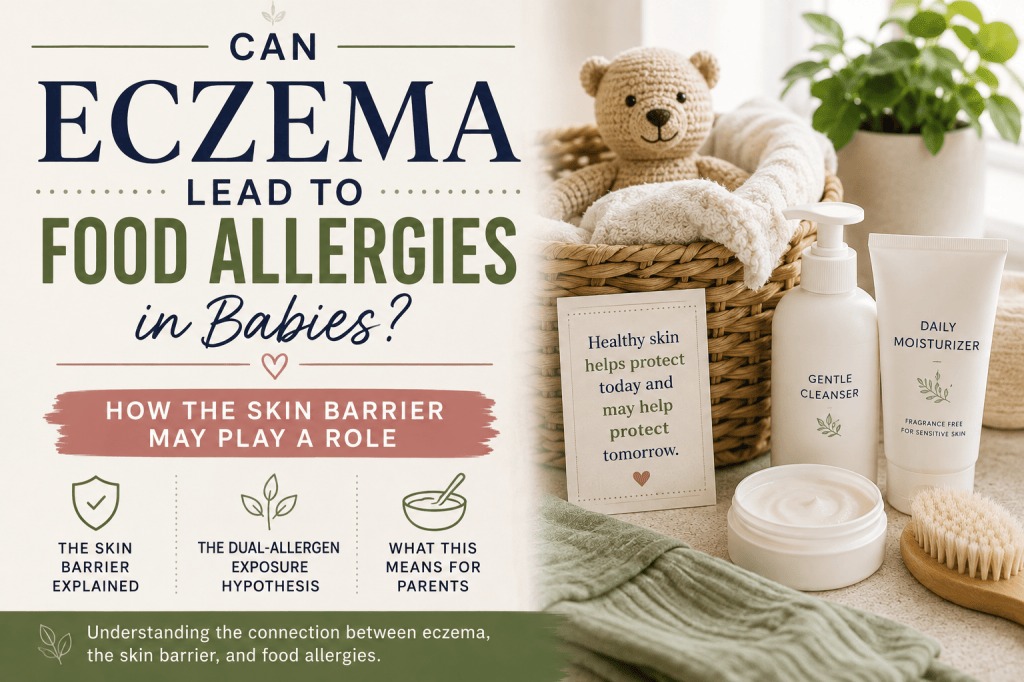
One of the most common skin conditions associated with cow’s milk protein allergy (CMPA) is eczema, also called atopic dermatitis.
Eczema causes the skin to become inflamed, dry, and irritated. Some babies have only a few rough patches, while others develop widespread areas of redness that seem impossible to keep under control.
Research has shown that babies with food allergies—including CMPA—are more likely to develop eczema than babies without food allergies. However, it’s important to remember that most babies with eczema do not have a milk allergy.
This is why pediatricians look beyond the skin itself and consider whether digestive or feeding symptoms are also present.
What Does Eczema Look Like in Babies?
Infant eczema can appear differently from child or adult eczema.
Parents often notice:
- Dry, rough cheeks
- Red patches on the face
- Flaky skin
- Cracked skin
- Rough spots on the arms or legs
- Rash behind the knees
- Rash inside the elbows
- Persistent itching
Some babies rub their face against your shoulder, crib sheet, or your clothing because the skin feels irritated.
Others scratch constantly, especially while sleeping.
When eczema continues despite gentle skin care—or occurs alongside digestive symptoms—your pediatrician may investigate possible food allergies.
Can a Baby Have Only a Rash From Dairy?
Yes.
Not every baby with CMPA has severe digestive symptoms.
Some babies primarily develop:
- Eczema
- Persistent dry skin
- Facial rashes
- Itching
- Red cheeks
Others experience both skin and digestive symptoms together.
That’s why there’s no “one-size-fits-all” presentation of cow’s milk protein allergy.
Every baby is different.
When Skin Symptoms and Digestive Symptoms Happen Together
Pediatricians become more suspicious of CMPA when skin changes occur alongside symptoms like:
- Frequent reflux
- Mucus in the stool
- Blood in the stool
- Green poop
- Excessive fussiness
- Arching during feeds
- Poor weight gain
- Feeding discomfort
A rash by itself doesn’t diagnose CMPA.
But when several symptoms appear together, it becomes much more helpful in identifying the bigger picture.
👉 Related Article: Milk Allergy Baby Poop: Pictures, Colors, and What Each Type Could Mean
Could It Just Be Sensitive Baby Skin?
Absolutely.
Babies have incredibly delicate skin.
Many perfectly healthy babies develop temporary rashes from:
- Heat
- Drool
- Friction
- Laundry detergent
- Dry winter air
- Saliva around the mouth
These rashes often improve once the irritation is removed or with gentle moisturizing.
CMPA-related skin symptoms, on the other hand, tend to persist or repeatedly flare despite routine skin care.
What Will Your Pediatrician Look For?
If your baby develops an ongoing rash, your pediatrician will likely ask questions such as:
- When did the rash first appear?
- Does it seem to come and go?
- Is it itchy?
- Where is it located?
- Are there digestive symptoms?
- Is your baby gaining weight appropriately?
- Is there a family history of allergies or eczema?
Rather than focusing on the rash alone, they’ll evaluate your baby’s overall health and symptom pattern.
Sometimes they may recommend a supervised dairy elimination trial if they believe CMPA is a possibility.
Should You Stop Eating Dairy Immediately?
Not necessarily.
Because many baby rashes are completely unrelated to food allergies, eliminating dairy without medical guidance may not improve the rash—and could make breastfeeding more challenging.
Instead:
- Continue documenting symptoms.
- Take pictures of the rash if it changes.
- Note when flare-ups occur.
- Discuss everything with your pediatrician.
The more complete the picture, the easier it is to determine whether dairy may be contributing.
When Should You Call Your Pediatrician?
Contact your pediatrician if your baby’s rash:
- Continues getting worse
- Covers large areas of the body
- Appears infected
- Develops blisters
- Causes significant discomfort
- Occurs with poor feeding
- Occurs with poor weight gain
- Is accompanied by blood in the stool or persistent vomiting
Prompt evaluation is especially important if your baby appears ill or the rash develops suddenly with swelling or difficulty breathing, which requires immediate emergency care.
A Helpful Reminder
One of the biggest mistakes parents make is assuming every rash must be caused by dairy.
While CMPA can absolutely affect the skin, many infant rashes have completely different causes.
Your goal isn’t to diagnose the rash yourself.
It’s to observe patterns, document changes, and partner with your pediatrician to determine the most likely explanation.
That thoughtful approach gives your baby the best chance of receiving the right diagnosis and treatment.
Frequently Asked Questions
Can dairy really cause a rash in breastfed babies?
Yes. Cow’s milk protein allergy (CMPA) can cause skin symptoms in some breastfed babies because tiny amounts of milk protein can pass into breast milk. However, not every rash is caused by dairy, which is why your pediatrician will consider your baby’s complete symptom pattern.
What does a milk allergy rash usually look like?
There isn’t one specific “milk allergy rash.” Many babies develop:
- Dry, rough patches
- Red cheeks
- Eczema-like skin
- Persistent redness
- Itchy skin
- Flare-ups that don’t seem to improve
Because these symptoms overlap with many common skin conditions, they’re only one piece of the diagnostic puzzle.
Can dairy cause eczema?
It can.
Some babies with CMPA develop eczema, while many babies with eczema do not have a food allergy at all.
Your pediatrician will evaluate other symptoms before determining whether dairy may be contributing.
How long after removing dairy will a rash improve?
If dairy is the cause, improvement usually isn’t immediate.
Many parents begin noticing gradual improvement over 2–4 weeks, although some babies take longer as the inflammation in their skin and digestive tract settles.
👉 Read: When Will My Baby Feel Better After Going Dairy-Free? (What to Expect Week by Week)
Should I stop eating dairy if my baby develops a rash?
Not without discussing it with your pediatrician first.
Many infant rashes are completely unrelated to food allergies, so it’s important to identify the true cause before making significant dietary changes.
Can baby acne and CMPA happen at the same time?
Yes.
A baby may have ordinary newborn acne while also developing digestive symptoms or eczema related to CMPA.
That’s why pediatricians evaluate each symptom individually instead of assuming every skin change has the same cause.
Final Thoughts
Few things are more stressful than watching your baby’s skin become red, dry, or irritated.
Naturally, you begin asking yourself:
“Is it something I’m eating?”
“Is it baby acne?”
“Will it ever go away?”
The reassuring news is that most infant rashes are temporary, and many improve with time, gentle skin care, or treatment once the underlying cause is identified.
If your baby’s rash is accompanied by reflux, unusual stools, feeding difficulties, or excessive fussiness, it may be worth discussing cow’s milk protein allergy with your pediatrician.
Whether the answer turns out to be CMPA or something entirely different, paying attention to patterns—and asking questions—is one of the best things you can do for your baby.
Remember, you’re not expected to have all the answers.
You’re simply learning alongside your little one, one day at a time.
❤️ Call to Action
Did your baby’s rash end up being related to dairy—or was it something else?
I’d love to hear your story.
👇 Leave a comment below and share what symptoms your baby had, what your pediatrician found, and what ultimately helped. Your experience could provide comfort to another parent searching for answers.
Medical Disclaimer
This article is for educational purposes only and should not replace medical advice from your pediatrician or another qualified healthcare professional. Every baby is different, and rashes have many possible causes. Seek immediate medical attention if your baby develops difficulty breathing, swelling of the lips or face, or a rapidly spreading rash.




Leave a comment