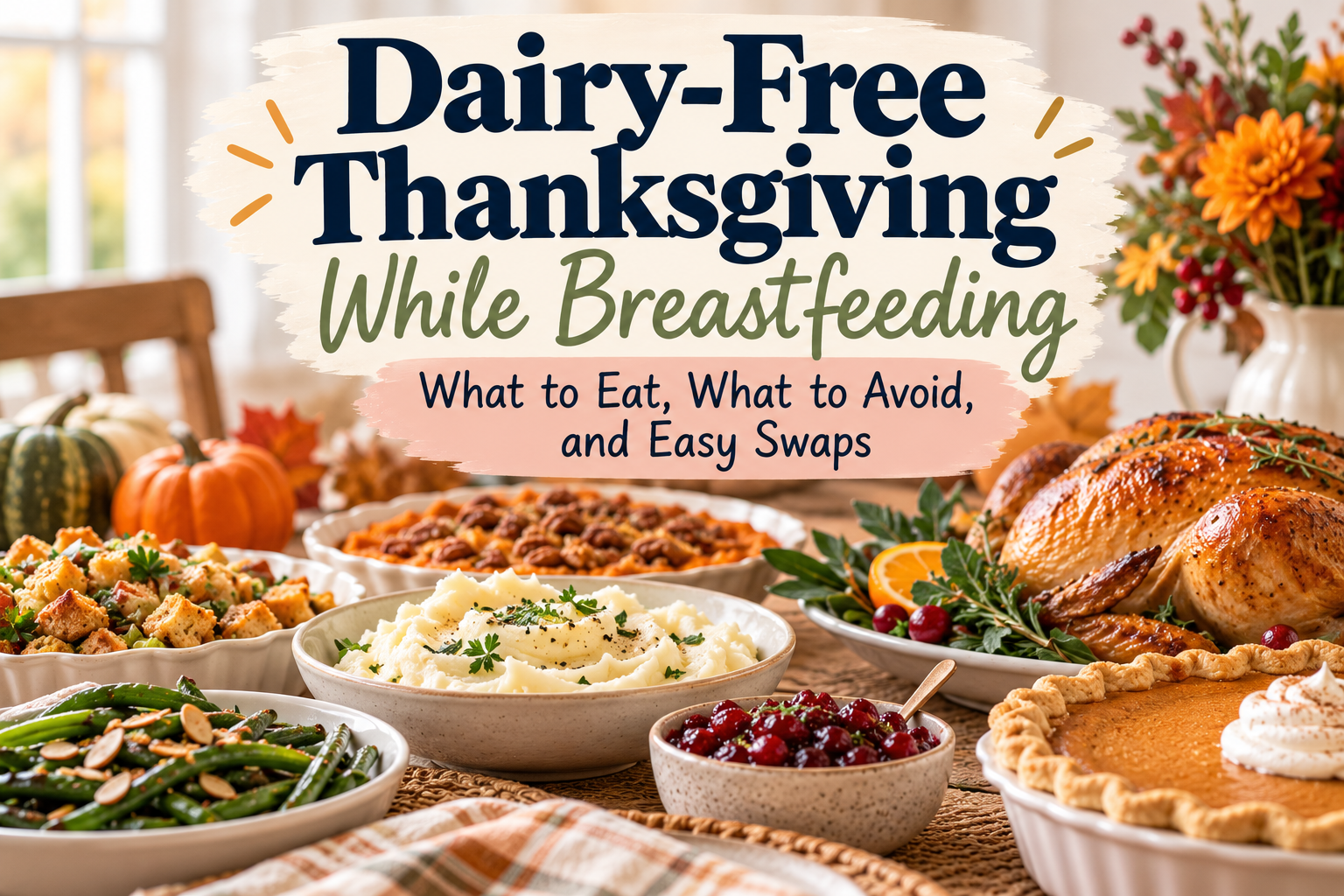
Thanksgiving is supposed to be a day filled with delicious food, family traditions, and time spent around the table. But when you’re breastfeeding a baby with cow’s milk protein allergy (CMPA) and following a dairy-free diet, the holiday can suddenly feel a little more complicated. Foods you’ve enjoyed your entire life, like buttery mashed potatoes, creamy casseroles, and homemade pumpkin pie, may no longer fit into your diet without a few adjustments.
If this is your first Thanksgiving since eliminating dairy, you might be wondering what you can safely eat, which traditional dishes contain hidden milk ingredients, and whether you’ll need to prepare an entirely separate meal. The thought of explaining your dietary restrictions to family members or carefully inspecting every dish can take some of the excitement out of the holiday.
Fortunately, you don’t have to give up your favorite Thanksgiving traditions just because you’re dairy-free. With a little preparation and a few simple ingredient swaps, you can enjoy a delicious holiday meal without feeling like you’re missing out. This guide will walk you through common Thanksgiving foods, hidden sources of dairy, easy substitutions, and practical tips for navigating holiday gatherings while breastfeeding.
Why Some Breastfeeding Moms Need a Dairy-Free Thanksgiving
Cow’s milk protein allergy occurs when a baby’s immune system reacts to proteins found in cow’s milk. In some cases, sensitive breastfed babies may react to cow’s milk proteins from their mother’s diet that pass into breast milk. When this happens, a pediatrician or allergy specialist may recommend a temporary dairy-elimination trial or a longer dairy-free diet if the allergy is confirmed.
However, it’s important to understand that not every breastfeeding mother needs to eliminate dairy, even if her baby has CMPA. Maternal dairy restriction should be based on the baby’s symptoms, diagnosis, and medical guidance rather than automatically recommended to everyone. If you’re currently following a dairy-free diet under your healthcare provider’s direction, maintaining those restrictions during Thanksgiving can help you stay consistent with your baby’s care plan.
One of the challenges of eating dairy-free during the holidays is that milk ingredients appear in many traditional dishes. Butter, cream, cheese, sour cream, and condensed milk are common ingredients in Thanksgiving recipes. Even dishes that seem naturally dairy-free may contain unexpected ingredients added for flavor or texture.
The good news is that many Thanksgiving favorites can be prepared without dairy while still tasting remarkably similar to the originals. You may even discover new recipes that become part of your family’s holiday traditions.
If you’re new to eliminating dairy while breastfeeding, understanding which ingredients to avoid can make everyday meals and holiday gatherings much easier. Our complete dairy-elimination guide for breastfeeding moms walks you through getting started, recognizing hidden dairy ingredients, and navigating the transition.
What Thanksgiving Foods Are Naturally Dairy-Free?
Before focusing on everything you need to avoid, it’s helpful to recognize how many Thanksgiving foods can already fit into a dairy-free diet. Fresh vegetables, fruits, plain potatoes, rice, herbs, and unseasoned meats do not naturally contain cow’s milk proteins. The ingredients used during preparation are usually what determine whether a finished dish is dairy-free.
Traditional roasted turkey, for example, can be dairy-free when prepared with olive oil, herbs, garlic, and seasonings instead of butter. Roasted sweet potatoes, steamed green beans, cranberry sauce, and fresh fruit are other possibilities. However, you should always confirm how a dish was prepared because recipes vary from household to household.
A Thanksgiving plate featuring roasted turkey, herb-seasoned potatoes, green beans, cranberry sauce, and a dairy-free dessert can be just as satisfying as a traditional holiday meal. The goal isn’t to eliminate everything familiar from your plate. It’s to find versions of the foods you love that work with your current dietary needs.
Hidden Dairy Ingredients in Thanksgiving Foods
Some Thanksgiving dishes obviously contain dairy, while others can be surprisingly difficult to identify. Mashed potatoes are often prepared with milk, cream, or butter. Green bean casserole traditionally uses condensed cream soup, which may contain milk ingredients. Stuffing sometimes includes butter or broth containing dairy, while dinner rolls may be made with milk or whey.
Even roasted turkey deserves a closer look. Some cooks rub butter beneath the skin before roasting, and certain pre-seasoned or prepared turkey products may contain milk-derived ingredients. Gravy can also contain butter, cream, or packaged mixes with milk ingredients.
Desserts are another common source of dairy. Traditional pumpkin pie frequently contains evaporated milk or sweetened condensed milk, while pecan pie recipes may include butter. Whipped cream, cheesecake, and many holiday cookies also contain dairy unless they’re specifically prepared with alternatives.
When checking packaged ingredients, look for terms such as milk, butter, cream, whey, casein, caseinate, and milk powder. In the United States, milk is a major food allergen that must be identified on applicable packaged food labels, but reviewing the complete ingredient list is still important.
Remember that lactose-free dairy products are not necessarily safe for a cow’s milk protein elimination diet. Lactose-free milk may still contain the proteins that trigger CMPA. The same concern applies to goat’s milk and sheep’s milk, which contain proteins that can cross-react with cow’s milk proteins.
Easy Dairy-Free Thanksgiving Food Swaps
One of the easiest ways to enjoy Thanksgiving while dairy-free is to modify traditional recipes rather than replace the entire menu. Most holiday dishes rely on dairy for richness, moisture, or texture, and those qualities can often be recreated using plant-based ingredients.
If you’re new to dairy-free cooking, start with a few familiar recipes and make one substitution at a time. You don’t need to experiment with every dish on Thanksgiving morning. Testing your favorite recipes ahead of time can help you find combinations that taste good and work with your family’s preferences.

Dairy-Free Mashed Potatoes
Mashed potatoes are one of the easiest Thanksgiving dishes to make dairy-free. Instead of regular butter, use a dairy-free buttery spread or olive oil. Replace cow’s milk with an unsweetened, unflavored plant-based milk that works for your dietary needs. Oat milk can create a creamy texture, while unsweetened soy milk is another option for families who aren’t avoiding soy.
For extra flavor, try adding roasted garlic, fresh chives, salt, and pepper. You can also reserve some of the potato cooking water to adjust the consistency without adding additional milk alternatives.
The most important thing is choosing an unsweetened product. Vanilla-flavored or sweetened plant milk can noticeably change the flavor of savory potatoes.
Dairy-Free Green Bean Casserole
Traditional green bean casserole often contains condensed cream of mushroom soup, making it unsuitable for a dairy-free diet unless the ingredients are changed. Fortunately, you can prepare a homemade mushroom sauce using olive oil or dairy-free butter, mushrooms, garlic, flour, broth, and unsweetened plant-based milk.
Cook the mushrooms until tender, stir in a little flour, and gradually add the broth and plant milk until the mixture thickens. Combine the sauce with cooked green beans and bake until heated through. If you enjoy crispy onions on top, check the package ingredients to confirm they’re dairy-free.
This version keeps the comforting flavor of a traditional casserole while allowing you to control exactly what goes into it.
Dairy-Free Sweet Potato Casserole
Sweet potato casserole is another Thanksgiving favorite that can easily be adapted. Instead of butter, use a dairy-free alternative or a small amount of coconut oil if you enjoy its flavor. Mashed sweet potatoes can be naturally creamy, so you may not need much additional liquid.
For the topping, consider chopped pecans, brown sugar, cinnamon, and a little dairy-free butter. If you prefer marshmallows, check the package ingredients for your dietary requirements.
Sweet potatoes are naturally flavorful, which makes this one of the easier holiday recipes to prepare without traditional dairy ingredients.
Dairy-Free Stuffing and Gravy
Stuffing recipes frequently include butter, but olive oil or dairy-free butter can work well when sautéing onions, celery, and herbs. The bread is equally important because some varieties contain milk, butter, or whey. Choose bread with ingredients that meet your dietary restrictions, and check the broth as well.
For gravy, use turkey drippings that haven’t been mixed with butter, along with broth and a thickener such as flour or cornstarch. Season with herbs, salt, and pepper. If you’re using packaged gravy, review the ingredients carefully because some mixes contain milk derivatives.
These substitutions allow you to keep two of the most familiar Thanksgiving side dishes on your plate without preparing completely different recipes.
Can You Have Dairy-Free Pumpkin Pie?
Yes! Pumpkin pie can absolutely be made without dairy, and it’s one of the holiday desserts worth experimenting with before Thanksgiving.
Traditional pumpkin pie usually contains evaporated milk or sweetened condensed milk, but many dairy-free recipes use coconut milk or another suitable plant-based alternative. The best substitute depends on the recipe because different milks contain different amounts of fat and water.
You’ll also need to check the pie crust. Some store-bought crusts contain butter or milk ingredients, while others are made with vegetable oils or shortening. Reading the ingredient list is the easiest way to determine whether a particular crust fits your diet.
If you’re attending Thanksgiving at someone else’s home, bringing your own dairy-free pumpkin pie can be a wonderful solution. You’ll know exactly what’s in your dessert, and other guests may enjoy trying it too.
For more ideas on replacing everyday dairy ingredients, read our guide to the best dairy-free substitutes for breastfeeding moms.
How to Handle Thanksgiving Dinner at Someone Else’s House
Eating dairy-free at home is one thing, but attending Thanksgiving dinner at someone else’s house introduces a different challenge. You may not know exactly how each dish was prepared, and family members may not understand the difference between avoiding lactose and avoiding cow’s milk protein.
The easiest approach is to communicate with your host before Thanksgiving Day. Explain that you’re currently avoiding dairy while breastfeeding under medical guidance and that ingredients such as butter, cream, cheese, and milk powder need to be excluded from the foods you eat. You don’t have to share every detail of your baby’s medical history, but giving your host a clear explanation can help prevent misunderstandings.
Consider asking about two or three dishes you would especially like to enjoy. For example, you might ask whether a portion of the mashed potatoes could be set aside before butter and milk are added, or whether the turkey will be prepared with olive oil instead of butter. Small adjustments can make a big difference without requiring the host to change the entire meal.
It’s also perfectly reasonable to bring a dish or two that you know you can eat. A dairy-free casserole, roasted vegetable dish, or homemade dessert gives you a reliable option and allows you to contribute something delicious to the gathering.
If you’re uncertain about a particular food, don’t feel obligated to eat it. Politely asking about ingredients or choosing something else is a practical part of managing a medically necessary elimination diet.
Many of the same strategies that make dining out easier while breastfeeding dairy-free can also help at holiday gatherings. Our guide to eating out dairy-free while breastfeeding explains how to ask about ingredients, communicate dietary restrictions, and make informed food choices when someone else is preparing your meal.
What About Cross-Contact With Dairy?
Cross-contact happens when an allergen is unintentionally transferred from one food or surface to another. For example, a serving spoon used in buttery mashed potatoes might accidentally be placed in a dairy-free vegetable dish.
The precautions needed depend on the individual allergy and the advice you’ve received from your healthcare professional. A breastfeeding parent’s elimination diet and a child’s direct food allergy exposure plan are not necessarily identical. If your baby has been diagnosed with CMPA, follow the specific instructions your healthcare team has provided for maternal dietary avoidance and for any foods your baby eats directly.
At a busy holiday gathering, simple habits can help reduce accidental ingredient mix-ups. Keep serving utensils with their designated dishes, use clean preparation equipment, and label foods when necessary. If you’re preparing dairy-free food for someone with a diagnosed milk allergy, carefully follow their allergy-management instructions.
Staying Nourished While Breastfeeding During the Holidays
When you’re breastfeeding and avoiding dairy, it’s important to think about what you’re including in your diet, not just what you’re removing. Dairy products are common sources of calcium and other nutrients, so a prolonged elimination diet may require additional meal planning.
Fortified plant-based beverages, certain leafy greens, beans, and other calcium-containing foods can help support a balanced diet. However, the nutritional content of dairy-free alternatives varies significantly between products, so checking nutrition labels is worthwhile.
Breastfeeding also increases the body’s need for several nutrients, including iodine and choline. If you’re avoiding dairy for an extended period, consider discussing your diet with a registered dietitian or healthcare professional to make sure you’re meeting your nutritional needs. Your provider may recommend calcium, vitamin D, or other supplements depending on your overall intake.
Thanksgiving itself doesn’t need to be nutritionally perfect. Enjoying a satisfying meal with a variety of foods is a reasonable goal, and you shouldn’t feel pressured to make every holiday dish fit an idealized eating plan.
Your Dairy-Free Thanksgiving Checklist
A little preparation can make the holiday much easier. Use this checklist during the week leading up to Thanksgiving so you can focus on enjoying the day instead of worrying about every ingredient.
One Week Before Thanksgiving
- Confirm your current dietary restrictions with your healthcare plan.
- Ask the host which dishes will be served.
- Identify foods that may contain hidden dairy.
- Choose one or two dairy-free dishes to prepare.
- Purchase dairy-free substitutes for your favorite recipes.
- Check packaged ingredients, including broth, bread, and dessert products.
The Day Before Thanksgiving
- Prepare any make-ahead dairy-free side dishes.
- Bake a dairy-free dessert if desired.
- Label dishes that need to remain dairy-free.
- Confirm any ingredient substitutions with your host.
- Pack snacks or an additional food option if you’re traveling.
On Thanksgiving Day
- Ask about ingredients when you’re unsure.
- Use clean serving utensils for dairy-free dishes.
- Enjoy the foods that fit your dietary needs.
- Keep your usual breastfeeding or pumping routine as practical.
- Focus on spending time with family rather than worrying about having a perfect meal.

Frequently Asked Questions About Dairy-Free Thanksgiving
Can I Eat Turkey While Breastfeeding Dairy-Free?
Yes, turkey itself does not naturally contain dairy. However, the preparation method matters. Turkey cooked with butter or a milk-containing seasoning may not fit a cow’s milk protein elimination diet. Ask how the turkey was prepared and check the ingredients of any packaged seasonings or marinades.
Is Thanksgiving Gravy Usually Dairy-Free?
Not always. Homemade gravy may be prepared using turkey drippings, broth, and flour, but some recipes include butter, cream, or milk. Packaged gravy mixes can also contain dairy ingredients. Check the recipe or product label before eating.
Can I Eat Butter if My Baby Has CMPA?
If your healthcare provider has instructed you to avoid cow’s milk proteins, regular butter generally isn’t suitable because it contains milk-derived components. Ghee and clarified butter may also contain residual milk proteins and should not automatically be considered safe for a milk-allergy elimination diet. Use an appropriate dairy-free substitute instead.
Do I Need to Avoid Dairy Forever While Breastfeeding?
Not necessarily. Many babies with CMPA develop tolerance over time, and maternal dietary restrictions should be reassessed with medical guidance. Your baby’s healthcare provider can help determine when a dairy reintroduction trial or another evaluation may be appropriate. Don’t make changes to a medically recommended elimination diet without discussing the plan with your healthcare team.
What if I Accidentally Eat Dairy on Thanksgiving?
If you accidentally consume dairy while following a maternal elimination diet, avoid assuming that your baby will necessarily have a reaction. Follow the guidance you’ve received from your healthcare professional, continue your usual feeding plan unless advised otherwise, and contact your baby’s clinician if concerning symptoms develop. Seek emergency medical care for signs of a severe allergic reaction.
Final Thoughts: You Can Still Enjoy Thanksgiving While Dairy-Free
Your first dairy-free Thanksgiving while breastfeeding may look a little different from previous years, but that doesn’t mean it has to be less enjoyable. With thoughtful ingredient swaps, a little communication, and a few reliable dishes you know you can eat, you can still enjoy many of the flavors and traditions that make the holiday special.
Remember that you don’t need to prepare an entirely separate Thanksgiving feast or spend the whole day worrying about food. Focus on finding a few favorite dishes that work for your diet, make adjustments where they’re needed, and give yourself permission to enjoy the celebration.
Being dairy-free may change a few ingredients on your Thanksgiving table, but it doesn’t have to change the joy of gathering around it.
Medical disclaimer: This article is for educational purposes only and is not a substitute for individualized medical advice. Maternal dairy elimination while breastfeeding should be guided by a qualified healthcare professional, particularly when cow’s milk protein allergy is suspected or diagnosed.


Leave a Reply