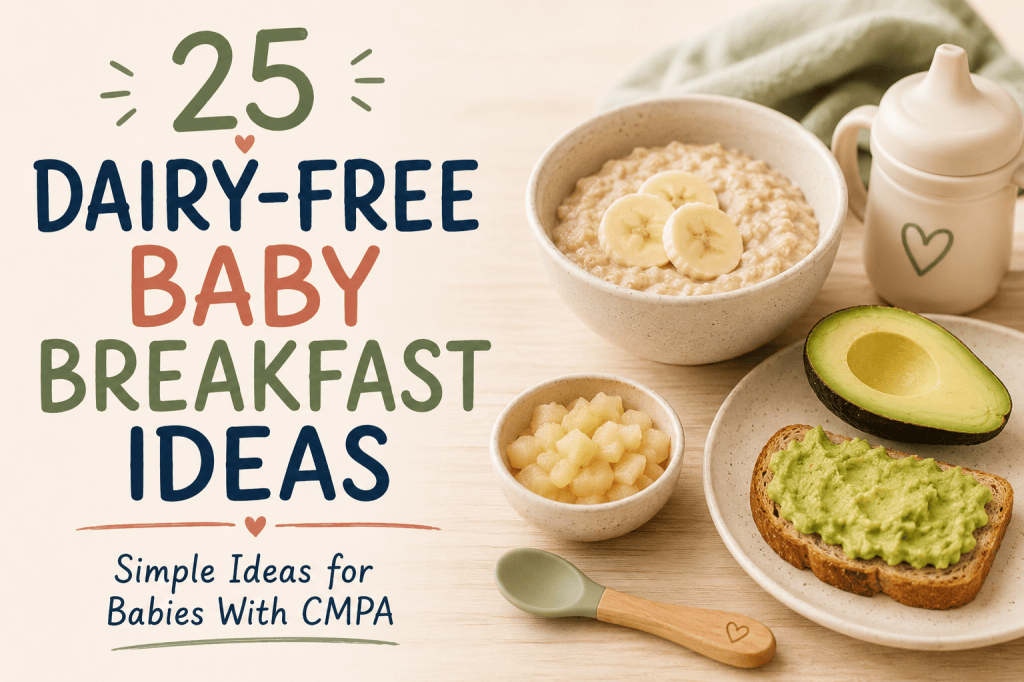
Breakfast used to be easy. Then your baby started solids, and if your baby has cow’s milk protein allergy, suddenly even something as simple as breakfast can bring up a dozen questions. Can they have oatmeal? What do you put on toast instead of butter? Does baby cereal contain milk? What about pancakes, yogurt, or eggs? And how are you supposed to make breakfast without turning every morning into a separate cooking project?
The good news is that breakfast is actually one of the easiest meals to make dairy-free. Fruit is naturally dairy-free. Oats are naturally dairy-free. Eggs don’t contain milk. Avocado doesn’t contain milk. Many breads and cereals can also be milk-free depending on their ingredients. Once you stop thinking about breakfast as something that needs milk, butter, cheese, or yogurt, there are a surprising number of options.
Below are 25 simple dairy-free breakfast ideas to help you get started. These aren’t meant to be a rigid meal plan, and not every idea will be appropriate for every baby. Your baby’s age, developmental readiness, food-allergy history, feeding skills, and ability to safely manage different textures all matter. Use the ideas that fit your baby and adapt them according to the feeding guidance you’ve received from your pediatrician or dietitian.
👉 New to solids with CMPA? Start with [CMPA and Starting Solids: What Parents Need to Know Before Baby’s First Foods].
First, Does Dairy-Free Mean Egg-Free?
No, and this causes a surprising amount of confusion. Eggs are not dairy. Dairy refers to foods made from the milk of mammals, such as cow’s milk. Eggs come from birds, so a baby who needs to avoid cow’s milk protein doesn’t automatically need to avoid eggs. However, egg is itself a common food allergen. If your baby hasn’t been introduced to egg yet, follow the allergen-introduction guidance you’ve received for your baby rather than assuming it’s appropriate simply because it’s dairy-free. The same principle applies throughout this list: dairy-free doesn’t automatically mean allergen-free.
1. Banana Oatmeal
Plain oatmeal is one of the easiest dairy-free breakfasts to customize. Cook the oats until they’re appropriately soft for your baby and mix in mashed banana for natural sweetness and a different texture. You don’t need cow’s milk, butter, or added sugar to make a simple bowl of baby oatmeal.
If you’re using packaged oatmeal or infant cereal rather than plain oats, continue checking the ingredient and allergen information. Don’t assume every cereal is milk-free simply because the basic grain itself doesn’t contain dairy.
2. Avocado Toast
Mash ripe avocado onto appropriately prepared toast for a simple breakfast that contains no dairy ingredients by itself. The part parents sometimes overlook is the bread. Some breads contain milk, whey, butter, or other dairy ingredients, so check the label on the specific bread you’re using.
👉 Not sure where milk can hide? Read [50 Hidden Sources of Dairy (Even Dairy-Free Moms Miss These)].
3. Scrambled Egg With Avocado
If egg has already been appropriately introduced and tolerated, scrambled egg and avocado can make an easy savory breakfast. Eggs don’t require butter or milk to be scrambled, so there’s no need to find a complicated dairy substitute. Prepare the egg and avocado in textures appropriate for your baby’s developmental stage.
This is also a good example of why CMPA doesn’t have to make your baby’s diet extremely restrictive. Avoiding cow’s milk protein still leaves an enormous variety of foods available.
👉 As solids become a bigger part of your baby’s diet, allergen avoidance isn’t the only thing to consider. Read [How to Make Sure Your Dairy-Free Baby Gets Enough Calcium] for practical ways to build calcium into a CMPA baby’s diet without cow’s milk.
4. Pear Oatmeal
Once plain oatmeal is established, changing the fruit can make essentially the same breakfast feel completely different. Soft or appropriately prepared pear can be mixed into oatmeal for another naturally dairy-free option.
This is one of the easiest strategies for busy mornings: keep the basic meal simple and rotate what you add to it. Banana oatmeal on Monday can become pear oatmeal on Tuesday and peach oatmeal later in the week without requiring three completely different recipes.
5. Sweet Potato Mash
Breakfast doesn’t have to look like traditional breakfast food. Appropriately cooked sweet potato can make a perfectly reasonable morning food for a baby. It’s naturally dairy-free and doesn’t require butter to make it taste good.
Adults tend to divide foods into breakfast, lunch, and dinner categories. Babies don’t know those rules. Sweet potato at 8:00 in the morning is still sweet potato.
6. Banana and Avocado Mash
Banana and avocado can be combined into a soft, creamy mixture without yogurt, milk, or another dairy ingredient. It’s a simple option when you’re looking for something that doesn’t require much preparation.
And that’s something worth remembering throughout this list: baby breakfast doesn’t need to be complicated to be useful. Sometimes two ordinary foods are enough.
👉 Wondering whether egg is okay with cow’s milk protein allergy? Read [Can Babies With CMPA Eat Eggs? Dairy vs. Egg Allergy Explained].
7. Dairy-Free Pancakes
Pancakes can absolutely be made without cow’s milk, but this is where ingredient checking becomes more important. Traditional recipes and packaged mixes may contain milk, buttermilk, butter, whey, or other dairy ingredients.
If you’re making pancakes for your baby, choose a recipe that fits all of your baby’s dietary needs and prepare it in a developmentally appropriate way. There’s no need to add lots of sugar simply because pancakes are traditionally considered a sweet breakfast.
8. Peach Oatmeal
Soft or appropriately prepared peach is another easy oatmeal addition. Using different fruits is one of the simplest ways to expose your baby to different flavors without requiring you to learn a completely new breakfast every morning.
As your baby’s feeding skills develop, the texture of the fruit and oatmeal can change too. Follow age-appropriate feeding and choking-safety guidance rather than relying on age alone to determine texture.
9. Egg With Soft-Cooked Vegetables
If egg has already been introduced and tolerated, appropriately prepared vegetables can be served alongside it for a savory breakfast. There’s no requirement that vegetables wait until lunch or dinner.
This can also be a convenient way to use food you’ve already prepared. If you have appropriate vegetables left from another family meal, breakfast doesn’t necessarily require starting over from scratch.
10. Mashed Beans and Avocado
Beans and avocado may not look like a traditional American breakfast, but your baby doesn’t care. Appropriately prepared beans paired with avocado can provide another dairy-free savory option without needing cheese, butter, or a plant-based imitation of either one.
Your Baby Doesn’t Need “Breakfast Food”
This is one of the most useful mindset changes when feeding a baby with CMPA. Adults tend to think breakfast means cereal, yogurt, pancakes, toast, eggs, milk, or cheese. Remove dairy from that picture and breakfast can initially feel surprisingly limited.
But your baby doesn’t have those expectations. Beans can be breakfast. Sweet potato can be breakfast. Avocado can be breakfast. Appropriately prepared leftovers can be breakfast. Fruit and oatmeal can even be dinner.
Instead of asking, “What dairy-free breakfast food can I buy?”, try asking, “What foods does my baby already safely eat that could work this morning?” That one change can make feeding a dairy-free baby considerably easier.
11. Banana Pancakes
Banana-based pancakes are popular because they can be simple and easy for families to customize. Recipes vary, though, and many contain egg or other common allergens. Choose a recipe appropriate for foods your baby has already introduced according to their feeding plan, and make sure the finished texture and serving method are developmentally appropriate.
12. Apple Oatmeal
Appropriately prepared apple can add another flavor to plain oatmeal. This is another breakfast that doesn’t require a dairy substitute at all. Depending on your baby’s diet and developmental stage, a small amount of spice such as cinnamon may also add flavor without requiring added sugar.
13. Toast With Mashed Banana
If your baby can safely manage appropriately prepared toast, mashed banana makes a simple dairy-free topping. As with avocado toast, the banana isn’t the ingredient you need to worry about from a CMPA standpoint—the bread is where hidden milk ingredients may appear.
Check the label every time you purchase packaged foods because recipes can change.
14. Avocado and Egg Toast
For babies who already tolerate egg and can safely manage the appropriate texture, avocado and egg can be combined with milk-free bread for another easy breakfast. It’s also the kind of meal that can grow with your child instead of being something you only prepare during the purée stage.
15. Oatmeal With Berries
Appropriately prepared berries can completely change an ordinary bowl of oatmeal. Depending on your baby’s feeding abilities, they may be mashed, softened, or otherwise prepared in an age-appropriate way.
Again, the goal isn’t to create 25 elaborate recipes. It’s to show how many breakfasts can come from a relatively small group of naturally dairy-free foods.
Do You Need Dairy-Free Yogurt, Cheese, and Milk?
Once parents remove cow’s milk, it’s natural to start looking for replacements. Dairy-free yogurt, plant milk, dairy-free cheese, and dairy-free butter can seem like the obvious solution. Some of these products may eventually fit into your child’s diet, but dairy-free doesn’t automatically mean nutritionally equivalent.
Plant-based products can vary considerably in protein, fat, calcium, vitamin D, added sugar, and other nutrients. Ordinary plant-based beverages also shouldn’t simply replace breast milk or an appropriate infant formula during infancy. If your baby requires formula because of CMPA, work with their healthcare professional rather than choosing a grocery-store plant beverage yourself.
You also don’t need to replace every dairy product to feed your baby well. Building meals around naturally dairy-free foods is often simpler.
16. Egg and Sweet Potato
If egg is already a tolerated food, pairing it with appropriately prepared sweet potato gives you another simple savory breakfast. Neither food requires cheese or butter to make it work.
17. Oatmeal With Pear and Banana
Once your baby has safely eaten individual foods, combining familiar flavors can add variety. Pear and banana can both work well with plain oatmeal and make an easy breakfast from ingredients you may already have in the kitchen.
18. Avocado With Soft Fruit
Avocado doesn’t have to be served on toast. Pair it with appropriately prepared fruit for a breakfast that requires very little cooking and no specialty dairy-free products.
19. Beans With Sweet Potato
Appropriately prepared beans and sweet potato make another savory combination that demonstrates just how unnecessary traditional “breakfast food” can be for babies.
20. Egg With Fruit
If egg is safely established in your baby’s diet, it can simply be paired with appropriately prepared fruit. Not every breakfast needs a recipe, and not every plate needs six ingredients.
21. Dairy-Free French Toast
French toast can be prepared without cow’s milk, but both the bread and the other ingredients need to fit your baby’s dietary needs. Egg is also a common allergen, so this isn’t automatically appropriate simply because the recipe is dairy-free.
If the necessary foods have already been introduced and tolerated, a dairy-free version can provide another way to use milk-free bread.
22. Oatmeal With Appropriately Prepared Nut or Seed Butter
Nut and seed products require extra attention because of both allergy considerations and choking safety. Whole nuts and thick spoonfuls of nut butter can be choking hazards for young children. If peanut, tree nuts, or seeds are being introduced, follow current age-appropriate preparation guidance and any individualized allergen-introduction advice you’ve received for your baby.
CMPA doesn’t automatically mean your baby should avoid these foods, but an existing food allergy is a good reason to discuss other allergen introductions with your baby’s healthcare professional.
23. Egg, Avocado, and Fruit
Sometimes the easiest breakfast is simply a few foods your baby already safely eats. If egg has been established, pairing it with avocado and appropriately prepared fruit can create a varied breakfast without a recipe or dairy substitute.
24. Leftover Dairy-Free Dinner
Yes, leftovers count. If last night’s meal contains foods your baby already eats safely and can be served in an appropriate texture, there’s nothing wrong with serving part of it for breakfast. This can make mornings considerably easier, especially when the family meal was already dairy-free.
25. Oatmeal With Whatever Fruit You Have
This may eventually become your secret weapon. Banana, pear, peach, apple, berries, or another appropriately prepared fruit can turn the same basic oatmeal into different breakfasts throughout the week. It isn’t exciting enough to become a viral recipe, but when you’re tired and feeding a baby every single day, easy matters.
The Simplest CMPA Breakfast Formula
When you don’t know what to make, don’t immediately start searching for another complicated dairy-free recipe. Start with foods your baby already safely eats and think about combining a grain or starch, fruit or vegetable, and an appropriate source of protein or fat. Not every breakfast needs to perfectly fit that formula, and nutrition should be considered across your baby’s overall diet rather than judged from one meal. But it gives you an easy place to start. Most importantly, don’t feel like you have to recreate every dairy-containing breakfast with a dairy-free imitation. Build meals around foods that never needed dairy in the first place. That’s often cheaper, simpler, and much less stressful.
How to Make Dairy-Free Baby Breakfast Easier During a Busy Week
Having 25 breakfast ideas is helpful, but the real challenge isn’t coming up with something your baby could eat. It’s figuring out what to serve at 7:00 in the morning when you’re tired, your baby is hungry, and you don’t have time to make three different meals.
The easiest solution is to stop thinking about breakfast one morning at a time. Instead, keep a few basic dairy-free foods available that can be mixed and matched throughout the week. Oatmeal, fruit, avocado, appropriately prepared eggs if they’re tolerated, sweet potato, beans, and milk-free bread can create a surprising number of combinations without requiring a complicated meal plan.
You also don’t need seven completely different breakfasts every week. Babies don’t require the kind of menu variety adults sometimes expect. Repeating familiar foods while gradually introducing variety can make mornings much more manageable.
A Simple Dairy-Free Breakfast Rotation
Instead of planning a completely different recipe every day, you could rotate between a few basic types of breakfast. One morning might be oatmeal with fruit, another might be avocado toast, another could include egg and sweet potato if those foods are tolerated, and another could simply use appropriately prepared leftovers from dinner. Then change the smaller pieces. Banana oatmeal becomes pear oatmeal. Avocado toast becomes banana toast. Egg with avocado becomes egg with soft vegetables. This gives your baby exposure to different foods without requiring you to reinvent breakfast every morning. And if your baby happily eats banana oatmeal several times in one week? That’s okay too.
👉 Not sure which dairy-free milk is actually appropriate for your baby’s age? Read [What Milk Can a Baby With CMPA Drink? Formula, Breast Milk & Milk Alternatives Explained].
Prepare Ingredients Instead of Entire Meals
Meal prep doesn’t necessarily mean spending Sunday afternoon making 14 individual containers of baby food. Sometimes it’s much easier to prepare a few ingredients that can be used in different ways. For example, you might have cooked sweet potato ready in the refrigerator, several fruits available, avocado, prepared oats, and another food your baby already tolerates. Those ingredients can be combined differently depending on the morning. This also helps reduce food waste. Instead of buying specialty ingredients for one Pinterest recipe your baby may refuse, you’re using foods that can often be eaten by the rest of the family too.
👉 Need more practical dairy-free meal ideas for yourself? Read [Dairy-Free Breastfeeding Meal Prep for Busy Moms (Save Time, Eat Well, Feel Better)].
You Don’t Need to Cook Separately for Your Baby
As your baby becomes developmentally ready to eat more of the foods your family eats, one of the biggest time-savers can be preparing meals with everyone in mind. If the family’s oatmeal starts dairy-free, your baby’s portion can be removed before other family members add ingredients that aren’t appropriate for them. The same idea can work with eggs, vegetables, potatoes, and many other foods. This doesn’t mean your baby should simply eat anything from your plate. Salt, added sugar, choking hazards, allergens, texture, and other age-appropriate feeding considerations still matter. But you don’t necessarily need an entirely separate CMPA kitchen. Since you’re already accustomed to preparing dairy-free foods while breastfeeding, you may discover that your baby can eventually share appropriately prepared versions of many foods you’re already eating.
Hidden Dairy at Breakfast: Where Parents Get Caught
Whole foods such as banana and avocado are easy. Packaged breakfast foods are where things can become more complicated. Milk ingredients can appear in foods that don’t necessarily look dairy-heavy. Depending on the product, parents may encounter milk in breads, pancake mixes, waffles, muffins, cereals, breakfast bars, biscuits, pastries, instant oatmeal, prepared potatoes, and other convenience foods. That doesn’t mean every product in those categories contains milk. It means you need to check the specific product rather than relying on what the food normally contains. Even products you’ve purchased before deserve another look occasionally because manufacturers can change ingredients.
👉 For a deeper look at unexpected milk ingredients, read [50 Hidden Sources of Dairy (Even Dairy-Free Moms Miss These)].
Learn the Milk Ingredients That Matter
After you’ve been dairy-free for a while, words like milk, whey, casein, butter, cream, cheese, and yogurt probably jump off an ingredient label immediately. If you’re in the United States, milk is one of the major food allergens that must be identified on packaged foods under federal allergen-labeling requirements. Still, reading the complete ingredient information remains a good habit, particularly when you’re feeding a child with a diagnosed food allergy. One mistake parents sometimes make is relying entirely on the front of the package. Words such as “natural,” “organic,” or “plant-based” don’t tell you everything you need to know about whether a particular food fits your baby’s allergy plan. Turn the package around and read the actual label.
What About “May Contain Milk”?
This becomes especially relevant once you begin buying more packaged foods for your baby. A precautionary statement such as “may contain milk” is different from milk being intentionally listed as an ingredient. These statements generally relate to the possibility of unintended allergen cross-contact during manufacturing. Whether your baby should eat products carrying precautionary milk statements depends on their individual allergy history and the advice you’ve received from their healthcare professional. Don’t assume “may contain” automatically means the same thing as “contains milk,” but don’t assume it’s automatically appropriate for your baby either.
👉 Read [“May Contain Milk” vs “Made in a Facility”: What Dairy-Free Breastfeeding Moms Need to Know] for a complete explanation.
Do You Need Special CMPA Baby Products?
Probably fewer than you think. There’s a growing market for foods labeled vegan, plant-based, dairy-free, allergen-friendly, and free-from. Some of these products can be extremely useful, especially when you’re looking for convenient options. But CMPA doesn’t mean every food your baby eats needs to come from a specialty section of the grocery store. Bananas don’t need a dairy-free label. Neither do potatoes, avocados, plain beans, fruits, vegetables, and many other ordinary foods. Building most meals around simple foods can also make ingredient checking easier because there are fewer ingredients to investigate. Specialty products can provide convenience. They don’t need to become the foundation of your baby’s entire diet.
Is Oatmeal Safe for Babies With CMPA?
Plain oats don’t inherently contain cow’s milk protein, which is one reason oatmeal appears so many times on our breakfast list. However, prepared oatmeal products and flavored varieties can contain additional ingredients, so check the specific package you’re using. You’ll also need something appropriate to prepare the oatmeal with. Depending on your baby’s age and feeding plan, follow the preparation instructions and guidance you’ve received rather than automatically substituting an ordinary plant beverage for cow’s milk. Remember that during infancy, breast milk or an appropriate infant formula continues to play an important nutritional role as complementary foods are introduced.
What About Butter on Toast?
Traditional butter is a dairy product, so it isn’t appropriate when cow’s milk protein needs to be avoided. But toast doesn’t require butter. Avocado, mashed fruit, or another appropriate topping your baby safely eats may work without requiring a butter substitute at all. There are also dairy-free spreads available, but ingredients and nutritional profiles vary. This brings us back to one of the central ideas of this article: you don’t have to replace every dairy food with a product pretending to be dairy. Sometimes the easiest replacement for butter is simply choosing a different topping.
What About Cheese at Breakfast?
Cheese is another food parents often miss once babies start eating scrambled eggs, toast, breakfast sandwiches, or other family foods. Traditional cheese contains cow’s milk protein and would need to be avoided if your baby’s CMPA plan requires cow’s milk avoidance. Plant-based cheeses exist, but they’re not all nutritionally alike. Some contain relatively little protein and may primarily function as a flavor or texture addition. There’s nothing inherently wrong with using an appropriate dairy-free alternative if it fits your baby’s diet. Just don’t assume that replacing dairy cheese with plant-based cheese provides exactly the same nutrition.
Should I Buy Dairy-Free Baby Yogurt?
Plant-based yogurts are another category where label comparison becomes useful. Different products may be based on soy, coconut, oats, nuts, or other ingredients, and their nutritional profiles can vary considerably. Some may also contain other common allergens. If you’re considering using plant-based yogurt regularly, especially as a major substitute for dairy yogurt, ask your pediatrician or pediatric dietitian whether the product fits your baby’s nutritional needs. You don’t need yogurt simply because it seems like a traditional baby breakfast food.
What If My Baby Also Can’t Have Soy?
CMPA doesn’t automatically mean your baby needs to avoid soy. However, some babies may have additional food allergies or may have been advised to avoid soy based on their individual symptoms and medical history. If your baby does need to avoid both dairy and soy, you’ll have fewer packaged alternatives available, but many of the whole-food breakfasts we’ve discussed remain options because they never contained either ingredient in the first place. This is another reason a simple-food approach can make life easier.
👉 If you’re unsure about soy, read [Do I Have to Cut Out Soy Too While Dairy-Free Breastfeeding? (What Most Moms Don’t Know)].
What If My Baby Refuses Breakfast?
You lovingly prepare avocado toast. Your baby drops it. You make oatmeal. They turn their head. You offer banana. Apparently banana has personally offended them today. This can be frustrating, especially when CMPA already makes you feel like your choices are limited. But babies don’t necessarily eat predictable amounts from meal to meal, and food acceptance can take time. A refusal doesn’t automatically mean your baby dislikes the food forever, and it doesn’t necessarily mean something is wrong. Continue following your baby’s feeding cues and the guidance you’ve received from their healthcare professional. The goal isn’t to make your baby finish a predetermined amount. It’s to continue giving them opportunities to learn about food.
Don’t Measure Success by How Much Food Gets Eaten
Especially early in complementary feeding, meals are about more than calories. Your baby is learning how food feels in their mouth, how to move it around, how different textures work, how to pick food up, and what different flavors taste like. Some mornings they’ll eat more. Other mornings it may seem like the floor ate most of breakfast. That doesn’t make breakfast unsuccessful. Over time, those tiny experiences add up to something much bigger: your baby learning how to eat. And CMPA doesn’t need to take that experience away from them.
Does a Dairy-Free Baby Need Special Nutrition?
Removing cow’s milk protein doesn’t mean your baby can’t have a nutritionally balanced diet, but as solids become a larger part of what your baby eats, it’s worth paying attention to the nutrients that dairy foods often provide. Calcium and vitamin D usually get the most attention, but protein, healthy fats, iron, iodine, vitamin B12, and other nutrients also matter during growth and development. The goal shouldn’t simply be to find a dairy-free version of every dairy food. Instead, think about your baby’s overall diet across the day and week. A pediatrician or pediatric dietitian can be especially helpful if your baby has multiple food restrictions, relies heavily on specialty dairy-free products, has growth concerns, or needs to remain dairy-free for an extended period.
What About Calcium and Vitamin D?
Parents often associate calcium almost entirely with cow’s milk, but dairy isn’t the only possible source. Depending on your baby’s age and foods they safely eat, calcium can come from a variety of foods and appropriately fortified products. The amount your baby needs changes with age, so if cow’s milk protein needs to remain excluded, ask your baby’s healthcare professional whether their current diet provides enough. Vitamin D deserves similar attention. Recommendations during infancy can depend on whether your baby is breastfed, formula-fed, or receiving a combination. Don’t assume that removing dairy means you should independently start or increase a supplement. Ask your pediatrician what your baby needs based on their individual feeding situation.
Don’t Forget Iron
Iron is particularly important as babies begin complementary foods. Depending on what your baby safely tolerates, iron can come from foods such as meats, beans, lentils, iron-fortified cereals, and other appropriate foods. Pairing iron-rich plant foods with foods containing vitamin C can also help support iron absorption.
This is another reason I wouldn’t build every breakfast around fruit alone. Fruit is fantastic, but over time your baby’s diet should become increasingly varied. Breakfast can be an opportunity to include oats, egg if tolerated, beans, appropriately prepared nut or seed products when suitable, or other foods that contribute something different nutritionally.
Protein and Healthy Fats Without Dairy
Cheese and yogurt are convenient sources of protein and fat, but they’re certainly not the only ones. Depending on your baby’s age, allergy history, and foods already safely introduced, options may include eggs, beans, lentils, meat, fish, avocado, and appropriately prepared nut or seed products. You don’t need to calculate the nutritional value of every spoonful your baby eats. Think about variety over time. If breakfast was mostly oatmeal and fruit, lunch and dinner can contribute different nutrients. One meal doesn’t need to accomplish everything.
A Simple Week of Dairy-Free Baby Breakfasts
If you’re looking at the 25 ideas above and still thinking, “Okay, but what am I actually supposed to make tomorrow morning?”, here’s what a simple week could look like. This isn’t a prescribed meal plan, and foods should only be used when they’re appropriate for your baby’s developmental stage and allergy history.
- Monday: Banana oatmeal with avocado
- Tuesday: Egg with sweet potato and soft fruit, if egg is tolerated
- Wednesday: Avocado toast with appropriately prepared fruit
- Thursday: Pear oatmeal with a safely established protein or fat source
- Friday: Dairy-free pancakes with mashed fruit
- Saturday: Beans, avocado, and sweet potato
- Sunday: Leftover dairy-free family food or oatmeal with whatever fruit needs to be used
Notice that there isn’t anything particularly fancy here. That’s intentional. You don’t need seven Pinterest-worthy breakfasts every week. You need foods your baby can safely eat, reasonable nutritional variety, and meals you can realistically prepare.
👉 Need ideas beyond breakfast? See [What Can My Baby Eat With CMPA? A Complete Dairy-Free Baby Food List] for a much bigger list of foods, meals, and ingredients to consider.
What About Breakfast When You’re Away From Home?
Breakfast at home becomes easier once you know which foods work. Traveling, eating at a restaurant, visiting grandparents, or sending breakfast to daycare can be trickier because you don’t control every ingredient.
For packaged foods, keep reading labels just as you would at home. For restaurant or prepared foods, don’t assume something is dairy-free because the basic version normally would be. Scrambled eggs, oatmeal, toast, pancakes, potatoes, and other breakfast foods can be prepared with butter, milk, cream, cheese, or other dairy ingredients. If your baby has a diagnosed food allergy, make sure anyone responsible for feeding them understands the allergy and the plan you’ve received from their healthcare professional. Saying “no dairy” may not be enough for someone who doesn’t realize whey, casein, butter, or other milk ingredients also count.
When Does Breakfast Get Easier?
Probably sooner than it feels right now. In the beginning, every ingredient can feel like another thing to research. But eventually you’ll build a mental list of foods and products your family regularly uses. You’ll know which bread you normally buy, which oatmeal works, which breakfasts your baby enjoys, and which ingredients you need to double-check.
You’ll also become more comfortable adapting ordinary family food rather than searching for something labeled specifically for babies with CMPA. That’s when dairy-free feeding starts feeling less like a special diet you have to constantly manage and more like simply feeding your child.
And remember that CMPA itself may change as your baby grows. Many children eventually develop tolerance to cow’s milk protein, although the timing varies and dairy should be reassessed according to the guidance you’ve received from your baby’s healthcare professional.
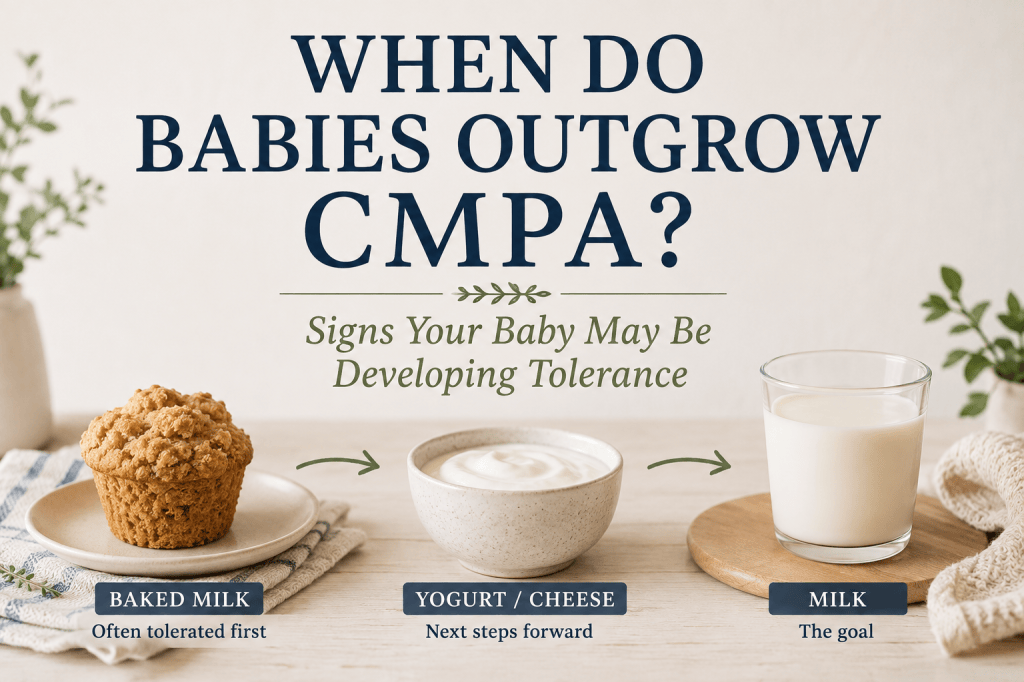
👉 Wondering what the future may look like? Read [When Do Babies Outgrow CMPA? Signs Your Baby May Be Developing Tolerance].
Frequently Asked Questions About Dairy-Free Baby Breakfasts
What Can a Baby With CMPA Eat for Breakfast?
There are many naturally dairy-free options. Depending on your baby’s developmental stage, allergies, and foods already introduced, breakfast might include oatmeal, fruit, avocado, sweet potato, beans, eggs if tolerated, milk-free toast, appropriately prepared nut or seed products, or combinations of these foods. Your baby doesn’t need specialty CMPA breakfast foods.
Can Babies With CMPA Eat Oatmeal?
Plain oats don’t inherently contain cow’s milk protein, but packaged oatmeal and flavored cereals can contain additional ingredients. Check the specific product and prepare it according to age-appropriate feeding guidance. If a recipe calls for milk, don’t automatically replace breast milk or infant formula with an ordinary plant beverage without considering your baby’s age and nutritional needs.
Can Babies With CMPA Eat Eggs?
CMPA doesn’t automatically mean a baby is allergic to egg because eggs are not dairy. Egg is, however, a separate common food allergen. Follow the allergen-introduction guidance appropriate for your baby, particularly if they already have a diagnosed food allergy.
Can Babies With CMPA Eat Bread?
Some breads are milk-free and others contain dairy ingredients, so check the label on the specific bread you’re buying. Ingredients can also change over time, which is why it’s worth continuing to check even after you’ve found a product that previously worked.
Can Babies With CMPA Have Pancakes?
They can potentially have pancakes made without cow’s milk protein if the other ingredients are appropriate for them. Traditional pancake recipes and mixes may contain milk, buttermilk, whey, or butter, so don’t assume pancakes are automatically dairy-free.
Can Babies With CMPA Have Dairy-Free Yogurt?
Some plant-based yogurts may fit into a dairy-free diet, but products vary considerably in ingredients and nutrition. They may also contain other common allergens. If you’re using plant-based yogurt regularly as a replacement for dairy yogurt, discuss nutritional considerations with your pediatrician or dietitian.
What Can I Put on Toast Instead of Butter?
Depending on what your baby safely eats, options might include mashed avocado, mashed banana, another appropriately prepared fruit, or other age-appropriate toppings. You don’t necessarily need to purchase a dairy-free butter substitute.
Can I Give My Baby Oat Milk Instead of Cow’s Milk?
Ordinary oat milk and other plant-based beverages shouldn’t simply replace breast milk or an appropriate infant formula during infancy. If your baby has CMPA and needs formula, work with their healthcare professional to determine an appropriate option. Recommendations change as children get older, so ask your pediatrician what beverage is suitable for your child’s age and nutritional needs.
Do I Need to Make Every Meal Dairy-Free?
If your baby needs to avoid cow’s milk protein, the food served to your baby should follow the allergy plan you’ve been given. That doesn’t necessarily mean every member of the household must avoid dairy. Some families find it easiest to make the base of family meals dairy-free and allow other family members to add dairy separately.
When Can My Baby Try Dairy Again?
Starting solids doesn’t automatically mean it’s time to reintroduce cow’s milk protein. When and how dairy should be reassessed depends on your baby’s type of CMPA, previous reactions, age, and medical history.
👉 Read [When Can I Try Dairy Again While Breastfeeding? What Moms Need to Know About Reintroduction] and [What Is the Milk Ladder? A Simple Guide for Parents of Babies With CMPA].
Final Thoughts
Feeding a baby with CMPA can make breakfast seem much more complicated than it really needs to be. When you remove yogurt, cheese, butter, and cow’s milk from the picture, it’s easy to focus on everything your baby can’t have. But there are still an enormous number of ordinary foods available.
Oatmeal, fruit, avocado, sweet potato, beans, eggs when appropriate, milk-free bread, vegetables, and foods from last night’s dinner can all become breakfast. You don’t need an expensive collection of specialty dairy-free products, and you certainly don’t need to prepare an elaborate recipe every morning.
Start with foods your baby already safely eats. Add variety gradually. Continue checking packaged-food labels. Pay attention to nutrition across the whole diet rather than obsessing over a single meal. Most importantly, remember that breakfast doesn’t have to look like breakfast.
Sometimes banana oatmeal is enough. Sometimes it’s eggs and avocado. And sometimes it’s leftover sweet potato because that’s what you have in the refrigerator.
Simple counts.
You May Also Enjoy
👉 CMPA and Starting Solids: What Parents Need to Know Before Baby’s First Foods
👉 50 Hidden Sources of Dairy (Even Dairy-Free Moms Miss These)
👉 Do I Have to Cut Out Soy Too While Dairy-Free Breastfeeding? (What Most Moms Don’t Know)
👉 “May Contain Milk” vs “Made in a Facility”: What Dairy-Free Breastfeeding Moms Need to Know
👉 When Do Babies Outgrow CMPA? Signs Your Baby May Be Developing Tolerance
👉 What Is the Milk Ladder? A Simple Guide for Parents of Babies With CMPA
👉 When Can I Try Dairy Again While Breastfeeding? What Moms Need to Know About Reintroduction
Medical Disclaimer
The information in this article is intended for educational and informational purposes only and isn’t a substitute for individualized medical, nutritional, or feeding advice. Babies differ in developmental readiness, nutritional needs, allergy history, and ability to safely manage different foods and textures.
If your baby has diagnosed or suspected cow’s milk protein allergy or another food allergy, work with your child’s pediatrician, allergist, pediatric dietitian, or another qualified healthcare professional when making decisions about food avoidance, allergen introduction, dairy alternatives, supplements, formula, and dairy reintroduction.
Always prepare foods in developmentally appropriate ways and follow established infant-feeding and choking-safety guidance. Do not intentionally introduce a food that has previously caused an allergic reaction unless your child’s healthcare professional has advised that doing so is appropriate.
Seek urgent medical care for potentially serious or rapidly developing allergic symptoms. Never delay or disregard professional medical advice because of information you have read on this website.




Leave a comment