
Quick Answer
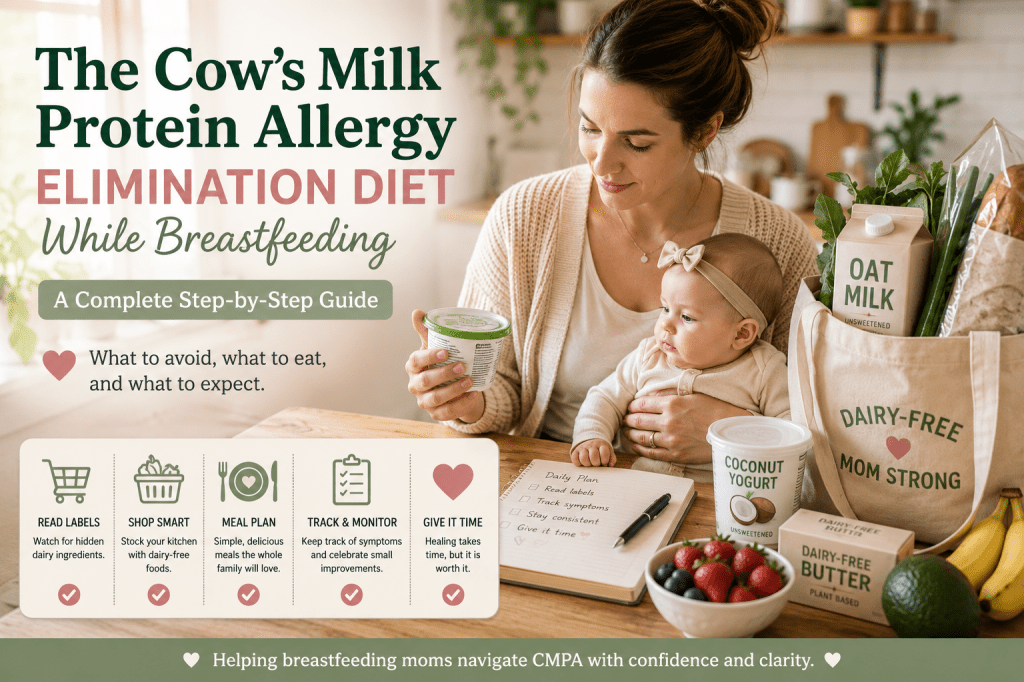
If your pediatrician recommends a dairy elimination diet while you’re breastfeeding, the goal is to remove all sources of cow’s milk protein from your diet so you can determine whether your baby’s symptoms improve. This includes obvious dairy products like milk, cheese, yogurt, and butter, as well as many packaged foods that contain hidden milk ingredients. Although it may feel overwhelming at first, most parents find the process becomes much easier after the first couple of weeks.
“I Left the Pediatrician Feeling Overwhelmed.”
For many breastfeeding moms, the appointment goes something like this. Your pediatrician listens carefully. Reviews your baby’s symptoms. Then says:
“I’d like you to try eliminating dairy for a few weeks.”
And suddenly your mind fills with questions. Can I still have coffee? What about chocolate? Is bread okay? How do I know if something contains dairy? What am I supposed to eat now? If you’ve felt that way, you’re not alone. Starting a dairy-free diet can feel intimidating. The good news is that once you understand what to look for—and stock your kitchen with a few reliable foods—it becomes much more manageable than most parents expect.
Why Is Dairy Removed?
Cow’s milk protein allergy isn’t caused by lactose. It’s caused by proteins naturally found in cow’s milk. After you eat dairy, tiny amounts of these proteins can pass into your breast milk. For babies with CMPA, those proteins may trigger inflammation that leads to symptoms like:
- Reflux
- Feeding discomfort
- Mucus in the stool
- Blood in the stool
- Eczema
- Excessive fussiness
Removing dairy allows your pediatrician to evaluate whether your baby’s symptoms improve when those proteins are no longer present.
👉 Read: How Is Cow’s Milk Protein Allergy Diagnosed in Breastfed Babies? What Parents Can Expect
Step 1: Remove the Obvious Sources
The easiest place to begin is with foods that obviously contain dairy. These include:
- Milk
- Cheese
- Butter
- Yogurt
- Ice cream
- Cream
- Sour cream
- Cottage cheese
- Half-and-half
Replacing these foods is often simpler than parents expect because most grocery stores now carry a wide variety of dairy-free alternatives.
👉 Looking for the best places to buy dairy-free foods? Check out our guide to the best grocery stores for dairy-free breastfeeding moms.The Best Grocery Stores for Dairy-Free Breastfeeding Moms: Where to Find the Best Products, Prices, and Selection
Step 2: Learn to Read Ingredient Labels
This is where many parents are surprised. Even foods that don’t seem like dairy products may contain milk proteins. Some ingredients to watch for include:
- Casein
- Whey
- Milk solids
- Milk powder
- Butterfat
- Lactalbumin
- Curds
Reading labels becomes second nature after a little practice, but it’s one of the most important skills you’ll develop during an elimination diet.
👉 If your baby is eventually ready to reassess dairy, read [What Is the Milk Ladder? A Simple Guide for Parents of Babies With CMPA] to understand one approach healthcare professionals may discuss for dairy reintroduction.
Step 3: Stock Your Kitchen Before You Start
One of the best ways to make the transition easier is to prepare before your first dairy-free week. Consider stocking up on foods like:
- Fresh fruit
- Vegetables
- Chicken
- Turkey
- Rice
- Potatoes
- Eggs (if tolerated)
- Oat milk
- Coconut yogurt
- Olive oil
- Avocados
- Nuts (if appropriate for your family)
Having easy dairy-free meals available helps reduce stress during the first few days.
‘👉 Already cut dairy but your baby still isn’t improving? Read [Baby Still Has CMPA Symptoms After Cutting Dairy? Here’s What to Check Next] before assuming you need to eliminate more foods.
Step 4: Watch for Hidden Sources of Dairy
Once you’ve removed obvious dairy products like milk and cheese, the next challenge is identifying hidden dairy ingredients. This is where many parents accidentally consume small amounts of cow’s milk protein without realizing it. Some packaged foods that may contain dairy include:
- Crackers
- Bread
- Granola bars
- Instant mashed potatoes
- Salad dressings
- Creamy soups
- Frozen meals
- Protein bars
- Flavored chips
- Some deli meats
👉 Cow’s milk elimination doesn’t automatically mean removing egg from your diet too. Read [Can Babies With CMPA Eat Eggs? Dairy vs. Egg Allergy Explained] for why milk and egg allergies need to be considered separately.
Always read the ingredient list, even on products you’ve purchased before. Manufacturers occasionally change recipes, and a food that was dairy-free last month may not be today.
👉 As your baby gets older, managing CMPA changes again. Read [CMPA and Starting Solids: What Parents Need to Know Before Baby’s First Foods] for help navigating the transition to complementary foods.
Step 5: Know the Ingredient Names
Food labels don’t always use the word milk. Some of the most common dairy-derived ingredients include:
- Casein
- Sodium caseinate
- Calcium caseinate
- Whey
- Whey protein concentrate
- Milk solids
- Nonfat dry milk
- Butterfat
- Lactalbumin
- Curds
- Ghee
The good news is that in many countries, including the United States, packaged foods must clearly identify milk as a major allergen. Still, learning these ingredient names can make grocery shopping much less stressful.
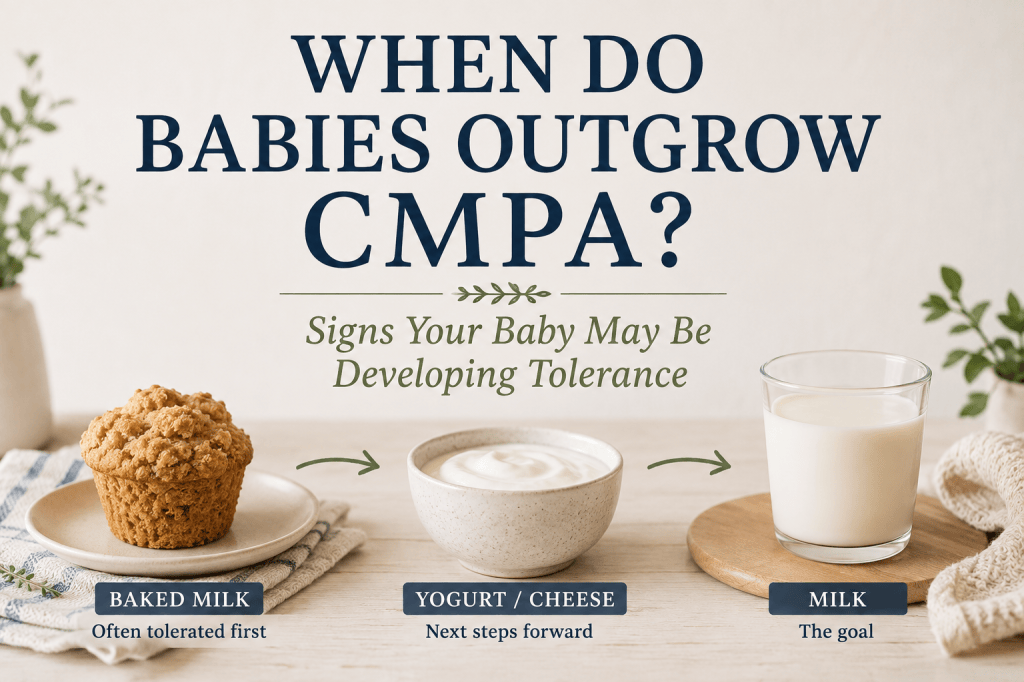
👉 Dairy elimination isn’t necessarily forever. Read [When Do Babies Outgrow CMPA? Signs Your Baby May Be Developing Tolerance] to learn how cow’s milk allergy can change as babies grow and how tolerance is eventually reassessed.
Step 6: Eating at Restaurants
Eating out doesn’t have to stop, but it does require a little planning. When ordering, don’t be afraid to ask questions such as:
- Is this cooked in butter?
- Does the sauce contain cream?
- Is there cheese mixed into this dish?
- Are the mashed potatoes made with milk?
- Is the bread brushed with butter?
- Can this meal be prepared without dairy?
Most restaurants are happy to answer questions or suggest modifications. Simple grilled meats, vegetables, rice, and salads (without creamy dressings) are often easier choices than heavily prepared dishes.
👉 If you’re wondering whether breastfeeding can continue or what your baby’s other milk options are, read [What Milk Can a Baby With CMPA Drink? Formula, Breast Milk & Milk Alternatives Explained].
Step 7: Make Sure You’re Getting Enough Nutrition
When you remove dairy, you’re also removing an important source of nutrients such as:
- Calcium
- Vitamin D
- Protein
- Iodine (depending on your diet)
Many breastfeeding mothers can meet these needs through dairy-free foods and fortified alternatives, but it’s worth discussing your diet with your healthcare provider or a registered dietitian if you’re concerned. Good dairy-free calcium sources include:
- Fortified oat milk
- Fortified soy milk (if soy is tolerated)
- Calcium-set tofu
- Sardines with bones
- Leafy green vegetables
- Fortified orange juice
👉 If eczema is part of your baby’s symptom picture, it’s worth understanding that the eczema-food allergy relationship may work in more than one direction. Read [Can Eczema Lead to Food Allergies in Babies? The Skin Barrier Connection] for an explanation of the emerging research.
Maintaining your own nutrition is just as important as helping your baby feel better.
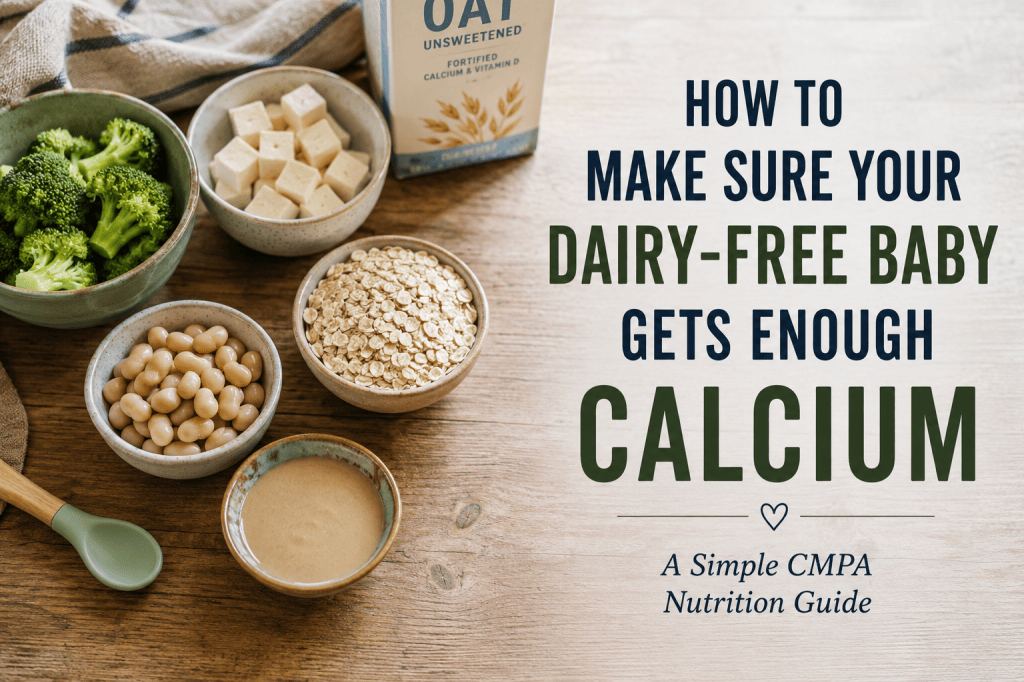
👉 If you’re breastfeeding while dairy-free, calcium matters for you too. [How to Make Sure Your Dairy-Free Baby Gets Enough Calcium] also explains why breastfeeding moms shouldn’t overlook their own calcium and vitamin D intake during elimination.
What About Soy?
This is one of the most common questions parents ask. The answer is: It depends. Some babies with CMPA also react to soy protein, while many do not. For that reason, most pediatricians do not recommend eliminating soy unless there’s a specific reason to suspect it’s contributing to symptoms or unless your healthcare provider advises it. Eliminating unnecessary foods can make breastfeeding much more difficult, so it’s usually best to make changes under medical guidance.
Common Mistakes During an Elimination Diet
It’s easy to feel discouraged if you don’t see immediate improvement. Some common mistakes include:
- Accidentally eating hidden dairy.
- Stopping the elimination diet too soon.
- Changing multiple foods at once, making it difficult to know what helped.
- Expecting symptoms to disappear overnight.
- Forgetting to track improvements.
Remember that healing often happens gradually. Small improvements over several weeks are common.
👉 Read: When Will My Baby Feel Better After Going Dairy-Free? (What to Expect Week by Week)
Meal Planning Made Simple
One of the easiest ways to stay consistent is to keep meals uncomplicated.
For breakfast:
- Oatmeal with fruit
- Dairy-free yogurt
- Eggs (if appropriate)
- Smoothies made with fortified oat milk
Lunch ideas:
- Grilled chicken salad
- Turkey sandwich on dairy-free bread
- Rice bowls with vegetables
- Leftovers from dinner
Dinner ideas:
- Baked salmon with roasted vegetables
- Chicken stir-fry
- Taco bowls
- Pasta with dairy-free sauce
- Slow cooker soups made without cream
Simple meals are often the easiest to maintain during the first few weeks.
Give Yourself Grace
The first grocery trip can feel overwhelming. You’ll probably spend more time reading labels than you ever have before. You might accidentally buy something with dairy. That’s okay. Very few parents navigate a dairy elimination diet perfectly from day one. The goal isn’t perfection. The goal is consistency over time. As your confidence grows, reading labels and choosing dairy-free foods becomes second nature.
Frequently Asked Questions
How long should I stay dairy-free before deciding whether it’s helping?
Every baby is different, but most pediatricians recommend giving the elimination diet at least 2–4 weeks before deciding whether it’s making a difference. Some symptoms, like fussiness or reflux, may begin improving sooner, while skin conditions such as eczema can take longer.
👉 Read: When Will My Baby Feel Better After Going Dairy-Free? (What to Expect Week by Week)
What if I accidentally eat dairy?
First, don’t panic. One accidental exposure doesn’t mean you’ve failed. Simply return to your dairy-free diet as soon as you realize what happened and continue monitoring your baby’s symptoms. If you’re unsure whether a food contained dairy, make a note of it in your symptom journal and discuss it with your pediatrician if needed.
Will my breast milk still be healthy if I stop eating dairy?
Absolutely. Breast milk continues to provide excellent nutrition for your baby while you’re following a well-balanced dairy-free diet. The key is making sure you continue getting enough calories, calcium, vitamin D, and other nutrients. If you have concerns, speak with your healthcare provider or a registered dietitian.
Can I eat foods labeled “may contain milk”?
This depends on your pediatrician’s recommendations and your baby’s individual situation. For most babies with non-IgE-mediated CMPA, the primary concern is ingredients that actually contain milk proteins, not necessarily foods that have a precautionary “may contain” statement due to shared manufacturing equipment. If your baby has a confirmed IgE-mediated milk allergy, your healthcare team may provide different guidance.
How will I know if the elimination diet is working?
Many parents notice that it isn’t one dramatic change. Instead, they start noticing several small improvements:
- Less reflux
- Calmer feedings
- Better sleep
- Fewer crying episodes
- Improved stools
- Happier diaper changes
- Gradual healing of eczema
Looking back over two or three weeks often reveals progress that isn’t obvious from one day to the next.
👉 Once your baby starts eating solids, dairy avoidance shifts from your diet to their food too. See [What Can My Baby Eat With CMPA? A Complete Dairy-Free Baby Food List] for a practical starting point.
🌿 Bonus: A Simple 7-Day Dairy-Free Starter Meal Plan
One thing missing from many elimination diet articles is a practical starting point. This isn’t a strict meal plan—it’s simply an example to help you get through the first week with less stress.
| Day | Breakfast | Lunch | Dinner | Snack |
|---|---|---|---|---|
| Monday | Oatmeal with berries | Turkey sandwich | Grilled chicken, rice & broccoli | Apple + peanut butter |
| Tuesday | Dairy-free yogurt & fruit | Chicken salad | Beef tacos (no cheese) | Trail mix |
| Wednesday | Smoothie with oat milk | Leftover tacos | Salmon, potatoes & green beans | Banana |
| Thursday | Eggs & toast | Rice bowl with chicken | Spaghetti with dairy-free sauce | Hummus & carrots |
| Friday | Overnight oats | Turkey wrap | Stir-fry with rice | Mixed fruit |
| Saturday | Avocado toast | Leftover stir-fry | Baked chicken & sweet potato | Rice cakes |
| Sunday | Oatmeal | Grilled chicken salad | Slow cooker soup | Dairy-free yogurt |
The goal isn’t perfection—it’s making the first week feel manageable.
Final Thoughts
Starting a dairy elimination diet can feel like learning a completely new way to eat. At first, every grocery trip takes longer. Every restaurant menu feels intimidating. Every ingredient label seems confusing. But here’s what nearly every parent eventually says:
“It got easier.”
Within a few weeks, you’ll probably know exactly which brands you trust, which meals your family enjoys, and which restaurants can accommodate your needs. More importantly, you’ll begin focusing less on what you’re giving up and more on how your baby is feeling. If your baby’s symptoms improve, every extra minute spent reading labels suddenly feels worthwhile. Remember, this isn’t about achieving a perfect diet. It’s about giving your pediatrician the best opportunity to determine whether cow’s milk protein is contributing to your baby’s symptoms. And if it is, you’re taking an important step toward helping your baby feel better.
❤️ Call to Action
What has been the hardest part of going dairy-free while breastfeeding? Was it grocery shopping? Reading ingredient labels? Finding snacks? Eating at restaurants?
👇 Share your tips and experiences in the comments. Your advice might make another mom’s first week much less overwhelming.
Medical Disclaimer
This article is for educational purposes only and should not replace advice from your pediatrician, physician, or registered dietitian. Do not begin or stop an elimination diet without discussing it with your healthcare provider, especially if your baby has severe symptoms or poor weight gain.





Leave a comment