After weeks or months of checking labels, avoiding milk ingredients, and finally getting comfortable with dairy-free life, you may hear your baby’s pediatrician, allergist, or dietitian mention something called the milk ladder.
And your first thought may be: What in the world is a milk ladder? Despite the name, there’s no actual ladder involved. The milk ladder is a structured approach that may be used for some children with cow’s milk protein allergy (CMPA) when healthcare professionals believe it’s appropriate to begin assessing whether they can tolerate certain forms of cow’s milk protein. Instead of going directly from complete dairy avoidance to drinking a glass of cow’s milk, some milk-ladder approaches gradually move through different forms of dairy. Foods containing extensively heated or baked milk may appear earlier, while less-heated forms of dairy appear later. But there’s something extremely important to understand before we go any further: The milk ladder is not appropriate for every baby with CMPA, and this article is not a milk-ladder protocol to follow at home. Your baby’s type of allergy, previous reactions, age, health, and medical history all matter. Some children may require specialist guidance or a medically supervised food challenge rather than attempting dairy reintroduction at home. This guide will help you understand what the milk ladder is, why healthcare professionals may use it, and what questions to ask your baby’s healthcare team.
👉 Not sure whether it’s time to think about dairy again? Read: [When Can I Try Dairy Again While Breastfeeding? What Moms Need to Know About Reintroduction].
Why Is It Called a Milk “Ladder”?
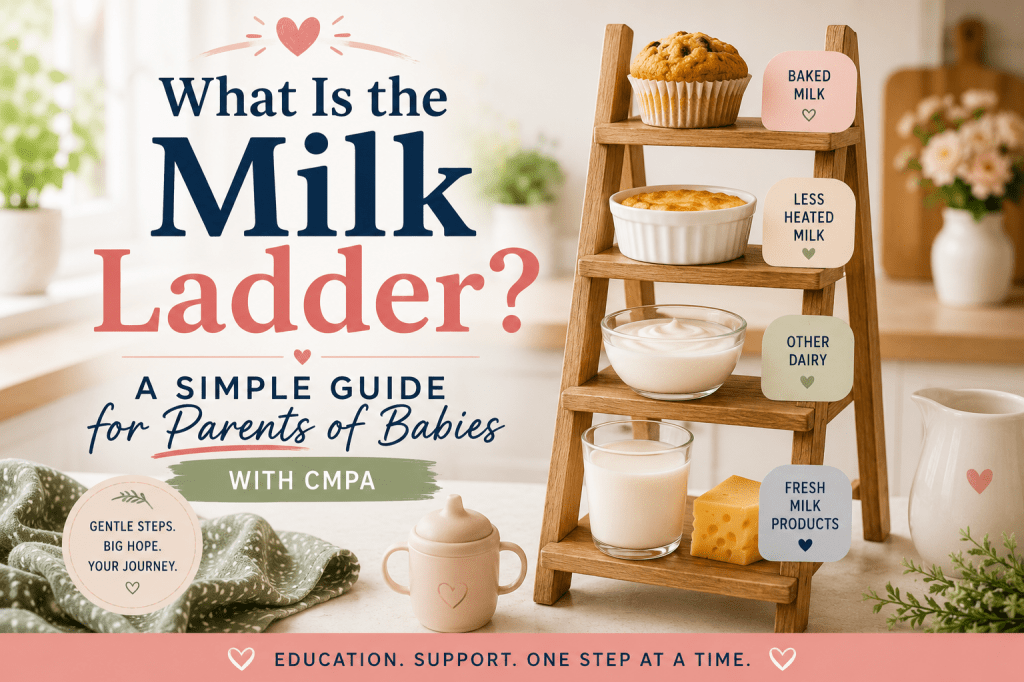
Think about an actual ladder. You don’t normally jump directly from the ground to the top. You move upward gradually. The milk ladder uses a similar concept. Different forms of cow’s milk protein can be introduced in a structured progression when a healthcare professional determines that doing so is appropriate. The earlier stages may involve foods where milk has been extensively heated as part of baking. Later stages may involve forms of milk that have been heated less. Eventually, depending on the particular ladder and the child’s tolerance, the progression may reach less-processed or fresh dairy. The exact foods and stages aren’t universal. Different healthcare systems and clinical resources may use different versions of a milk ladder. That’s another reason downloading a random graphic online and treating it as your baby’s personalized plan isn’t a good idea.
Why Would Baked Milk Come Before Fresh Milk?
This is probably the most confusing part when you first learn about milk ladders.
If your baby reacts to cow’s milk protein, wouldn’t all cow’s milk protein cause the same problem? Not necessarily. Heating can change the structure of some proteins found in cow’s milk. The amount of heating, how long the food is heated, and the food matrix surrounding the milk proteins can affect how those proteins are presented to the immune system. For some children with certain forms of cow’s milk allergy, extensively heated milk may be tolerated before less-heated or fresh milk. That doesn’t mean baking makes milk “dairy-free.” It doesn’t. And it certainly doesn’t mean a child who reacts to cow’s milk should automatically be given a muffin containing milk to see what happens. It simply helps explain why healthcare professionals may sometimes use progressively less-heated forms of milk when assessing tolerance.
Who Might Use a Milk Ladder?
Milk ladders are commonly discussed in connection with some forms of non-IgE-mediated cow’s milk allergy, where reactions tend to be delayed rather than occurring immediately after exposure. However, deciding whether a particular child is an appropriate candidate should be individualized. Your healthcare professional may consider things such as:
- Your baby’s original symptoms
- Whether reactions were immediate or delayed
- How severe previous reactions were
- Whether your baby has a confirmed CMPA diagnosis
- Your baby’s age
- Whether your baby is otherwise well
- Whether asthma or other allergic conditions are present
- Whether your baby has experienced serious reactions
- Whether other food allergies are involved
- Your baby’s feeding and growth history
The point isn’t simply: “My baby has CMPA, therefore we use the milk ladder.” The better question is: “Is a milk ladder an appropriate way to reassess cow’s milk tolerance for my baby?” That’s a conversation to have with the healthcare professional managing your baby’s allergy.
“My baby has CMPA, therefore we use the milk ladder.” The better question is: “Is a milk ladder an appropriate way to reassess cow’s milk tolerance for my baby?” That’s a conversation to have with the healthcare professional managing your baby’s allergy.
👉 Getting close to baby’s first foods? Read [CMPA and Starting Solids: What Parents Need to Know Before Baby’s First Foods] for our complete guide to navigating dairy avoidance, other allergens, and nutrition as solids begin.
What About IgE-Mediated Milk Allergy?
This distinction matters enormously. Some cow’s milk allergies are IgE-mediated. These reactions generally occur relatively quickly after exposure and may include symptoms such as hives, swelling, vomiting, coughing, wheezing, or other immediate allergic symptoms. Potentially serious reactions can occur. If your child has a diagnosed IgE-mediated milk allergy or has previously experienced an immediate reaction to milk, do not start a home milk ladder simply because you found one online. An allergist or other qualified healthcare professional should determine how and where cow’s milk should be reintroduced. In some situations, an oral food challenge may need to happen in a medically supervised setting.
What Is a Food Challenge?
You may hear the term oral food challenge while discussing CMPA. A food challenge is different from casually giving your baby dairy at home to see what happens. Under medical guidance, increasing amounts of a suspected allergen may be given according to a defined protocol while the child is observed for reactions. Food challenges can be used in allergy care to help determine whether a child currently tolerates a food. Whether your child needs a supervised food challenge, a home reintroduction plan, a milk ladder, or another approach depends on their individual situation. You shouldn’t have to figure that distinction out yourself. That’s what your baby’s healthcare team is there to help determine.
👉 Not sure whether your baby may be ready for this stage yet? Read [When Do Babies Outgrow CMPA? Signs Your Baby May Be Developing Tolerance] to understand how CMPA can change with age and how tolerance is eventually reassessed.
Is the Milk Ladder Used to Diagnose CMPA?
This is where terminology can get confusing. Elimination followed by reintroduction can play an important role in evaluating some suspected non-IgE-mediated cow’s milk allergies. A healthcare professional may recommend removing cow’s milk protein for a defined period and then reintroducing it to determine whether symptoms disappear and return. Later, a structured milk ladder may also be discussed when assessing whether a child who has been avoiding cow’s milk is developing tolerance. Those aren’t necessarily the exact same situation. If you’re still in the “Does my baby actually have CMPA?” stage, don’t assume that a milk ladder designed for later tolerance testing is automatically the right diagnostic approach.
👉 Still trying to understand the diagnosis? Read: [How Is Cow’s Milk Protein Allergy Diagnosed in Breastfed Babies? What Parents Can Expect].
Does the Breastfeeding Mom Follow the Milk Ladder?
This is another question that’s especially relevant to our readers.
If you’ve been the one avoiding dairy while breastfeeding, you might naturally assume that you climb the milk ladder by gradually eating different forms of dairy. But milk reintroduction through a breastfeeding parent’s diet and direct introduction to a baby or child aren’t equivalent. When a breastfeeding mother consumes cow’s milk, the baby’s exposure through breast milk differs from directly eating a food containing cow’s milk protein. The appropriate approach can depend on your baby’s age, symptoms, diagnosis, whether they’ve started solids, and the plan recommended by your healthcare professional. So don’t assume that a milk-ladder chart intended for a child should simply be applied to your own diet. Ask specifically: “Do you want me to reintroduce dairy into my diet, or are we assessing my baby’s direct tolerance to cow’s milk?” That one question can prevent a lot of confusion.
Not sure whether your baby may be developing tolerance yet? Read [When Do Babies Outgrow CMPA? Signs Your Baby May Be Developing Tolerance] for a closer look at how CMPA can change over time.
What If My Baby Hasn’t Started Solids Yet?
If your baby is exclusively breastfed and hasn’t started solid foods, a traditional food-based milk ladder may not be relevant yet. Your healthcare professional may have a different plan for assessing whether maternal dairy avoidance remains necessary. Once your baby begins eating solid foods, the situation changes because your baby can potentially be exposed to food proteins directly. This is one reason the transition to solids is such an important stage for families dealing with CMPA. Suddenly, you’re not only checking your food. You’re checking your baby’s food too.
The Milk Ladder Isn’t a Race
It’s easy to look at the word “ladder” and immediately focus on reaching the top.
But that’s not the goal. The goal is to determine what your child can tolerate safely. A child remaining at one stage longer than another child isn’t falling behind. And needing to stop a reintroduction doesn’t mean you’ve failed. Every baby’s history is different. The safest approach is the one developed around your baby, not the fastest milk ladder you saw another parent complete on social media. For now, the most important thing to remember is simple: Milk ladders can be useful tools, but they belong inside an individualized allergy-management plan.
What Does Moving Up the Milk Ladder Mean?
When parents first see a milk-ladder graphic, it can look surprisingly simple. Start here. Move to the next food. Keep going until your child reaches fresh milk. But there’s much more happening than simply checking foods off a list. The general concept is that some milk ladders progress from foods containing more extensively heated cow’s milk protein toward forms that are progressively less heated. Depending on the specific ladder recommended by a healthcare professional, the progression might conceptually move from:
Extensively baked milk-containing foods
Less extensively heated milk-containing foods
Other forms of dairy Less-heated or fresh cow’s milk products This is only an illustration of the concept. It is not a milk-ladder protocol, and the exact foods, stages, amounts, preparation methods, and timing can vary between established milk ladders and individual children. That’s why the version recommended by your child’s healthcare professional matters.
Why Does Preparation Matter So Much?
It might seem like milk is milk regardless of whether it’s inside a baked food or poured into a cup. But with a milk ladder, preparation can matter. Heating can alter certain milk proteins, and the way milk is incorporated into other foods may also affect how those proteins are encountered by the body. That means two foods that both contain cow’s milk aren’t necessarily equivalent for the purpose of a structured reintroduction. This is also why randomly choosing a food that “has a little milk in it” isn’t the same thing as following a professionally recommended milk ladder. The form of milk matters. The preparation matters. And your child’s history matters.
How Do You Know When Your Baby Is Tolerating a Stage?
If your healthcare professional has recommended a milk ladder, they should also explain what they want you to watch for and when they want you to progress.
Generally, you’re looking for whether your child’s previous symptoms return after cow’s milk protein is introduced. What that means depends on the symptoms your child had originally. For one baby, the relevant history may involve digestive symptoms. For another, it may involve skin symptoms. For another, feeding or reflux-like symptoms may have been part of the original concern. This is why keeping track of your baby’s normal baseline before beginning reintroduction can be useful. You’re not looking for every tiny variation in your baby’s day. You’re looking for meaningful changes that fit the pattern your healthcare team has asked you to monitor.
Don’t Expect Every Symptom to Be Instant
This is particularly important when discussing non-IgE-mediated CMPA. Delayed reactions don’t necessarily appear immediately after eating. That can make reintroduction confusing. A baby might seem completely fine after an exposure, only for relevant symptoms to appear later. That’s one reason healthcare professionals may recommend spending enough time assessing tolerance rather than racing through several stages. If you introduce multiple new dairy exposures too quickly, it can become much harder to determine what your baby actually tolerated.
What Happens If Symptoms Return?
If symptoms associated with your child’s previous cow’s milk reaction return during a healthcare-guided milk ladder, follow the stopping instructions your child’s healthcare professional gave you. Don’t keep increasing exposure simply because you want to finish the ladder. And don’t think of the reaction as a failure. It provides information. Your child’s healthcare professional may decide that your baby isn’t ready for that particular stage or form of dairy yet and may advise you about what to do next. Depending on the situation, that could mean returning to a previously tolerated diet, waiting before another assessment, or having your baby evaluated again. The exact next step should depend on the reaction and your child’s medical history.
👉 Have you seen symptoms after an accidental exposure before? Read: [Why Symptoms Return After Accidental Dairy Exposure (What to Expect)].
What If My Baby Tolerates a Stage?
That’s encouraging, but it doesn’t necessarily mean you should immediately jump to unrestricted dairy. Tolerating one form of cow’s milk protein doesn’t automatically prove that every other form will be tolerated. If you’re following a milk ladder recommended by your healthcare professional, continue according to the plan they provided. The purpose of the gradual progression is to learn what your child currently tolerates. Jumping several stages may remove much of the value of that structured approach.
Common Milk-Ladder Mistakes to Avoid
Mistake #1: Using a Random Milk Ladder From Social Media
A pretty infographic isn’t a medical assessment. Different milk ladders exist, and not every ladder is appropriate for every child. Use the resource recommended by the healthcare professional managing your child’s allergy.
Mistake #2: Starting Without Knowing What Type of Reaction Your Baby Had
A history of delayed digestive symptoms is very different from a history of rapid hives, swelling, breathing symptoms, or another immediate reaction. If you’re unsure what kind of allergy or reaction your baby has had, talk with your pediatrician or allergist before intentionally reintroducing milk.
Mistake #3: Trying to Reach the Top Quickly
This isn’t a challenge. There’s no benefit to finishing faster than another family. The goal is useful information and safe progression.
Mistake #4: Introducing Several New Foods at the Same Time
Suppose you begin dairy reintroduction on the same weekend that your baby tries three new foods. Then symptoms appear. Was it dairy? One of the new foods? Something unrelated? You may have made the situation unnecessarily difficult to interpret. When practical, keeping other major dietary changes limited during a planned reintroduction can make patterns easier to recognize.
Mistake #5: Assuming a Tiny Reaction Doesn’t Matter
If symptoms your healthcare professional told you to monitor appear, don’t ignore them simply because you want to keep progressing. Follow the plan you were given.
Mistake #6: Assuming One Successful Exposure Means CMPA Is Gone
Tolerance isn’t necessarily all-or-nothing. A child may tolerate one form of milk protein while still reacting to another. A successful step is encouraging. It’s not permission to skip the rest of the plan.
Should I Keep a Milk-Ladder Diary?
If your healthcare professional recommends a milk ladder, a simple record can make it much easier to remember what happened. You don’t need anything elaborate. You might note:
- Date
- Stage or exposure recommended by your healthcare professional
- Any relevant symptoms
- When symptoms appeared
- Stool changes, if relevant to your baby’s history
- Skin changes, if relevant
- Feeding changes
- Anything unusual that might affect interpretation, such as illness
This can be especially useful with delayed symptoms. Trying to remember exactly what happened several days ago while caring for a baby isn’t always easy. A few notes on your phone can give you something concrete to discuss at your next appointment.
What If My Baby Is Sick?
This is a good example of why following an individualized plan matters.
Illness can cause symptoms that overlap with things parents may be monitoring during food reintroduction. A stomach bug can change poop. A respiratory virus can cause coughing. A viral illness can affect feeding and behavior. A skin irritation may have nothing to do with food. If your baby becomes sick around the time you planned to begin or progress with reintroduction, contact the healthcare professional guiding you if you’re unsure whether to proceed. Trying to interpret a new food exposure while your baby is already unwell can become unnecessarily confusing.
What About Eczema?
Eczema and food allergy can overlap, but eczema also naturally improves and worsens for many reasons. Weather, skin-care products, illness, drooling, heat, and other environmental factors can affect a baby’s skin. If eczema was one of the symptoms involved in your baby’s CMPA evaluation, ask your healthcare professional what kind of skin change they consider meaningful during reintroduction. Otherwise, it’s very easy to blame every red patch on the last thing your baby ate.
What If We Can’t Get Past a Stage?
Don’t assume that means your child will never tolerate dairy. Tolerance to cow’s milk protein can change as children grow. Your healthcare professional may recommend waiting before reassessing or may want to review the reaction before deciding what happens next. The milk ladder isn’t something you need to “complete” by a particular deadline. Your baby’s safety and nutritional needs matter much more than reaching the top.
The Most Important Rule: Don’t Compare Babies
This may be one of the hardest parts. You’ll find parents online saying: “My baby finished the ladder immediately.” “My baby could eat baked milk but nothing else.” “My child didn’t tolerate dairy until much later.” Those stories may all be true. They still don’t tell you what will happen with your baby. CMPA isn’t identical in every child. Neither is the development of tolerance. Use other parents for support. Use your baby’s healthcare team for your baby’s medical plan. That distinction can save you a tremendous amount of unnecessary worry.
When Do Babies With CMPA Develop Tolerance to Dairy?
This is probably the question sitting underneath everything we’ve discussed:
When will my baby finally be able to have dairy? Unfortunately, there isn’t one age that applies to every child. Many children with cow’s milk allergy eventually develop tolerance, but the timing varies. The type of allergy, previous reactions, other allergic conditions, and your child’s individual medical history can all influence how their healthcare team approaches reassessment. Instead of focusing on a specific birthday or comparing your baby with another child, ask your healthcare professional: “When should we reassess whether my baby still reacts to cow’s milk protein?” That gives you a plan based on your child rather than an arbitrary timeline.
Is the Milk Ladder the Same as Just Trying Dairy Again?
No. Eating a random dairy-containing food and watching what happens isn’t the same thing as following a structured reintroduction plan. A healthcare-guided milk ladder is designed to introduce forms of cow’s milk protein in a particular progression when that approach is considered appropriate for the child. That’s very different from deciding: “My baby seems better, so let’s try some yogurt.” A structured approach makes it easier to understand what your child tolerates and where symptoms may appear.
👉 Before considering reintroduction, read: [When Can I Try Dairy Again While Breastfeeding? What Moms Need to Know About Reintroduction].
What Happens If My Child Reaches the Top of the Milk Ladder?
If your child progresses through the milk ladder recommended by their healthcare professional without relevant symptoms, that’s obviously encouraging. But don’t make assumptions about what comes next. Ask the healthcare professional guiding you whether your child can now eat unrestricted dairy and how they recommend keeping tolerated dairy foods in the diet. Your child’s individual plan still matters even after successful reintroduction.
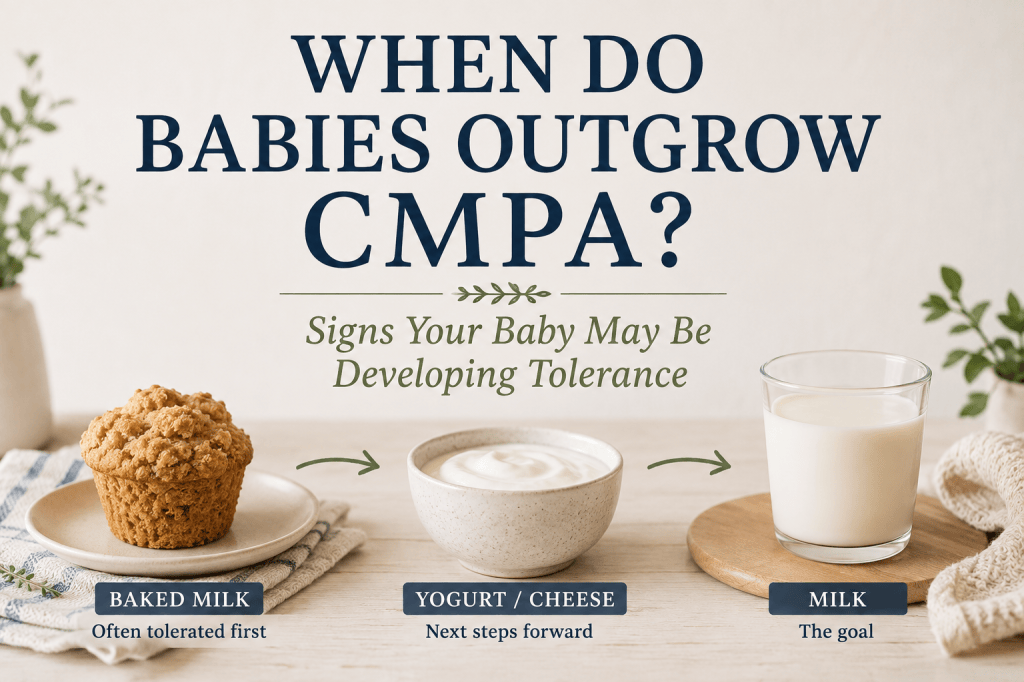
Does Tolerating Baked Milk Mean CMPA Is Gone?
Not necessarily.
This is an important distinction. A child may tolerate extensively heated milk while still reacting to less-heated forms of cow’s milk protein. That’s one of the reasons milk ladders progress through different forms rather than treating every dairy-containing food as identical. Tolerating an earlier stage can be good news without necessarily meaning your child is ready for unrestricted dairy.
Can Breastfeeding Continue During the Milk Ladder?
Breastfeeding can often continue while food allergies are being evaluated and managed.
However, whether you should continue avoiding dairy while your baby is progressing through a reintroduction plan is a separate question. Ask the healthcare professional managing your baby’s CMPA specifically what they want you to do with your own diet. Don’t assume that because your baby has started a milk ladder, you should immediately start eating dairy again too.
What Happens to Mom’s Dairy-Free Diet?
This is particularly important for breastfeeding moms who have spent months avoiding dairy.
You may eventually reach a point where your baby tolerates cow’s milk protein directly. Naturally, your next question becomes: Can I finally eat dairy again too? Potentially, yes, but follow the plan recommended for your situation. Maternal dairy consumption and direct dairy consumption by a baby aren’t identical exposures. Your healthcare professional can help determine when maternal restriction is no longer necessary. And when that day comes, you may discover that eating dairy again feels strangely unfamiliar after spending months checking every label. That’s normal.
Frequently Asked Questions About the Milk Ladder
How Many Steps Are in the Milk Ladder?
There isn’t one universal number. Different established milk ladders can contain different numbers of stages and use different foods. Use the version recommended by your child’s healthcare professional rather than assuming every ladder you find online is interchangeable.
What Age Can a Baby Start the Milk Ladder?
There isn’t one age that’s appropriate for every baby. Timing depends on the child’s diagnosis, allergy history, development, current health, and the clinical approach being used. Your pediatrician, allergist, or dietitian should advise you about when reassessment is appropriate.
Can I Start the Milk Ladder Without a Doctor?
You shouldn’t assume a home milk ladder is appropriate simply because your child has CMPA. This is particularly important if your child has experienced an immediate or potentially serious reaction. Discuss reintroduction with a qualified healthcare professional first.
Is the Milk Ladder Safe for IgE-Mediated Milk Allergy?
A home milk ladder may not be appropriate for a child with IgE-mediated cow’s milk allergy.
Children with immediate reactions may require specialist assessment and, in some cases, medically supervised food challenges. Follow your allergist’s recommendations rather than attempting reintroduction independently.
What If My Baby Reacts to the First Stage?
Follow the instructions provided by the healthcare professional guiding the reintroduction. Don’t continue increasing milk exposure simply to see whether symptoms get worse. A reaction can provide useful information about your baby’s current tolerance.
What If My Baby Tolerates One Stage but Not the Next?
That can happen. Tolerating one form of cow’s milk protein doesn’t necessarily mean your baby will tolerate every form. Your healthcare professional can advise whether your child should remain with previously tolerated foods, return to avoidance, wait before another attempt, or be reassessed.
Can I Make My Own Milk-Ladder Foods?
Some professionally recommended milk-ladder resources include standardized recipes because preparation can affect the amount and form of milk protein involved. Don’t substitute ingredients, recipes, cooking methods, or portions without checking the guidance you’ve been given.
What If My Baby Accidentally Eats Dairy During the Milk Ladder?
Make a note of what your baby ate and any symptoms you observe, and follow the advice provided by your baby’s healthcare team. An accidental exposure doesn’t necessarily provide the same information as the planned progression.
👉 Read: [Why Symptoms Return After Accidental Dairy Exposure (What to Expect)].
Starting Solids Changes the Dairy-Free Journey
For months, your biggest concern may have been keeping dairy out of your diet. Then your baby starts eating. Suddenly, everything changes. You’re checking baby-food labels. You’re thinking about allergens. You’re wondering whether a product contains milk. You’re trying to determine which foods are appropriate. And you’re potentially managing dairy avoidance while introducing an entire world of new foods. This is the natural next stage of the CMPA journey, and it deserves its own guidance.
👉 Next in this series: [CMPA and Starting Solids: What Parents Need to Know].
Final Thoughts
The milk ladder can sound intimidating when you first hear about it. But the basic idea is fairly simple.
For some children with cow’s milk protein allergy, healthcare professionals may use a structured progression through different forms of cow’s milk protein to assess developing tolerance. What makes it complicated is that not every milk allergy is the same. The approach that’s appropriate for a child with mild delayed symptoms may be completely inappropriate for a child with a history of immediate allergic reactions. That’s why the most useful thing you can take away from this article isn’t a particular food or stage. It’s this: The milk ladder should fit the baby, not the other way around. You don’t need to race another family. You don’t need to reach the top by a certain age. And you don’t need to figure this out from social media. Work with your baby’s healthcare team. Pay attention to your baby’s individual history. Keep track of what matters. And move forward at the pace that’s appropriate for your child.
The milk ladder should fit the baby, not the other way around. You don’t need to race another family. You don’t need to reach the top by a certain age. And you don’t need to figure this out from social media. Work with your baby’s healthcare team. Pay attention to your baby’s individual history. Keep track of what matters. And move forward at the pace that’s appropriate for your child.
You May Also Enjoy
👉 When Can I Try Dairy Again While Breastfeeding? What Moms Need to Know About Reintroduction
👉 How Is Cow’s Milk Protein Allergy Diagnosed in Breastfed Babies? What Parents Can Expect
👉 The Cow’s Milk Protein Allergy Elimination Diet While Breastfeeding: A Complete Step-by-Step Guide
👉 Signs Your Dairy-Free Diet Is Actually Working (Even Before Symptoms Fully Disappear)
👉 When Will My Baby Feel Better After Going Dairy-Free? (What to Expect Week by Week)
👉 Why Symptoms Return After Accidental Dairy Exposure (What to Expect)
👉 Dairy Allergy vs Lactose Intolerance in Breastfed Babies (What Is the Difference?)
Medical Disclaimer
The information in this article is intended for educational and informational purposes only and should not be considered medical advice, diagnosis, or a personalized milk-reintroduction plan.
Milk ladders are not appropriate for every child with cow’s milk protein allergy. The appropriate method and setting for dairy reintroduction depend on factors including the type of allergy, previous reactions, severity, age, and individual medical history. Do not begin a milk ladder, oral food challenge, or other intentional cow’s milk reintroduction solely based on information from this article. Speak with your child’s pediatrician, allergist, dietitian, or another qualified healthcare professional to determine whether a milk ladder is appropriate and which protocol should be followed. Children with a history of immediate or potentially serious allergic reactions may require specialist assessment or medically supervised reintroduction. Seek urgent medical care for potentially serious or rapidly developing allergic symptoms. Never delay or disregard professional medical advice because of information you have read on this website.







Leave a comment