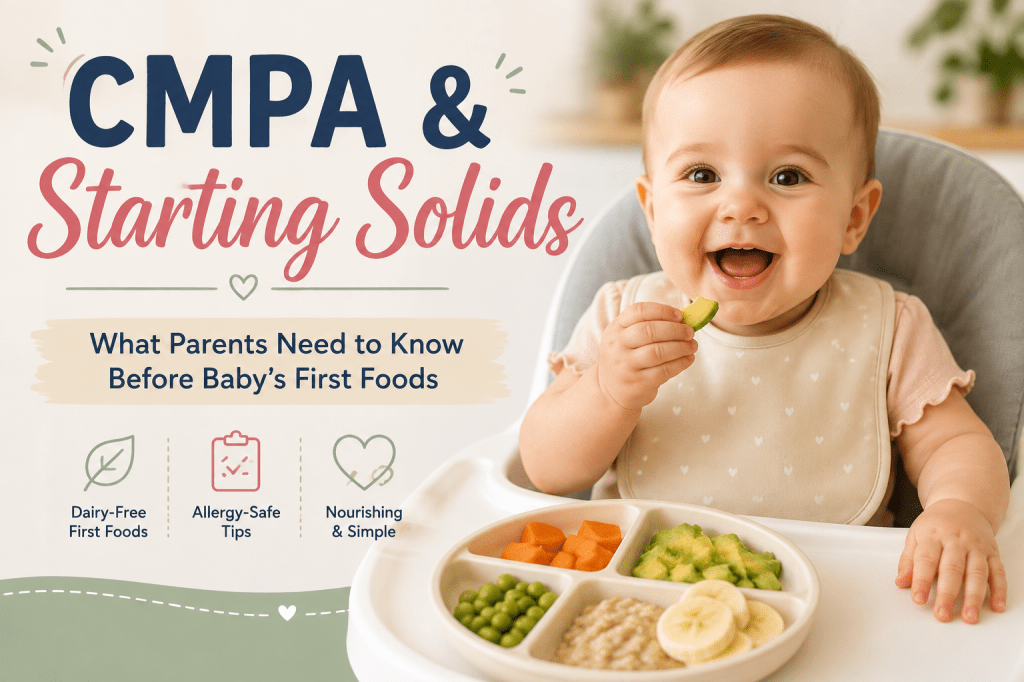
For months, managing your baby’s cow’s milk protein allergy may have mostly meant changing your food. You checked ingredient labels. You switched coffee creamer. You found dairy-free snacks. You learned that whey, casein, butter, and milk ingredients can turn up in foods you never expected. And every time you breastfed your baby, you knew exactly where their nutrition was coming from. Then suddenly… It’s time for solids. And the entire CMPA journey seems to change overnight. Now you’re not only wondering: “What can I eat while breastfeeding?” You’re wondering: “What can my baby eat?” Can they have foods that say “may contain milk”? What about butter? Yogurt? Baby cereal? Do you need to avoid soy too? What happens with other common allergens like egg and peanut? And if your baby is supposed to avoid cow’s milk protein, how do you make sure they’re still getting the nutrition they need? Starting solids can already feel overwhelming. Starting solids with CMPA can make every spoonful feel like another decision you have to get right. Fortunately, your baby doesn’t need an elaborate collection of specialty “dairy-free baby foods.” Most naturally dairy-free foods are simply…food. The important part is understanding where cow’s milk protein can hide, knowing your baby’s individual allergy plan, and working with your baby’s healthcare professional on how allergens and dairy should be handled. Let’s walk through what parents should know.
👉 Still in the dairy-elimination stage? Read: [The Cow’s Milk Protein Allergy Elimination Diet While Breastfeeding: A Complete Step-by-Step Guide].
Does CMPA Change When My Baby Starts Solids?
Your baby’s allergy doesn’t automatically disappear because they’re ready for solid food. What changes is how your baby can encounter cow’s milk protein. While exclusively breastfeeding, a baby’s exposure may have occurred through breast milk after the breastfeeding parent consumed dairy. Once your baby starts eating food directly, they can encounter cow’s milk protein directly too. That’s an important distinction. If your baby has diagnosed or suspected CMPA and you’ve been advised to avoid cow’s milk protein, don’t assume that starting solids means it’s time to introduce dairy. Ask your pediatrician, allergist, or dietitian how they want cow’s milk handled as solids begin. For some babies, continued avoidance may be recommended. For others, healthcare professionals may eventually discuss reassessing tolerance. The plan depends on your baby’s history.
👉 Wondering about eventually trying dairy again? Read: [When Can I Try Dairy Again While Breastfeeding? What Moms Need to Know About Reintroduction].
When Is a Baby Ready to Start Solid Foods?
CMPA doesn’t necessarily change the basic developmental signs healthcare professionals consider when determining whether a baby is ready for complementary foods.
Rather than choosing a date simply because your baby has reached a particular month, talk with your pediatrician and look for appropriate developmental readiness. Signs commonly considered include things such as being able to maintain good head and neck control, sitting with appropriate support, showing interest in food, and being developmentally able to move food through the mouth and swallow it. Most babies begin complementary foods at around 6 months, although individual guidance matters. And here’s something especially important for CMPA families: Don’t unnecessarily delay complementary feeding solely because introducing food feels scary. Having a food allergy doesn’t mean your baby shouldn’t experience a varied, nutritionally appropriate diet. Instead, it means you may need a more deliberate plan.
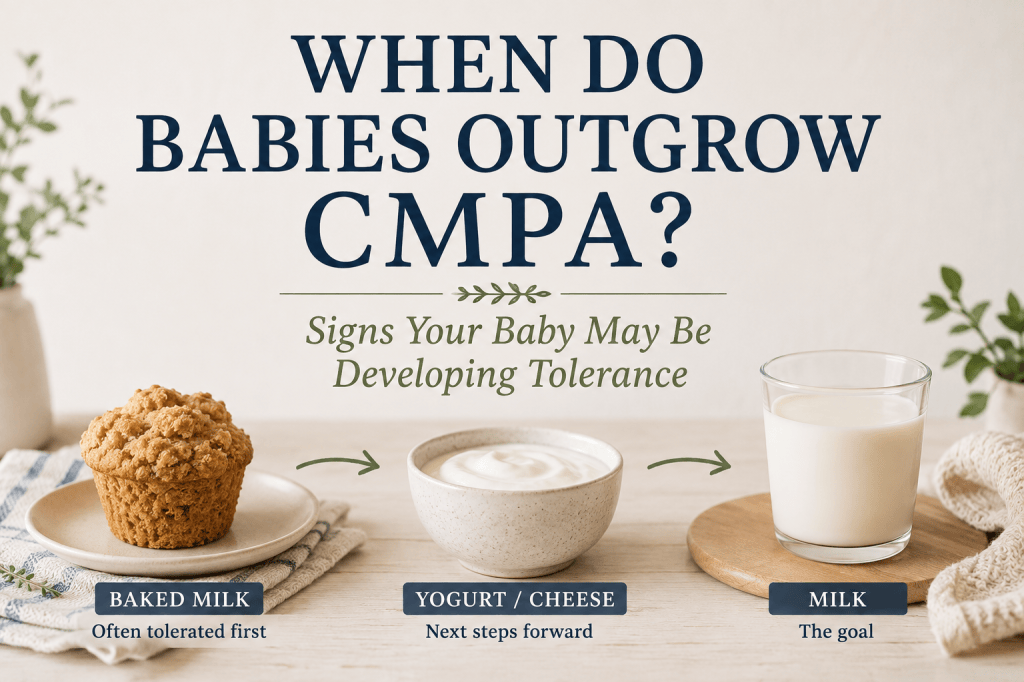
👉 Starting solids doesn’t mean CMPA has disappeared. Read [When Do Babies Outgrow CMPA? Signs Your Baby May Be Developing Tolerance] to understand when cow’s milk allergy may resolve and how tolerance is eventually assessed.
What Can a Baby With CMPA Eat?
This is where things become much less intimidating. There are tons of naturally dairy-free foods. Depending on your baby’s developmental readiness and the textures you’re using, options may eventually include foods such as:
- Avocado
- Banana
- Pear
- Peach
- Sweet potato
- Squash
- Broccoli
- Carrots
- Oats
- Rice
- Beans
- Lentils
- Meat
- Poultry
- Fish
- Egg, when appropriate for your baby’s allergy-introduction plan
- Nut or peanut products prepared in an age-appropriate form when medically appropriate
👉 Egg is a separate allergen from cow’s milk, so CMPA doesn’t automatically mean your baby needs to avoid it. Read [Can Babies With CMPA Eat Eggs? Dairy vs. Egg Allergy Explained] before introducing egg.
The exact foods and textures should be appropriate for your baby’s developmental stage and choking-safety needs. Notice something about that list? Most of it doesn’t require a “dairy-free” label. A banana doesn’t need to advertise that it’s dairy-free. Neither does an avocado. Building meals around simple whole foods can make the beginning of solids much easier.
👉 Need some ideas for your baby’s morning meal? Read [25 Dairy-Free Baby Breakfast Ideas for Babies With CMPA] for simple foods and combinations to try.
Where Does Hidden Dairy Become a Problem?
Things get trickier as foods become more processed. Cow’s milk ingredients can appear in foods parents don’t immediately think of as “dairy.” Depending on the product, you may encounter milk ingredients in things like:
- Breads and baked goods
- Crackers
- Cereals
- Mashed or prepared potatoes
- Sauces
- Soups
- Snack foods
- Prepared meats
- Baby meals
- Desserts
This is where all that label-reading practice from your own dairy-free diet suddenly becomes very useful. You’re already trained for this.
👉 Need a refresher? Read: [50 Hidden Sources of Dairy (Even Dairy-Free Moms Miss These)].
What Milk Ingredients Should Parents Look For?
If your baby’s healthcare professional has advised strict cow’s milk protein avoidance, read ingredient labels carefully. Obvious words such as milk, cheese, butter, cream, and yogurt are easy to recognize. But cow’s milk proteins may also appear under names parents don’t immediately associate with dairy, including ingredients such as whey and casein. In the United States, milk is one of the major food allergens that must be declared on packaged-food labels under federal allergen-labeling requirements. That can make spotting milk easier, but it doesn’t mean you should stop reading the complete ingredient list. Recipes and manufacturing practices can change. Get into the habit of checking the label every time you buy the product, even if you’ve purchased it before.
👉 As solids become a bigger part of your baby’s diet, allergen avoidance isn’t the only thing to consider. Read [How to Make Sure Your Dairy-Free Baby Gets Enough Calcium] for practical ways to build calcium into a CMPA baby’s diet without cow’s milk.
What Does “May Contain Milk” Mean?
This question causes enormous confusion. There is a difference between milk being deliberately included as an ingredient and precautionary statements such as: “May contain milk.” or “Made in a facility that also processes milk.” Those statements generally relate to possible unintended cross-contact rather than milk being intentionally included as an ingredient. But whether a product carrying a precautionary allergen statement is appropriate for your baby depends on your baby’s allergy history and the avoidance advice you’ve been given. Don’t assume that “may contain” automatically means safe. And don’t assume it automatically means the product contains milk either. If your baby has a diagnosed allergy, ask your allergist or pediatrician how they want you to handle precautionary allergen labels.
👉 Ready to start building actual meals? See [What Can My Baby Eat With CMPA? A Complete Dairy-Free Baby Food List] for fruits, vegetables, grains, proteins, meal ideas, and foods to check carefully.
“Made in a facility that also processes milk.” Those statements generally relate to possible unintended cross-contact rather than milk being intentionally included as an ingredient. But whether a product carrying a precautionary allergen statement is appropriate for your baby depends on your baby’s allergy history and the avoidance advice you’ve been given. Don’t assume that “may contain” automatically means safe. And don’t assume it automatically means the product contains milk either. If your baby has a diagnosed allergy, ask your allergist or pediatrician how they want you to handle precautionary allergen labels.
👉 For a deeper explanation, read: [“May Contain Milk” vs “Made in a Facility”: What Dairy-Free Breastfeeding Moms Need to Know].
Does My Baby Need Dairy to Grow?
Dairy foods can provide useful nutrients, but cow’s milk itself isn’t the only possible source of those nutrients. The nutritional picture becomes more important as your baby gradually transitions from primarily breast milk or formula toward a broader diet. Protein, fat, calcium, vitamin D, iodine, vitamin B12, iron, and other nutrients all matter during infancy and childhood. Exactly what your baby needs depends on their age, diet, feeding method, and medical situation. This is one area where a pediatric dietitian can be particularly valuable for families managing food allergies. The goal isn’t simply: “Remove dairy.” It’s: “Remove what’s medically necessary while still building a varied, nutritionally adequate diet.” Those are very different goals.
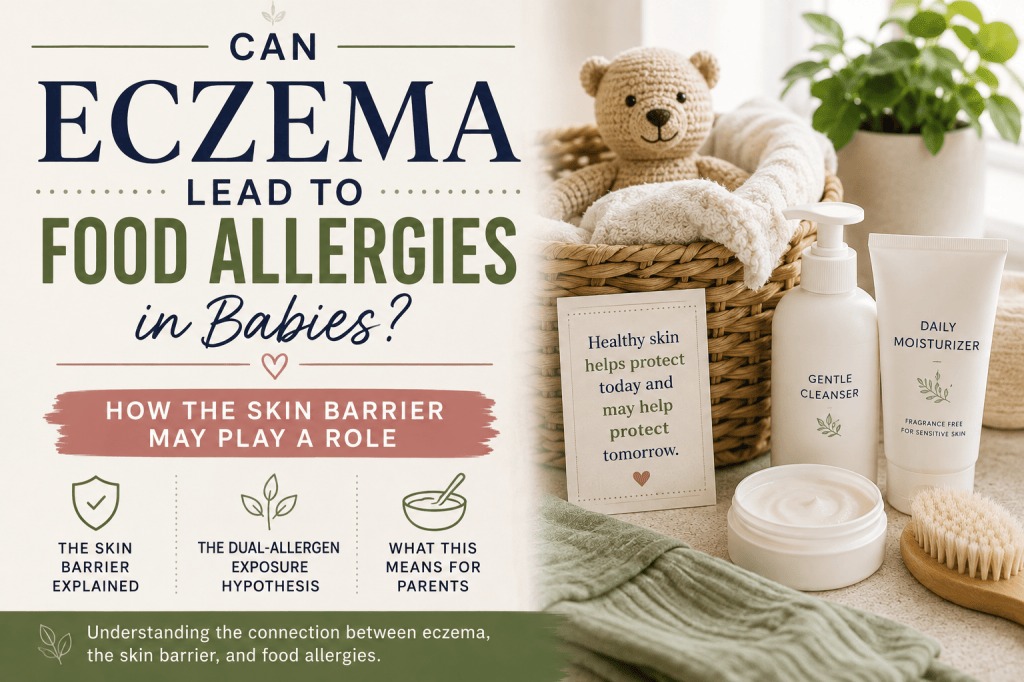
👉 If your baby also has eczema, there’s another important reason to have a thoughtful allergen-introduction plan. Read [Can Eczema Lead to Food Allergies in Babies? The Skin Barrier Connection] to learn how researchers believe exposure through impaired skin may differ from exposure through eating a food.
Breast Milk or Formula Still Matters
Starting solids doesn’t mean breast milk or infant formula suddenly becomes irrelevant. Complementary foods are introduced alongside breast milk or appropriate infant formula during infancy rather than instantly replacing milk feeds. If your baby uses formula and has CMPA, don’t independently replace infant formula with an ordinary plant-based beverage because it looks dairy-free. Plant drinks marketed for adults are not automatically nutritionally equivalent to breast milk or an appropriate infant formula. If formula changes are necessary because of CMPA, your baby’s healthcare professional should help determine an appropriate option.
Confused about what your baby should drink while avoiding cow’s milk? Read [What Milk Can a Baby With CMPA Drink? Formula, Breast Milk & Milk Alternatives Explained].
What About Soy?
You do not automatically need to remove soy simply because your baby has CMPA. Some babies may react to more than one food protein, but unnecessarily eliminating additional foods can make feeding more difficult and potentially complicate nutritional adequacy. If you’ve been avoiding both dairy and soy because of your baby’s symptoms, discuss whether continued soy avoidance is actually necessary with your healthcare professional.
👉 Read: [Do I Have to Cut Out Soy Too While Dairy-Free Breastfeeding? (What Most Moms Don’t Know)].
Starting Solids Doesn’t Mean Starting Dairy
This distinction is worth repeating. Your baby being developmentally ready for solid foods doesn’t automatically mean they’re medically ready for cow’s milk protein. Those are two separate milestones. If dairy has been eliminated because of suspected or diagnosed CMPA, ask your baby’s healthcare professional specifically about when and how cow’s milk tolerance should eventually be reassessed. For some children, healthcare professionals may later discuss a structured reintroduction approach. One term you may hear is the milk ladder.
👉 Before trying anything yourself, read: [What Is the Milk Ladder? A Simple Guide for Parents of Babies With CMPA].
Starting solids is an exciting milestone. CMPA may mean you have a few additional things to think about, but it doesn’t have to turn every meal into something frightening. The goal isn’t to make your baby’s diet as restricted as possible. It’s to give them a safe, varied, nutritious introduction to food while respecting the allergy plan their healthcare team has recommended.
What About Introducing Other Common Allergens?
Once your baby has CMPA, it’s understandable to become nervous about every other common food allergen. Egg? Peanut? Tree nuts? Wheat? Soy? Fish? Suddenly, introducing food can feel less like an exciting milestone and more like you’re waiting for something to go wrong.
But having cow’s milk protein allergy doesn’t automatically mean your baby is allergic to all of these foods. And unless your baby’s healthcare professional has given you a reason to avoid another food, unnecessarily restricting your baby’s diet isn’t necessarily helpful. Current allergy-prevention guidance generally does not recommend routinely delaying the introduction of common allergenic foods once a baby is developmentally ready for complementary foods. However, babies with existing food allergies or certain other risk factors may need individualized guidance. This is an excellent conversation to have with your pediatrician or allergist before you begin. Ask: “Because my baby already has CMPA, how would you like us to introduce the other common allergens?” That gives you a plan before you’re standing in the kitchen wondering what to do.
Should I Introduce One New Food at a Time?
You’ve probably heard the old advice to introduce every new food individually and wait several days before trying anything else. Modern guidance can vary depending on the baby and the food involved. For a baby with an existing food allergy, your healthcare professional may give you more specific instructions about introducing common allergens and monitoring for reactions. The practical goal is to make it possible to recognize a reaction if one occurs without unnecessarily limiting your baby’s dietary variety.
You don’t need to turn every bite of food into a science experiment. But introducing several major allergens for the first time in the same meal could make it much harder to identify what caused a reaction if symptoms appear.
What Should I Watch for After Introducing a New Allergen?
Your healthcare professional can tell you what symptoms are particularly important based on your baby’s history. Food-allergic reactions can involve different body systems and may include changes involving the skin, digestive system, breathing, or circulation. Immediate allergic reactions can potentially become serious. If your baby has difficulty breathing, significant swelling, becomes unusually limp or unresponsive, or develops other rapidly progressing or potentially serious symptoms after eating, seek emergency medical care. For less urgent symptoms, contact your baby’s healthcare professional for guidance. And if your allergist has already given you an allergy action plan, follow that plan.
Don’t Assume Every Change Is a Food Allergy
Babies are unpredictable. Their poop changes. Their skin changes. They drool. They get viruses. They become constipated when their diets change. They spit food out because they dislike it. They make strange faces because they’ve never tasted broccoli before. Starting solids introduces a huge number of changes at the same time. That means not every symptom that appears after eating is necessarily an allergic reaction. If something concerns you, document what your baby ate, what happened, and when it happened, and discuss it with your healthcare professional. A simple food record can be incredibly useful.
Keep a Simple First-Foods Record
You don’t need an elaborate spreadsheet. A note on your phone works. You might record: Food: What your baby tried. Date: When they tried it. Previous exposure: Whether they’ve eaten it before. Reaction: Anything unusual you noticed. Timing: Approximately when the change appeared. For a baby with CMPA, this can help you avoid relying on memory weeks later. And once a food is established as tolerated, your healthcare professional may recommend continuing to include certain foods regularly as part of your baby’s normal diet.
Purées or Baby-Led Weaning With CMPA?
CMPA doesn’t automatically determine whether you should use traditional spoon-fed purées, baby-led weaning, or a combination. The important considerations are developmental readiness, appropriate textures, choking safety, nutrition, and your family’s preferences.
Purées
Purées can make individual ingredients relatively easy to identify. Simple foods such as puréed vegetables, fruits, beans, meats, or appropriately prepared grains can often be naturally dairy-free. But don’t assume every commercial baby-food pouch or prepared meal is milk-free. Read the label.
Baby-Led Weaning
Baby-led approaches can also work with a dairy-free diet. Many naturally dairy-free foods can be prepared in developmentally appropriate shapes and textures. However, safe preparation matters enormously. Foods should be prepared in ways appropriate for your baby’s developmental abilities, and parents should understand the difference between gagging and choking. If you’re uncertain about safe food preparation, talk with your pediatrician or another qualified professional rather than relying solely on social-media demonstrations.
A Combination Is Fine Too
You don’t have to join a team. Your baby can eat some purées and some appropriately prepared finger foods. The goal is helping your baby learn to eat safely and experience a variety of foods. CMPA doesn’t change that.
The Grocery Store Changes Again
Remember how strange grocery shopping felt when you first went dairy-free? Now you’re going to experience a smaller version of that all over again. You’ll start looking at foods through a new lens: Can my baby eat this? The good news is that you’ve already learned one of the hardest skills. You know how to read labels. But foods marketed specifically toward babies and toddlers still deserve the same attention as adult foods. Don’t assume something is dairy-free because:
- It’s organic
- It’s vegan-looking
- It’s marketed toward babies
- It says “natural”
- You’ve bought the brand before
- The previous flavor was dairy-free
Check the actual product.
Watch Out as Meals Become More Complicated
The earliest days of solids can be fairly simple. Banana. Avocado. Sweet potato. Oatmeal. Then eventually your baby starts eating more of the family’s food. That’s where dairy can become easier to overlook. Consider something as ordinary as mashed potatoes. Potatoes themselves are dairy-free. But mashed potatoes may contain:
- Butter
- Milk
- Cream
- Cheese
- Sour cream
The same issue appears with:
- Pasta sauces
- Soups
- Casseroles
- Pancakes
- Muffins
- Bread
- Meatballs
- Sauces
- Restaurant foods
Instead of asking: “Is this food normally dairy-free?” ask: “What ingredients are in this particular version?” That’s a much safer habit.
Feeding Baby From the Family Meal
One of the easiest long-term approaches can be building family meals where the base is naturally dairy-free. For example: Chicken + rice + vegetables. Pasta + dairy-free tomato sauce + vegetables. Beans + avocado + appropriately prepared vegetables. Oatmeal + fruit. Then adults who eat dairy can add cheese, butter, or another dairy ingredient separately if they want it. That can be much easier than cooking an entirely separate meal for your baby every night. And since you’ve already been eating dairy-free while breastfeeding, you may discover that many of your current meals are already suitable starting points.
What About Daycare, Grandparents, and Babysitters?
This is something parents don’t always think about until the first time someone else feeds their baby. If your baby needs to avoid cow’s milk protein, anyone responsible for feeding them needs to understand that. Don’t simply say: “The baby can’t have dairy.” Explain what that means according to the plan you’ve received from your healthcare professional. Milk ingredients aren’t always obvious to someone who hasn’t spent months reading labels. Grandma may know not to give your baby a spoonful of yogurt. She may not realize the bread she’s serving contains milk. Daycare staff should also know about diagnosed food allergies and have whatever medical documentation, emergency plan, and medication your child’s healthcare professionals and facility require. As your baby becomes more independent with food, communication becomes increasingly important.
Should the Whole Family Go Dairy-Free?
Not necessarily. If only your baby needs to avoid cow’s milk protein, the entire household doesn’t automatically need to eliminate dairy. Some families find it easier to prepare mostly dairy-free meals and add dairy separately for other family members. Others maintain both dairy-containing and dairy-free foods. What works depends on your baby’s allergy, the healthcare advice you’ve received, and what is realistic for your household. The important thing is preventing unintended exposure while still making family meals manageable.
Don’t Let CMPA Make Your Baby’s Diet Smaller Than Necessary
This may be one of the most important lessons in this entire article. When you’ve watched your baby struggle with symptoms, restriction can feel safe. You start thinking: Maybe we should avoid milk. Then: Maybe soy too. Then egg. Then wheat. Pretty soon you’re afraid to introduce anything. But eliminating foods without a medical reason can make it harder to build a varied diet and may complicate meeting nutritional needs. CMPA management should ideally be targeted, not endlessly restrictive. Avoid what your baby medically needs to avoid. Work with your healthcare team on uncertain foods. And allow your baby to experience as much safe dietary variety as possible.
The Goal Isn’t a Perfect First-Food Schedule
There will be messy meals. Your baby will throw food. They’ll love something Monday and refuse it Wednesday. They’ll rub avocado in their hair. You’ll probably spend an unreasonable amount of time cleaning food off the floor. That’s normal. CMPA adds another layer of planning, but your baby’s introduction to food can still be enjoyable. You’re not trying to create the perfect dairy-free baby menu. You’re helping your baby gradually learn: Food is safe. Food is interesting. Food comes in different flavors and textures. And, most importantly: Eating can be enjoyable. CMPA is part of your baby’s feeding story. It doesn’t have to become the entire story.
Nutrition Matters Even More as Solids Increase
In the beginning, babies may eat surprisingly small amounts of solid food. A few bites here. A spoonful there. Half of it on the floor. That’s normal. But as your baby gets older and solid foods become a larger part of their diet, nutritional variety becomes increasingly important. For babies avoiding cow’s milk protein, parents may need to pay particular attention to nutrients commonly supplied by dairy foods. That doesn’t mean your baby can’t get those nutrients without dairy. It means you need to know where else they’re coming from.
What About Calcium?
Calcium plays an important role in developing bones and teeth, along with other functions throughout the body. As your baby’s diet expands, calcium can come from different foods depending on age, allergies, and what your baby safely eats. Some foods and appropriately fortified products can provide calcium without cow’s milk. However, the amount babies and children need changes with age, and not every dairy-free alternative contains the same amount. If your baby needs to remain dairy-free long term, your pediatrician or pediatric dietitian can help make sure their overall diet provides adequate calcium.
Don’t Forget Vitamin D
Vitamin D is another nutrient parents often associate with dairy. But milk doesn’t naturally solve the entire vitamin D question. Recommendations for vitamin D supplementation during infancy can depend on feeding method and individual circumstances. If you’re breastfeeding, using formula, transitioning between the two, or managing a restricted diet, ask your pediatrician specifically whether your baby needs vitamin D supplementation and how much is appropriate. Don’t independently increase supplements simply because your baby has CMPA.
Iron Becomes Important Too
Iron deserves attention when complementary foods begin, regardless of whether your baby has CMPA. Babies can receive iron from developmentally appropriate foods such as meats, beans, lentils, iron-fortified cereals, and other foods depending on what they safely tolerate. This is another reason starting solids shouldn’t become: “What dairy substitute can I give my baby?”
A healthy complementary diet is much bigger than replacing cheese and yogurt. Think about overall nutrition. Protein. Iron. Healthy fats. Fruits. Vegetables. Grains. And safe exposure to a variety of foods and textures.
What About Dairy-Free Yogurt and Cheese?
Eventually, you may notice entire shelves of plant-based yogurt, cheese, and other dairy alternatives. Some can certainly fit into a dairy-free diet. But don’t assume a plant-based replacement is nutritionally equivalent to the dairy food it’s imitating. Products can vary significantly in:
- Protein
- Fat
- Calcium
- Vitamin D
- Added sugar
- Sodium
- Other nutrients
A dairy-free cheese might work perfectly well as a food your child enjoys without being a major nutritional source of anything. That’s okay.
Food doesn’t have to perfectly imitate dairy to have a place in your child’s diet. Just don’t assume the words “dairy-free” automatically mean “nutritionally equivalent.”
Can My Baby Drink Almond Milk, Oat Milk, or Another Plant Milk?
This question becomes incredibly important because plant-based beverages can look like obvious replacements for cow’s milk. But for young infants, ordinary plant beverages should not simply be substituted for breast milk or an appropriate infant formula. Almond milk, oat milk, coconut beverages, and similar products aren’t automatically nutritionally equivalent to breast milk or infant formula. If your baby requires formula and has CMPA, work with your baby’s healthcare professional to determine an appropriate formula rather than choosing a grocery-store plant beverage yourself. As children get older, recommendations about beverages change. If your child still needs to avoid cow’s milk at that point, your pediatrician or dietitian can help you choose an appropriate alternative based on your child’s overall diet and nutritional needs.
When Can My Baby Eventually Try Dairy?
Starting solids and reintroducing cow’s milk protein are separate decisions. Your baby may be ready for avocado, oatmeal, chicken, banana, and many other foods while still needing to avoid cow’s milk protein. Eventually, your healthcare professional may recommend reassessing whether your baby still reacts to dairy. How and when that happens depends on your baby’s allergy history. Some children with certain forms of CMPA may eventually use a structured reintroduction approach such as a milk ladder. Others may need a different approach or medically supervised testing.
👉 Read: [What Is the Milk Ladder? A Simple Guide for Parents of Babies With CMPA].
👉 Also read: [When Can I Try Dairy Again While Breastfeeding? What Moms Need to Know About Reintroduction].
What If My Baby Reacts to Dairy During Reintroduction?
Don’t continue increasing exposure simply to see whether the reaction becomes more obvious.
Follow the reintroduction plan provided by your baby’s healthcare professional. If symptoms associated with your baby’s previous cow’s milk reaction return, contact the healthcare professional managing their allergy for guidance. Potentially serious or rapidly progressing allergic symptoms require urgent medical attention. A reaction doesn’t mean your baby will never tolerate dairy. It may simply mean their healthcare team needs to reassess what comes next.
Frequently Asked Questions About CMPA and Starting Solids
What Are Good First Foods for a Baby With CMPA?
Many ordinary first foods are naturally free from cow’s milk protein. Depending on developmental readiness, safe preparation, and your baby’s individual allergy plan, your healthcare professional may suggest a variety of fruits, vegetables, grains, proteins, and other complementary foods. Your baby doesn’t need an entire diet made from specialty dairy-free products.
Does Baby Cereal Contain Milk?
Some products may and others may not. Check the ingredient and allergen information on the specific product you’re considering rather than assuming all baby cereals are dairy-free. Product formulations can change, so continue checking labels even after you’ve found products that previously worked for your family.
Can a Baby With CMPA Eat Eggs?
CMPA is an allergy to cow’s milk protein, not automatically an allergy to egg. However, babies with an existing food allergy may need individualized guidance about introducing other common allergens. Ask your pediatrician or allergist how they recommend introducing egg and other allergenic foods for your baby.
Do I Need to Avoid Soy When Starting Solids?
Not automatically. Some babies may have reactions involving more than one food, but CMPA itself doesn’t mean every baby must avoid soy. Avoid unnecessary food restrictions unless your baby’s healthcare professional has recommended them.
👉 Read: [Do I Have to Cut Out Soy Too While Dairy-Free Breastfeeding? (What Most Moms Don’t Know)].
Can My Baby Have Food Labeled “May Contain Milk”?
Precautionary allergen labels generally indicate potential cross-contact rather than milk being intentionally included as an ingredient. Whether those products are appropriate for your baby depends on their allergy history and the advice you’ve received from their healthcare professional. Ask your baby’s allergist or pediatrician how they want you to handle precautionary labeling.
Can I Keep Breastfeeding After Starting Solids?
Yes. Starting complementary foods doesn’t mean breastfeeding needs to stop. Solid foods are introduced alongside breast milk or appropriate infant formula during infancy.
Do I Still Need to Stay Dairy-Free?
Starting solids doesn’t automatically mean you should reintroduce dairy into your own diet. If you’re avoiding dairy because of your breastfed baby’s CMPA, ask your healthcare professional when they want your maternal dairy restriction reassessed.
Can I Give My Baby Dairy-Free Cheese?
Some plant-based cheese alternatives may be appropriate depending on your baby’s age, ingredients, allergies, texture, and nutritional needs. But “dairy-free cheese” doesn’t automatically mean it’s nutritionally equivalent to dairy cheese or appropriate for every baby. Read the label and discuss specific nutritional concerns with your pediatrician or dietitian.
Does My Baby Need Special Dairy-Free Baby Food?
Usually, many naturally dairy-free whole foods can form part of complementary feeding. Specialty products can be convenient, but they’re not automatically necessary simply because your baby has CMPA.
Your Baby’s Diet Can Still Be Big
One of the easiest traps to fall into after dealing with CMPA is focusing entirely on what your baby can’t eat. No milk. No cheese. No yogurt. No butter. But look at everything that’s left. Fruits. Vegetables. Grains. Beans. Lentils. Meats. Fish when appropriate. Egg when appropriate. Nut and peanut products in developmentally safe forms when medically appropriate. And countless combinations of those foods. CMPA removes one category of food. It doesn’t have to turn your baby’s entire diet into a list of restrictions.
Final Thoughts
Starting solids with CMPA can feel intimidating because the responsibility suddenly changes. For months, you may have controlled cow’s milk exposure primarily through your own dairy-free diet. Now your baby is eating directly. That means learning a new version of skills you’ve already developed: Read labels. Know the ingredients. Communicate with caregivers. Avoid unnecessary restrictions. Pay attention to nutrition. Introduce foods according to your baby’s developmental and medical needs.
And work with your baby’s healthcare team on dairy and other allergen introduction. Most importantly, remember that starting solids is supposed to be about more than allergies. Your baby is discovering food. They’re learning flavors. Textures. Smells. Family meals. And probably discovering how entertaining it is to throw a spoon onto the floor repeatedly. CMPA is something you have to manage. It doesn’t have to take the joy out of watching your baby discover food.
You May Also Enjoy
👉 What Is the Milk Ladder? A Simple Guide for Parents of Babies With CMPA
👉 When Can I Try Dairy Again While Breastfeeding? What Moms Need to Know About Reintroduction
👉 The Cow’s Milk Protein Allergy Elimination Diet While Breastfeeding: A Complete Step-by-Step Guide
👉 How Is Cow’s Milk Protein Allergy Diagnosed in Breastfed Babies? What Parents Can Expect
👉 “May Contain Milk” vs “Made in a Facility”: What Dairy-Free Breastfeeding Moms Need to Know
👉 50 Hidden Sources of Dairy (Even Dairy-Free Moms Miss These)
👉 Do I Have to Cut Out Soy Too While Dairy-Free Breastfeeding? (What Most Moms Don’t Know)
Medical Disclaimer
The information in this article is intended for educational and informational purposes only and is not a substitute for individualized medical or nutritional advice. Food allergies in infants can vary significantly in type and severity. Decisions about cow’s milk avoidance, dairy reintroduction, introducing other common allergens, infant formula, supplements, and complementary feeding should be discussed with your child’s pediatrician, allergist, pediatric dietitian, or another qualified healthcare professional.
Do not intentionally introduce a food that your baby has previously experienced an allergic reaction to unless your child’s healthcare professional has advised that doing so is appropriate. Children with a history of immediate or potentially serious allergic reactions may require specialist assessment or medically supervised food introduction. Always prepare foods in developmentally appropriate ways and follow established infant-feeding and choking-safety guidance. Seek urgent medical care for potentially serious or rapidly developing allergic symptoms. Never delay or disregard professional medical advice because of information you have read on this website.



Leave a comment