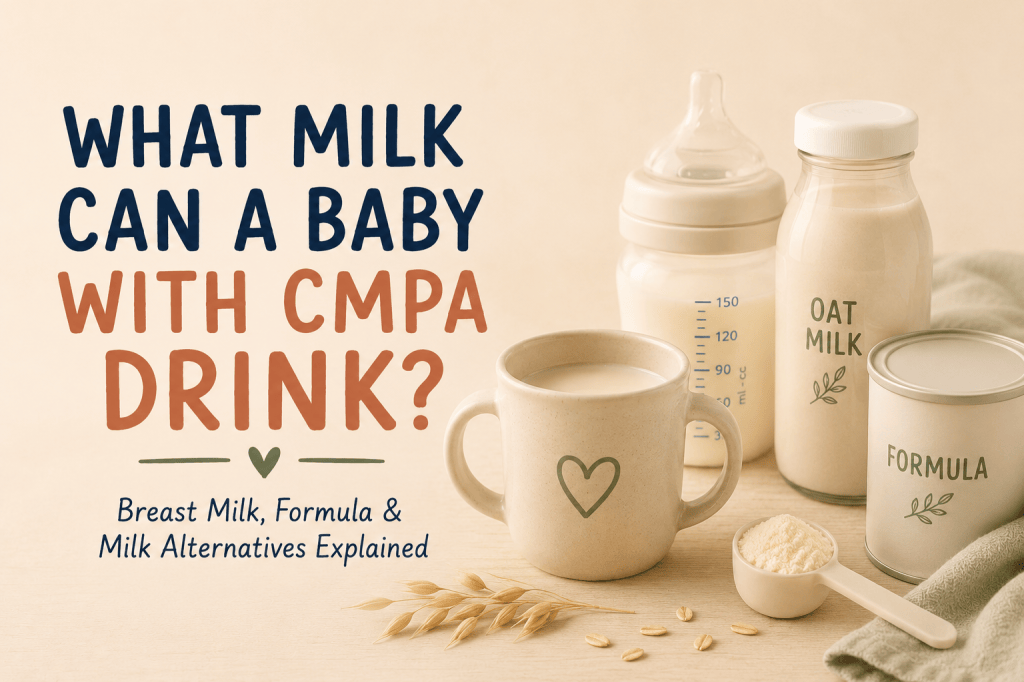
Once your baby has cow’s milk protein allergy, one of the most confusing parts of feeding can be figuring out what the word “milk” even means anymore.
Can you continue breastfeeding? Does your baby need a special formula? Is lactose-free formula okay? What about soy formula? And once your baby starts solids, can you simply grab oat milk, almond milk, or another dairy-free drink from the grocery store? Those questions become even more confusing because the answer can change depending on your baby’s age, nutritional needs, allergy history, and whether they’re breastfed, formula-fed, or both. The most important thing to understand from the beginning is this: “dairy-free” and “appropriate for a baby with CMPA” are not the same thing. A carton of oat milk may contain no cow’s milk protein whatsoever, but that doesn’t automatically make it a nutritionally appropriate replacement for breast milk or infant formula. Similarly, a product labeled “lactose-free” can still contain cow’s milk protein. Let’s sort through the differences so you know which questions to ask your baby’s pediatrician or dietitian.
👉 If you’re just beginning the dairy-free journey, read [The Cow’s Milk Protein Allergy Elimination Diet While Breastfeeding: A Complete Step-by-Step Guide].
Can You Still Breastfeed a Baby With CMPA?
In many cases, yes. A diagnosis or suspicion of cow’s milk protein allergy does not automatically mean breastfeeding needs to stop. Depending on your baby’s situation, a healthcare professional may recommend that a breastfeeding parent remove cow’s milk protein from their own diet for a period of time while continuing to breastfeed. The exact approach depends on the baby’s symptoms and diagnosis, which is one reason it’s useful to work with a pediatrician, allergist, or dietitian rather than starting an increasingly restrictive elimination diet on your own. If you’re eliminating dairy while breastfeeding, remember that the goal isn’t simply to stop drinking glasses of milk. Cow’s milk protein can appear in cheese, yogurt, butter, baked goods, packaged foods, sauces, and many other products.
👉 For help getting started, read [5 First Steps to Starting Dairy-Free Breastfeeding (What Every Mom Should Know)].
Does CMPA Mean There Is Cow’s Milk in Breast Milk?
This wording can cause a lot of confusion. Human breast milk is obviously not cow’s milk, but proteins from foods in a breastfeeding parent’s diet can be present in breast milk in very small amounts. For some breastfed babies with cow’s milk protein allergy, that exposure may be relevant to symptoms. That’s different from saying that breast milk itself is “dairy.” It also explains why some breastfeeding parents are advised to remove cow’s milk protein from their own diet while continuing to breastfeed. How long dietary elimination is appropriate and when dairy should eventually be reassessed are decisions to make with your baby’s healthcare professional.
👉 Wondering about the timeline? Read [How Long Does Dairy Stay in Breastmilk? Evidence-Based Timeline].
What If My Baby Needs Formula?
This is where parents need to be especially careful about choosing a product based only on the words printed on the front. A baby with diagnosed CMPA may need a specialized infant formula if formula is required. The appropriate formula depends on the baby’s age, symptoms, growth, type of allergy, previous reactions, and individual medical needs. For some babies, healthcare professionals may recommend an extensively hydrolyzed formula. In these formulas, cow’s milk proteins have been broken down into much smaller pieces. Some babies with more complex or severe presentations may require an amino-acid-based formula, in which the protein source is provided as individual amino acids rather than intact cow’s milk protein. These aren’t interchangeable grocery-store “dairy-free milks.” They’re nutritionally formulated infant products used for specific medical and feeding situations. Your baby’s pediatrician, allergist, or dietitian should help determine which formula is appropriate rather than having you choose one based solely on an online list.
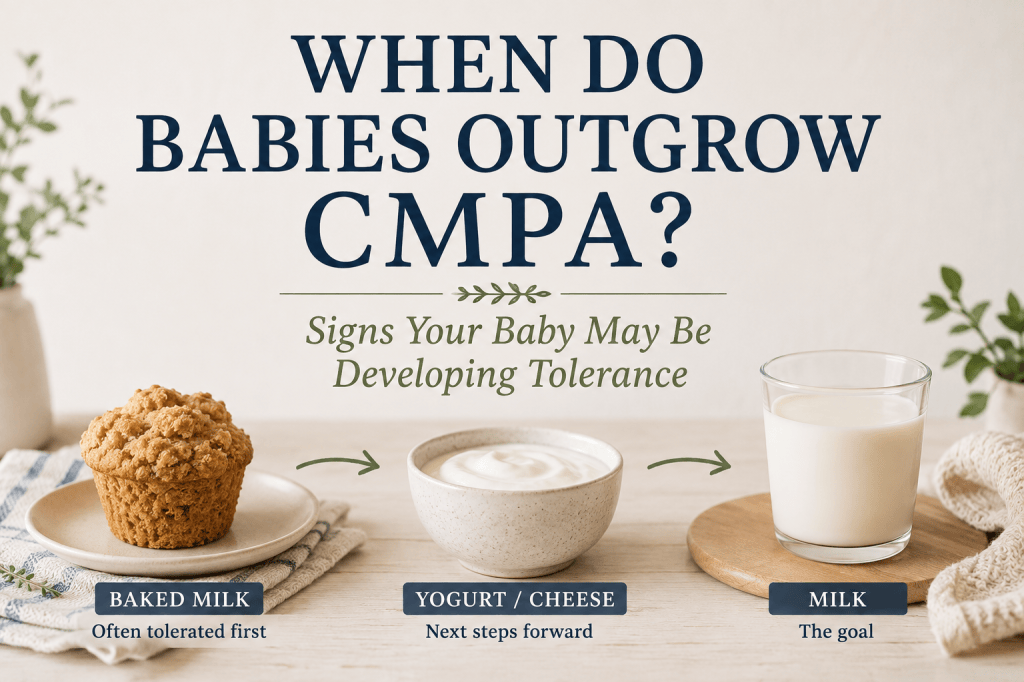
👉 Your baby’s first birthday doesn’t automatically mean CMPA is gone. Read [When Do Babies Outgrow CMPA? Signs Your Baby May Be Developing Tolerance] for what parents should know about CMPA at 1 year and beyond.
Is Lactose-Free Formula Safe for CMPA?
This is one of the most important distinctions for new CMPA parents: CMPA is not the same thing as lactose intolerance. Lactose is a sugar found in milk. Cow’s milk protein allergy involves an immune response to proteins found in cow’s milk. A product can therefore be lactose-free while still containing cow’s milk protein. So if your baby needs to avoid cow’s milk protein, seeing “lactose-free” on a formula or food label doesn’t automatically make that product appropriate.
👉 We explain the difference in [Dairy Allergy vs Lactose Intolerance in Breastfed Babies (What Is the Difference)].
What About Partially Hydrolyzed Formula?
The words “hydrolyzed” can make formula shopping even more confusing. Partially hydrolyzed formulas contain milk proteins that have been broken down to some degree, but they are not the same as extensively hydrolyzed formulas used in the management of CMPA. Parents shouldn’t assume that a formula marketed as “gentle,” “sensitive,” or containing partially hydrolyzed protein is appropriate for a baby with cow’s milk protein allergy. This is a situation where the exact formula matters.
If CMPA is suspected or diagnosed and your baby needs formula, ask your healthcare professional which specific type they recommend.
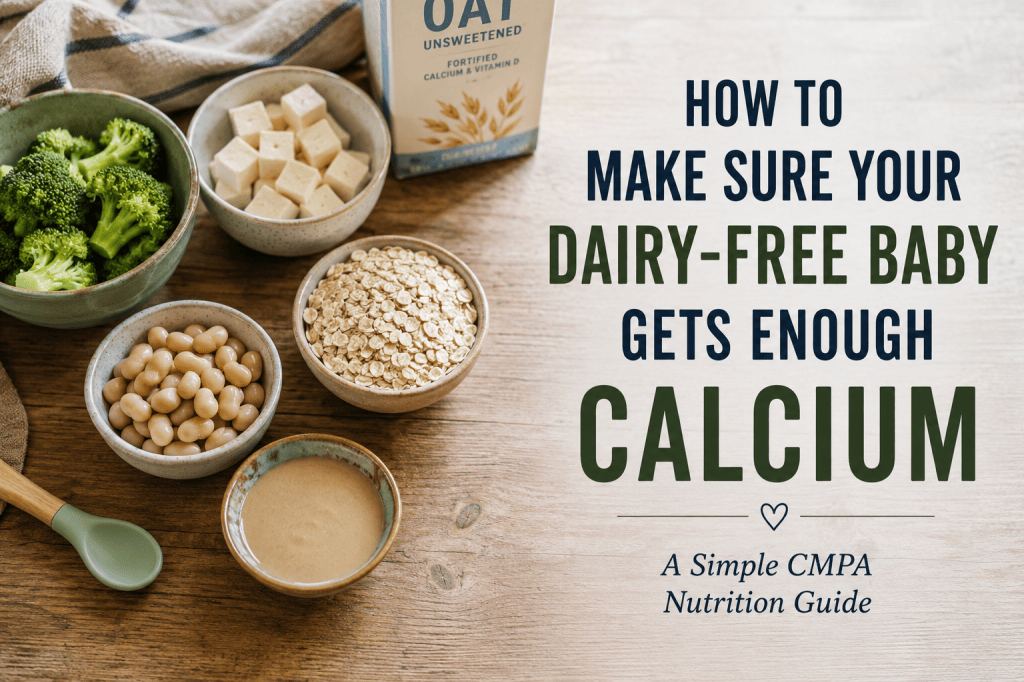
👉 Choosing a dairy-free milk is about more than finding one with calcium. Read [How to Make Sure Your Dairy-Free Baby Gets Enough Calcium] to see how calcium, vitamin D, protein, fat, fortified foods, and the rest of your baby’s diet fit together.
Can a Baby With CMPA Drink Soy Formula?
Sometimes soy formula may be considered for certain babies, but it isn’t automatically the next choice simply because it doesn’t contain cow’s milk protein. Age, nutritional needs, the type of CMPA, and whether your baby also reacts to soy can affect whether soy formula is appropriate. Some babies with cow’s milk allergy may also have problems with soy, particularly in certain non-IgE-mediated conditions. That doesn’t mean every baby with CMPA needs to avoid soy. It means soy should be considered separately rather than automatically eliminated or automatically substituted.
👉 Read [Do I Have to Cut Out Soy Too While Dairy-Free Breastfeeding? (What Most Moms Don’t Know)].
Can I Give My CMPA Baby Oat Milk?
This is where the baby’s age becomes extremely important. Oat milk may be dairy-free, but ordinary oat beverages sold alongside milk at the grocery store are not nutritionally equivalent to breast milk or infant formula and shouldn’t simply replace them during infancy. That distinction matters because babies have very specific nutritional requirements during their first year of life. Breast milk and infant formulas are designed around those needs in a way that ordinary plant beverages are not. Oat milk may appear in certain foods or recipes depending on your baby’s age and feeding plan, but that’s different from replacing your baby’s primary milk feeds with cartons of oat milk. Before making that switch, ask your baby’s pediatrician or pediatric dietitian.
What About Almond Milk?
The same basic caution applies. Almond milk is dairy-free, but ordinary almond beverages aren’t infant formula. They’re also nutritionally quite different from breast milk, formula, cow’s milk, and even other plant beverages. Another consideration is that tree nuts are themselves common food allergens. Having CMPA doesn’t automatically mean your baby will be allergic to tree nuts, but allergen introduction should be handled appropriately for your baby’s individual situation. The words “dairy-free” on a carton answer only one question. They don’t answer: “Is this nutritionally appropriate as my baby’s primary milk?”
What About Coconut Milk?
Coconut-based beverages are another dairy-free option parents frequently notice at the grocery store. Again, ordinary coconut beverages aren’t substitutes for breast milk or infant formula during infancy. Different plant beverages can have dramatically different amounts of calories, protein, fat, vitamins, and minerals. That’s why simply rotating through whichever dairy-free carton is on sale isn’t a good strategy for replacing an infant’s milk feeds.
What About Pea-Protein Milk?
Pea-protein beverages have become increasingly common and some have nutritional profiles that differ substantially from oat, almond, or coconut beverages. But the same principle applies: a plant-based beverage being nutritionally stronger than another plant beverage doesn’t automatically make it an appropriate infant formula substitute. Once your child is older, your pediatrician or dietitian may discuss which milk alternative best fits their diet if cow’s milk still needs to be avoided. During infancy, however, don’t make that decision based solely on the nutrition panel or a recommendation from social media.
Why Plant Milks Aren’t All the Same
Walk down the dairy-free aisle and you’ll see oat, almond, soy, coconut, pea, cashew, and other plant-based beverages sitting side by side. They may look interchangeable. Nutritionally, they aren’t. Protein can differ dramatically. So can fat, calories, calcium, vitamin D, vitamin B12, iodine, and added sugar. Some products are fortified while others aren’t. This becomes increasingly important as babies grow into toddlers and milk alternatives begin playing a different role in their diets. Instead of asking: “What’s the best dairy-free milk?” a better question is: “What milk or milk alternative is appropriate for my child’s age, allergy history, and overall diet?” That’s the question your pediatrician or pediatric dietitian can actually help answer.
👉 If your baby has recently started eating food too, read [CMPA and Starting Solids: What Parents Need to Know Before Baby’s First Foods].
What Changes Around Your Baby’s First Birthday?
The first birthday is where the milk question can change significantly. During infancy, breast milk or an appropriate infant formula generally remains an important source of nutrition while complementary foods are gradually introduced. As children move beyond infancy and eat a wider variety of solid foods, their nutritional needs and the role beverages play in their diet change.
For families managing CMPA, though, turning one doesn’t automatically mean it’s time to pour a cup of cow’s milk. If your child still needs to avoid cow’s milk protein, talk with their pediatrician or dietitian about what should take its place and whether it’s time to reassess the allergy. Some children may be ready for an appropriately planned dairy reintroduction, while others will need to continue avoiding cow’s milk.
👉 Wondering whether CMPA may be resolving? Read [When Do Babies Outgrow CMPA? Signs Your Baby May Be Developing Tolerance].
What Is the Best Milk Alternative After 12 Months?
There isn’t one dairy-free milk that’s automatically best for every child with CMPA. Once your child is old enough for a milk alternative to become part of their regular diet, the right choice depends on their nutritional needs, other allergies, growth, overall diet, and recommendations from their healthcare professional. This is why comparing plant milks by appearance can be misleading. Two cartons sitting beside each other in the refrigerator case may both say “dairy-free,” yet provide completely different amounts of protein, calories, fat, calcium, vitamin D, and other nutrients. Instead of choosing based on which carton looks healthiest, look at what the product actually provides and discuss regular use with your child’s healthcare professional.
Soy Milk
Fortified soy beverages can provide considerably more protein than many other plant-based beverages, which is one reason soy often comes up when families need an alternative to cow’s milk for an older child. But soy is also a common food allergen, and some children with CMPA may have been advised to avoid it. If your child safely tolerates soy, that’s different from eliminating it simply because they have CMPA. Don’t assume every baby with cow’s milk allergy needs to be both dairy-free and soy-free.
Oat Milk
Oat milk has become incredibly popular because of its taste and creamy texture. It’s easy to see why a dairy-free family might naturally reach for it.
But oat beverages vary by brand, and they generally shouldn’t be assumed to provide the same nutrition as cow’s milk or soy beverages. Protein can be particularly different, along with fat, calories, fortification, and added sugar. For an older child who eats a varied diet, your healthcare professional may determine that a particular oat beverage fits appropriately. The important point is that “my child likes oat milk” and “oat milk meets my child’s nutritional needs” are two different questions.
Almond and Other Nut Milks
Almond, cashew, and other nut-based beverages are widely available, but many contain relatively little protein. They may also introduce an additional allergen consideration for children who haven’t yet been appropriately introduced to the particular nut involved. That doesn’t automatically make nut beverages bad choices. It simply means you shouldn’t choose one because almonds sound nutritious and assume the beverage has the same nutritional profile as eating almonds. Always evaluate the actual product.
👉 Wondering what foods can go alongside those milk feeds? Read [What Can My Baby Eat With CMPA? A Complete Dairy-Free Baby Food List] for practical food and meal ideas.
Pea-Protein Milk
Pea-protein beverages can have more protein than some other plant-based alternatives, which can make them worth discussing with your child’s pediatrician or dietitian. As with every other alternative, though, brands and formulations differ. Look at the whole nutritional picture rather than one number on the label. Protein matters, but so do calories, fat, calcium, vitamin D, added sugar, and how the beverage fits with everything else your child eats.
Coconut Milk Beverages
Coconut-based beverages may be dairy-free, but many provide relatively little protein. Coconut products also vary considerably depending on whether you’re talking about canned coconut milk used in cooking or a refrigerated coconut beverage intended for drinking. Those aren’t nutritionally interchangeable, and neither should automatically be treated as a replacement for your child’s previous milk source.
What Should I Look for on a Dairy-Free Milk Label?
Once your child’s healthcare professional says a plant-based beverage is appropriate, comparing labels becomes much more useful. Don’t judge a product only by the words plant-based, natural, dairy-free, organic, or vegan on the front.
Turn the carton around and look at the nutrition information and ingredient list. Depending on your child’s individual needs, important considerations can include protein, calories, fat, calcium, vitamin D, vitamin B12, iodine, added sugar, and any other allergens contained in the product. Fortification is particularly important because some nutrients naturally present in cow’s milk may only be present in a plant beverage if the manufacturer adds them.
Fortified vs. Unfortified Plant Milk
Two oat milks can look nearly identical and still be nutritionally quite different. One may be fortified with calcium and vitamin D while another may contain little or none.
The same is true across other plant-based beverages. This is one reason homemade plant milk isn’t nutritionally equivalent to a commercially fortified product simply because both are made from the same base ingredient. Homemade almond milk, for example, doesn’t magically contain the nutrients manufacturers may add to fortified almond beverages. If a milk alternative will become a regular part of your child’s diet, this distinction matters.
Sweetened vs. Unsweetened
Another label detail worth checking is added sugar. Some flavored and sweetened plant beverages contain significant amounts of added sugar, while unsweetened versions may contain little or none.
Children don’t need their milk alternative to taste like dessert in order to accept it. If an appropriate unsweetened option meets your child’s nutritional needs, there generally isn’t a reason to select a heavily sweetened version just because it’s dairy-free. Again, though, nutrition isn’t determined by one label characteristic. An unsweetened beverage with very little protein or fortification doesn’t automatically become the best option simply because it has no added sugar.
Don’t Forget About Fat
Parents understandably focus on calcium and protein, but dietary fat is also important during early childhood. Young children have different nutritional needs from adults, so a beverage marketed toward adults who want something “light” or low-calorie isn’t automatically ideal for a growing child. This is another reason choosing the lowest-calorie plant milk isn’t necessarily the goal. Your child’s healthcare professional can help you look at their entire diet rather than trying to make one beverage supply every nutrient they need.
Does My Toddler Even Need a Milk Alternative?
This is an excellent question because parents sometimes assume every child must drink a large glass of something called milk. Milk can be a convenient source of nutrients, but nutrition comes from the child’s entire diet. If cow’s milk isn’t appropriate, your pediatrician or dietitian can help determine whether a milk alternative is useful and how much makes sense based on the other foods your child eats. The goal isn’t to find a plant beverage that allows you to perfectly recreate a cow’s-milk-based diet. It’s to make sure your child receives appropriate nutrition while avoiding the food they currently need to avoid.
What About Calcium Without Cow’s Milk?
If cow’s milk remains excluded, calcium becomes one of the nutrients parents naturally worry about. Depending on your child’s age and diet, calcium can come from appropriately fortified foods and beverages and from certain naturally calcium-containing foods. But don’t start adding multiple supplements simply because your child doesn’t drink cow’s milk. Too little of a nutrient can be a problem, but more isn’t automatically better either. Your pediatrician or dietitian can help determine whether your child’s diet is meeting their needs and whether supplementation is actually necessary.
Vitamin D Matters Too
Vitamin D deserves similar attention. Your child’s needs and whether supplementation is recommended can depend on age, diet, milk or formula intake, and other individual factors. If your baby already receives vitamin D supplementation, don’t assume that switching beverages means you should independently stop, double, or otherwise change it. Ask your healthcare professional how the transition affects the plan you’re already following.
What About Protein?
This is one of the biggest nutritional differences between plant-based beverages. Some contain meaningful amounts of protein, while others contain surprisingly little. That’s especially important if your child is a selective eater or if multiple foods have been eliminated because of allergies. A child eating eggs, beans, meat, fish, nut or seed products when appropriate, and other protein-rich foods may have a very different overall diet from a child with several additional food restrictions. That’s why the best milk alternative can’t really be chosen without considering the rest of the diet.
Can I Cook With Plant Milk Before My Baby Drinks It?
Using an appropriate plant beverage as an ingredient in food and using it to replace your baby’s primary milk feeds are different things. Depending on your baby’s age, allergies, foods already introduced, and feeding plan, a healthcare professional may be comfortable with certain plant beverages being used in foods before they’d ever recommend using that beverage as your baby’s main drink. This comes up frequently with oatmeal, pancakes, sauces, and other recipes.
👉 Looking for practical morning meals? Read [25 Dairy-Free Baby Breakfast Ideas for Babies With CMPA].
What Should I Send to Daycare?
Once someone else starts feeding your baby, communication becomes just as important as the food itself. Make sure daycare providers understand that CMPA involves cow’s milk protein, not simply drinking regular milk. Depending on your child’s allergy plan, foods containing milk, cheese, yogurt, butter, whey, casein, or other milk ingredients may need to be avoided. If your child has a prescribed formula or specific milk alternative, clearly label it and make sure caregivers know exactly what they’re supposed to use. Daycare should also have whatever written allergy or emergency plan your child’s healthcare professional recommends. Don’t rely entirely on a verbal comment at drop-off such as, “She’s dairy-free.”
What About Restaurants?
Restaurants can be trickier because dairy can appear in foods you wouldn’t necessarily expect. Eggs may be cooked with butter. Mashed potatoes may contain milk. Vegetables may be finished with butter. Bread may contain milk ingredients. Sauces can contain cream, cheese, or butter even when the main food appears dairy-free.
If your child has a diagnosed food allergy, communicate that it’s an allergy to cow’s milk protein rather than simply stating a dietary preference. Follow whatever restaurant and cross-contact precautions your child’s healthcare team recommends based on their allergy history.
👉 For more help with eating away from home, read [Eating Out Dairy-Free While Breastfeeding (What to Order and What to Avoid)].
Traveling With a Baby Who Has CMPA
Travel becomes much easier when you plan for the foods you can’t easily replace. If your baby requires a particular specialized formula, don’t assume you’ll be able to buy the same product at your destination. Bring an appropriate supply and discuss longer or international trips with your healthcare professional when necessary. For older babies eating solids, familiar packaged foods can also make travel easier, but continue checking labels. A product sold under a familiar brand in another country may not necessarily use the same ingredients. The goal isn’t to pack your entire kitchen. It’s to make sure the nutritionally important and medically necessary pieces of your baby’s feeding plan aren’t left to chance.
What If My Baby Is Almost One and Still Has CMPA?
That’s not automatically a sign that something has gone wrong. Some children develop tolerance earlier than others. As your baby’s first birthday approaches, it’s a good time to ask their healthcare professional two separate questions: Should we reassess their cow’s milk allergy yet? And if they still need to avoid cow’s milk, what should their milk and overall diet look like after infancy? Those questions solve two different problems. The first determines whether avoidance is still necessary. The second makes sure your child’s nutritional needs continue to be met if it is.
👉 Read [What Is the Milk Ladder? A Simple Guide for Parents of Babies With CMPA] to understand one approach that may be used for appropriate children when cow’s milk is eventually reassessed.
A Simple Age-by-Age Guide
After all the different formulas, plant milks, nutrients, and labels we’ve discussed, it helps to simplify everything. The role of “milk” changes as your baby grows, so what makes sense for a 4-month-old with CMPA can be completely different from what makes sense for a 14-month-old.
Under 6 Months
During early infancy, nutrition comes primarily from breast milk and/or an appropriate infant formula. If you’re breastfeeding and your baby has CMPA, you may be advised to continue breastfeeding while removing cow’s milk protein from your own diet. If formula is needed, your baby’s healthcare professional can recommend an appropriate specialized formula based on their individual situation. Ordinary oat, almond, coconut, pea, or other plant-based grocery-store beverages aren’t substitutes for breast milk or infant formula at this age. This is one of the most important distinctions to remember when you’re newly navigating CMPA.
Around 6–12 Months
Once complementary foods begin, your baby’s diet starts expanding, but breast milk or appropriate infant formula continues to play an important nutritional role throughout the first year. Starting solids doesn’t mean it’s time to replace milk feeds with oat milk or another plant beverage. This is also when you may begin using a wider variety of foods in meals. Depending on your baby’s allergy history and professional guidance, naturally dairy-free foods can provide plenty of variety without requiring every meal to contain a commercial dairy substitute.
👉 Read [CMPA and Starting Solids: What Parents Need to Know Before Baby’s First Foods] for our complete guide to this transition.
12 Months and Beyond
After the first birthday, the conversation changes. Solid foods become increasingly important nutritionally, and your child’s healthcare professional can help determine what role breast milk, specialized formula, cow’s milk if tolerance has developed, or an appropriate fortified milk alternative should play.If your child still has CMPA, this is a particularly useful time to review their overall diet rather than simply swapping cow’s milk for the first dairy-free carton you find. Protein, fat, calories, calcium, vitamin D, iodine, vitamin B12, and other nutrients may all be worth considering depending on the alternative chosen and the foods your child eats.
Common Mistakes Parents Make With CMPA Milk Alternatives
The first mistake is assuming lactose-free means milk-free. It doesn’t. Lactose is milk sugar, while CMPA involves cow’s milk proteins. A lactose-free product may still contain those proteins. Another common mistake is assuming plant-based means nutritionally appropriate for babies. A beverage can contain absolutely no dairy and still be unsuitable as a replacement for breast milk or infant formula. Parents can also become overly focused on calcium. Calcium matters, but so do protein, fat, calories, vitamin D, iodine, and the rest of the child’s diet. The plant milk with the most calcium printed on the carton isn’t automatically the best choice. Finally, don’t assume your child needs to avoid cow’s milk forever. If CMPA persists, appropriate avoidance is important. But many children eventually develop tolerance, which is why reassessment with your child’s healthcare professional matters.
Frequently Asked Questions About Milk for Babies With CMPA
What Is the Best Milk for a Baby With CMPA?
There isn’t one milk that’s best for every baby with CMPA. During infancy, breast milk may continue to be appropriate, sometimes alongside maternal dietary changes, and babies requiring formula may need a specialized formula recommended by their healthcare professional. Ordinary plant beverages shouldn’t simply replace breast milk or infant formula during the first year. After infancy, the best option depends on your child’s growth, overall diet, other allergies, whether CMPA persists, and the nutritional profile of the alternative being considered.
Can CMPA Babies Drink Oat Milk?
Ordinary oat milk shouldn’t be used as a replacement for breast milk or infant formula during infancy. For an older child, an appropriately fortified oat beverage may sometimes fit into the diet, but products vary considerably in protein, fat, calories, and fortification. If oat milk will become a regular drink for your child, discuss the specific product and their overall diet with their pediatrician or dietitian.
Can CMPA Babies Drink Almond Milk?
Almond milk is dairy-free, but that doesn’t make it an infant formula substitute. Many almond beverages are relatively low in protein, and almond is also a tree nut, which introduces a separate allergen consideration. For children over one, whether almond milk is appropriate depends on their overall diet and individual nutritional and allergy needs.
Can CMPA Babies Drink Soy Milk?
Soy needs to be considered separately from cow’s milk. Some children with CMPA can tolerate soy, while others may also have a soy allergy or another reason their healthcare professional recommends avoiding it. Soy-based infant formula and grocery-store soy beverages are also not the same thing. Don’t replace an infant’s formula with an ordinary carton of soy milk.
Can a CMPA Baby Have Lactose-Free Milk?
Lactose-free cow’s milk still generally contains cow’s milk proteins, so removing lactose doesn’t make it suitable for someone who needs to avoid those proteins because of cow’s milk allergy. This is exactly why CMPA and lactose intolerance shouldn’t be treated as interchangeable conditions.
Is Goat’s Milk Safe for CMPA?
Goat’s milk shouldn’t be assumed to be a safe substitute for cow’s milk in a child with CMPA. Proteins in the milks can be similar enough that cross-reactivity can occur. Don’t switch to goat’s milk or goat-milk-based products as a do-it-yourself solution to cow’s milk allergy. Ask your baby’s healthcare professional which alternative is appropriate.
What About Sheep’s Milk?
The same caution applies to sheep’s milk. Being from a different animal doesn’t automatically make its milk suitable for a child with cow’s milk protein allergy. If your child needs to avoid cow’s milk protein, don’t experiment with other mammalian milks without professional guidance.
What Milk Is Closest to Cow’s Milk Nutritionally?
This is tempting to answer by naming a single plant beverage, but that can be misleading because formulations vary and a child’s needs depend on their overall diet. Fortified soy and some pea-protein beverages may provide more protein than many oat, almond, or coconut beverages, but protein isn’t the only consideration. Fat, calories, calcium, vitamin D, vitamin B12, iodine, added sugar, and other nutrients can differ between brands. For an older child who still can’t have cow’s milk, compare the specific products with your pediatrician or dietitian rather than choosing solely by plant type.
Does My CMPA Baby Need Special Formula?
Some formula-fed babies with CMPA require specialized formula, such as an extensively hydrolyzed formula, while some babies may require an amino-acid-based formula. Which type is appropriate depends on the individual baby and should be determined with their healthcare professional. A formula marketed as “gentle,” “sensitive,” or lactose-free isn’t automatically appropriate for CMPA.
Can I Put Oat Milk in My Baby’s Oatmeal?
Using an appropriate plant beverage as a small ingredient in complementary food is different from using it to replace breast milk or infant formula. Whether that’s suitable depends on your baby’s age, allergies, and feeding plan. If you’re unsure, oatmeal can also be prepared according to the product instructions and the feeding guidance you’ve received for your baby rather than assuming plant milk is necessary.
Can I Keep Breastfeeding After My Baby Turns One?
Breastfeeding doesn’t have to stop simply because your baby reaches their first birthday. Families may continue breastfeeding beyond infancy if it’s working for them. If you’ve been avoiding dairy yourself because of your baby’s CMPA, however, your baby’s healthcare professional can help determine when your own elimination diet should be reassessed rather than assuming you need to remain dairy-free for as long as you breastfeed.
When Can My CMPA Baby Have Regular Cow’s Milk?
Don’t use the first birthday as an automatic date for introducing cow’s milk after CMPA. Your child’s healthcare professional should help determine when and how cow’s milk protein is appropriately reassessed. Some children may use a structured reintroduction approach when appropriate, while others—particularly those with certain allergy histories—may require specialist assessment or supervised testing.
👉 Read [When Do Babies Outgrow CMPA? Signs Your Baby May Be Developing Tolerance] and [What Is the Milk Ladder? A Simple Guide for Parents of Babies With CMPA].
You Don’t Have to Find the “Perfect” Dairy-Free Milk
It’s easy to stand in front of the refrigerated section comparing oat milk, soy milk, almond milk, coconut milk, and pea milk and feel like one of them must be the answer.
But the real answer isn’t hiding on the front of a carton. During infancy, the priority is breast milk and/or an appropriate infant formula based on your baby’s feeding and medical needs. Once your child gets older, the question becomes broader: what combination of foods and beverages best meets their nutritional needs while safely managing their allergy? That might include a fortified milk alternative. It might include continued breastfeeding. It might eventually include cow’s milk if tolerance develops. Your child’s needs can change.
Final Thoughts
So, what milk can a baby with CMPA drink?
For a breastfed baby, CMPA doesn’t automatically mean breastfeeding needs to end. A healthcare professional may recommend changes to the breastfeeding parent’s diet depending on the baby’s situation. For a formula-fed baby, CMPA may require a specialized infant formula rather than a standard, lactose-free, or “sensitive” formula.
During the first year, ordinary plant beverages such as oat, almond, coconut, and pea milk shouldn’t simply replace breast milk or appropriate infant formula. After infancy, some fortified plant-based beverages may become appropriate, but the best option depends on the child’s overall diet, growth, other allergies, and nutritional needs. The biggest mistake is treating “dairy-free” as the only requirement. Instead, ask two questions: Is this safe for my child’s allergy? Is this nutritionally appropriate for my child’s age? A product needs to pass both tests. And as your baby grows, keep another possibility in mind: the milk your child needs today may not be the milk they need forever. CMPA can change, tolerance can develop, and your child’s feeding plan can change right along with them.
You May Also Enjoy
👉 CMPA and Starting Solids: What Parents Need to Know Before Baby’s First Foods
👉 When Do Babies Outgrow CMPA? Signs Your Baby May Be Developing Tolerance
👉 25 Dairy-Free Baby Breakfast Ideas for Babies With CMPA
👉 The Cow’s Milk Protein Allergy Elimination Diet While Breastfeeding: A Complete Step-by-Step Guide
👉 Dairy Allergy vs Lactose Intolerance in Breastfed Babies (What Is the Difference?)
👉 Do I Have to Cut Out Soy Too While Dairy-Free Breastfeeding? (What Most Moms Don’t Know)
👉 What Is the Milk Ladder? A Simple Guide for Parents of Babies With CMPA
👉 When Can I Try Dairy Again While Breastfeeding? What Moms Need to Know About Reintroduction
Medical Disclaimer
The information in this article is intended for educational and informational purposes only and isn’t a substitute for individualized medical or nutritional advice. Cow’s milk protein allergy can vary significantly between children, and the appropriate feeding plan depends on factors including age, growth, allergy type, previous reactions, other food allergies, and overall nutritional intake. Do not replace breast milk or infant formula with an ordinary plant-based beverage during infancy without guidance from your baby’s pediatrician or another qualified healthcare professional. If your baby requires formula because of CMPA, work with their healthcare team to determine an appropriate formula rather than choosing one based solely on labels such as “dairy-free,” “lactose-free,” “gentle,” or “sensitive.” Before making significant dietary changes, introducing or reintroducing allergens, changing formula, beginning supplements, or choosing a regular milk alternative for a child with CMPA, speak with your child’s pediatrician, allergist, pediatric dietitian, or another qualified healthcare professional. Seek urgent medical care for potentially serious or rapidly developing allergic symptoms. Never delay or disregard professional medical advice because of information you have read on this website.




Leave a comment