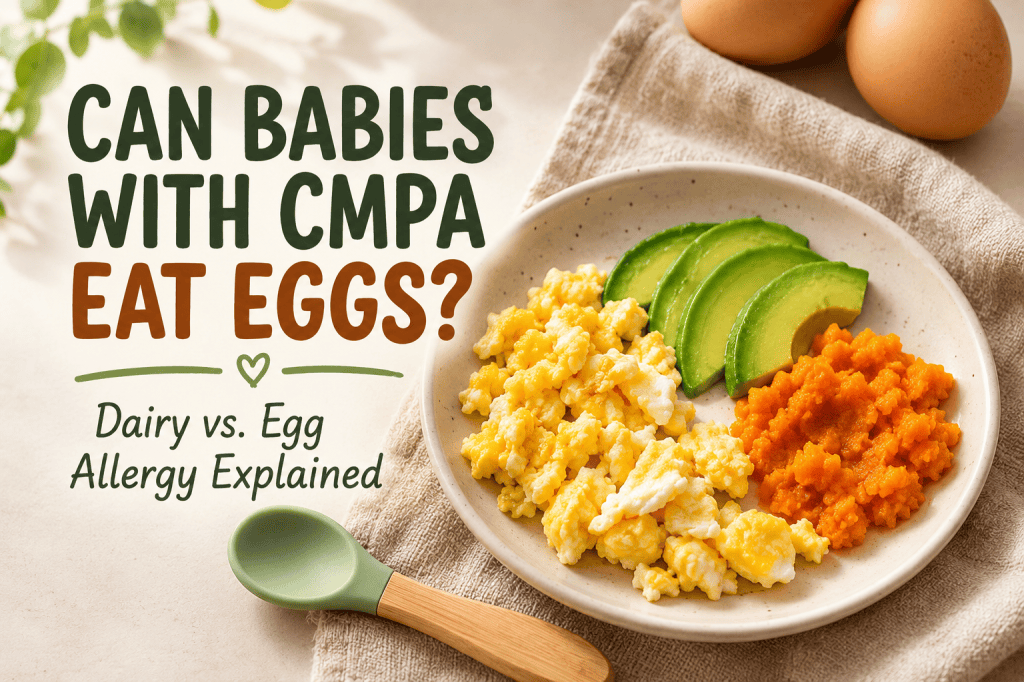
Your baby has cow’s milk protein allergy, you’ve finally figured out which dairy foods need to disappear, and then it’s time to start solids. You look at an egg and suddenly another question appears: Wait… are eggs dairy too? It’s an understandable question. Eggs are sold in the dairy section of many grocery stores, they’re commonly eaten alongside cheese and butter, and recipes frequently combine eggs with milk. But nutritionally and allergically, eggs and dairy are two completely different things.
Eggs are not dairy. Dairy foods come from the milk of mammals, such as cows. Eggs come from birds. Having cow’s milk protein allergy therefore doesn’t automatically mean your baby needs to avoid eggs. There is an important catch, though: egg is itself a common food allergen. A baby can have CMPA and tolerate egg perfectly well, have an egg allergy without CMPA, or have allergies to both. That’s why the question isn’t simply whether eggs contain dairy. It’s whether and how egg should be introduced based on your baby’s individual allergy history.
👉 If you’re just beginning solids, start with [CMPA and Starting Solids: What Parents Need to Know Before Baby’s First Foods].
Are Eggs Dairy?
No. Eggs don’t contain cow’s milk protein simply because they’re commonly grouped with dairy foods at the grocery store.
Milk, cheese, yogurt, cream, and butter are dairy products. An ordinary chicken egg isn’t. This distinction matters because unnecessarily eliminating egg can make feeding a baby with CMPA more restrictive than it needs to be. If your baby only needs to avoid cow’s milk protein, that restriction doesn’t automatically extend to eggs, soy, wheat, peanuts, tree nuts, fish, sesame, or other common food allergens. Each food needs to be considered separately.
👉 For a bigger list of foods that may be available to your baby, see [What Can My Baby Eat With CMPA? A Complete Dairy-Free Baby Food List].
Why Do People Think Eggs Are Dairy?
A lot of the confusion is practical rather than scientific. Eggs are often refrigerated near milk and cheese. They’re included in traditional “dairy and eggs” grocery categories, and many breakfast foods combine the two. Think about scrambled eggs cooked in butter, an omelet filled with cheese, French toast made with milk, or pancakes containing both egg and milk. In those foods, egg and dairy appear together—but the egg itself still isn’t dairy. For a baby with CMPA, that distinction is useful. An egg prepared without cow’s milk ingredients may fit the baby’s diet if egg itself has been appropriately introduced and tolerated.
Does CMPA Mean My Baby Is More Likely to Have Other Food Allergies?
Having one food allergy can be relevant when healthcare professionals assess a child’s risk for other food allergies, particularly when other allergic conditions such as eczema are also present. But CMPA doesn’t tell you that your baby will be allergic to egg.
That’s an important difference. It can be tempting after one food allergy to become afraid of every major allergen and delay them all. But avoiding foods indefinitely “just in case” isn’t necessarily the best approach either. Current allergen-introduction guidance generally doesn’t support unnecessarily delaying common allergens for all babies, although the appropriate approach can differ for higher-risk children. Because your baby already has suspected or diagnosed CMPA, their pediatrician or allergist is the right person to help determine whether you need any individualized precautions before introducing egg.
When Can Babies Eat Eggs?
Egg can be introduced during complementary feeding once a baby is developmentally ready for solids and it’s appropriate based on their individual allergy history. There isn’t a special rule saying babies with CMPA must wait until toddlerhood simply because cow’s milk is being avoided. Developmental readiness matters more broadly for starting solids. Babies need to be able to manage the foods and textures they’re offered safely, and preparation should be appropriate for their feeding skills. If your baby has a history that places them at higher risk of food allergy, your healthcare professional may give you more specific instructions about when and where to introduce egg.
Should I Ask My Pediatrician Before Giving Egg to a Baby With CMPA?
If your baby has already been diagnosed with a food allergy, it’s reasonable to discuss introduction of other major allergens with their pediatrician or allergist. That doesn’t necessarily mean your baby needs allergy testing before eating every new food. The recommendation may depend on factors such as the type of CMPA your baby has, previous reactions, whether they have eczema, whether another food allergy is suspected or diagnosed, and their overall medical history. The goal isn’t to make allergen introduction frightening. It’s to make the plan appropriate for your baby rather than a generic baby on the internet.
What If My Baby Has Non-IgE CMPA?
CMPA isn’t one single presentation. Some reactions are IgE-mediated and may happen relatively quickly after exposure, while non-IgE-mediated conditions can involve different symptoms and timing. That distinction can affect diagnosis, management, and how foods are eventually reassessed. It can also influence the individualized advice you receive about introducing other foods. Having non-IgE CMPA still doesn’t automatically mean egg must be removed. If you’re already working with a pediatrician, allergist, or dietitian for CMPA, ask whether they have any specific recommendations for introducing egg rather than assuming it belongs on the avoidance list.
What If My Baby Has Eczema Too?
Eczema is relevant because babies with eczema—particularly more significant eczema—may have a higher risk of food allergy. That doesn’t mean a baby with eczema is automatically allergic to egg, nor does it mean egg should simply be avoided. Instead, eczema is one of the factors a healthcare professional may consider when deciding how allergenic foods should be introduced. If your baby has CMPA plus significant eczema or another known food allergy, this is a particularly reasonable situation to ask your pediatrician or allergist about egg before introducing it.
Does Egg Contain Milk Protein?
A plain egg doesn’t contain cow’s milk protein. But egg dishes absolutely can.
Scrambled eggs may be prepared with milk, cream, butter, or cheese. Omelets often contain cheese. Quiche commonly contains milk or cream. French toast usually combines eggs with another liquid and may be cooked in butter. Egg muffins and baked breakfast foods can contain cheese or milk. So when feeding a baby with CMPA, you need to distinguish between egg as an ingredient and a prepared egg dish. The egg may be fine from a cow’s-milk-protein standpoint while the recipe isn’t.
Can I Scramble Eggs Without Milk?
Yes. Scrambled eggs don’t require cow’s milk to cook. If egg has been appropriately introduced and your baby tolerates it, it can be prepared without adding milk, cheese, or butter. How the finished egg should be served depends on your baby’s developmental stage and feeding abilities. There’s also no nutritional requirement that scrambled eggs contain milk. Adding milk is simply one way adults sometimes prepare them. This is exactly the kind of simple change that can make CMPA feeding easier: don’t replace the milk if the recipe never actually needed it.
What About Butter?
Traditional butter is a dairy product, so cooking an otherwise milk-free egg in butter introduces cow’s milk protein. Depending on your baby’s age and diet, eggs can be prepared using an appropriate dairy-free cooking method rather than automatically reaching for a specialty butter replacement. If you use a packaged dairy-free spread or oil, make sure it’s appropriate for your baby’s diet and check its ingredients. The same principle applies to the pan as it does to the egg: what you add during preparation matters.
Eggs Can Actually Make Dairy-Free Breakfast Easier
If egg is safely established in your baby’s diet, it opens up a lot of easy breakfast possibilities. Egg can be paired with avocado, sweet potato, appropriately prepared vegetables, fruit, milk-free toast, or other foods your baby already tolerates. That’s particularly useful with CMPA because you don’t need cheese, yogurt, or butter to create a substantial breakfast.
👉 For more ideas, see [25 Dairy-Free Baby Breakfast Ideas for Babies With CMPA].
Don’t Turn CMPA Into an “Avoid Everything” Diet
This may be the most important point in the entire article. Once your baby reacts to one food, it’s completely understandable to become cautious about everything else. But there’s a difference between appropriate caution and unnecessary restriction. CMPA means your baby needs an appropriate plan for avoiding cow’s milk protein. It doesn’t automatically create allergies to egg, soy, wheat, peanut, tree nuts, fish, sesame, or other foods. If another food causes concern, investigate that specific food with your baby’s healthcare professional rather than gradually removing entire categories from your baby’s diet without a clear reason. The goal isn’t to create the longest possible list of “safe” foods. It’s to build the widest varied diet your baby can safely tolerate.
Egg Allergy and CMPA Are Two Different Allergies
Cow’s milk protein allergy and egg allergy are both food allergies, but they’re reactions to proteins from completely different foods. With CMPA, the problem involves proteins found in cow’s milk. With egg allergy, the immune system reacts to proteins found in egg. A baby can have CMPA without egg allergy, egg allergy without CMPA, both allergies, or neither. That’s why an existing CMPA diagnosis shouldn’t automatically be used as evidence that egg needs to be removed too. This distinction becomes especially important during complementary feeding. If every common allergen gets eliminated because your baby reacted to milk, their diet can become unnecessarily restrictive very quickly.
How Should Egg Be Introduced?
If your baby’s healthcare professional has said home introduction is appropriate, egg should be prepared in an age-appropriate form and thoroughly cooked. The exact texture depends on your baby’s developmental stage and feeding abilities. When introducing a common allergen, it can also be useful to avoid introducing several completely new foods at exactly the same time. That way, if something concerning happens afterward, you have a clearer idea of which new food may have been involved. Because a baby with known CMPA already has a food-allergy history, follow any individualized allergen-introduction instructions you’ve received from their pediatrician or allergist rather than relying on a rigid online schedule.
Does Egg Need to Be Fully Cooked?
For babies, appropriately cooked egg is generally the starting point rather than raw or undercooked egg. This isn’t only an allergy consideration; food safety matters too. You may encounter online discussions about different forms of egg—such as baked egg, cooked egg, or less-cooked egg—but don’t turn that into a home experiment for a baby with a suspected egg allergy. If egg has previously caused concerning symptoms, ask your baby’s healthcare professional what form, if any, should be tried next.
Is Baked Egg Different From Regular Egg?
This is where food allergy can become more complicated. Some children with diagnosed egg allergy may tolerate egg when it has been extensively heated in baked foods while reacting to less-heated forms of egg. But that doesn’t mean parents should test baked egg at home after a suspected reaction. Whether baked egg is appropriate depends on the child’s individual allergy history and should be discussed with their allergist or another qualified healthcare professional. For a baby who has CMPA but no known egg allergy, the bigger challenge with baked foods may actually be the other ingredients. Muffins, pancakes, waffles, breads, and cakes containing egg frequently contain cow’s milk, butter, whey, or other milk ingredients too.
Hidden Egg vs. Hidden Dairy
Once you’re checking labels for CMPA, it’s easy to start treating every allergen word as though it belongs to the same restriction. It doesn’t.
If a product lists milk, that’s relevant to cow’s milk allergy. If it lists egg, that’s relevant to egg allergy. A baby who needs to avoid milk but safely tolerates egg doesn’t automatically need to avoid the product solely because egg appears in the ingredient list.Of course, a product containing both milk and egg still wouldn’t fit a cow’s-milk-protein-free diet because of the milk. Learning to separate allergens mentally can make label reading much easier. Instead of thinking, “This contains an allergen, so my baby can’t eat it,” ask, “Does this contain the specific food my baby needs to avoid?”
👉 For more help identifying milk ingredients, read [50 Hidden Sources of Dairy (Even Dairy-Free Moms Miss These)].
What Foods Commonly Contain Egg?
Egg can appear in foods such as baked goods, pancakes, waffles, French toast, mayonnaise, certain pastas, breaded foods, and other prepared products. But whether that matters depends on whether your baby actually needs to avoid egg. The same foods can also contain dairy, which is why a CMPA parent can’t simply see “egg-free” and assume a product is appropriate. An egg-free muffin could still contain cow’s milk. A dairy-free pancake could still contain egg. Front-of-package claims answer only part of the question. The ingredient information tells you much more.
What If My Baby Seems to React After Eating Egg?
If something concerning happens after introducing egg, stop treating egg as a routine tolerated food and contact your baby’s healthcare professional for guidance. Keep track of what your baby ate, approximately when they ate it, and what you observed. That information can help their clinician determine what should happen next. Don’t repeatedly feed egg at home just to “make sure” it caused the problem. Similarly, don’t automatically conclude that your baby has an egg allergy based on one vague symptom without discussing it with a healthcare professional. Babies can develop rashes, digestive symptoms, fussiness, and other symptoms for many reasons. Timing, consistency, the type of symptoms, and the child’s history all matter when evaluating a possible food allergy.
Should My Baby Have an Allergy Test Before Trying Egg?
Not every baby with CMPA automatically needs testing for egg before eating it. Testing decisions depend on the individual child’s history and risk factors.
This is another reason blanket rules aren’t particularly useful. One baby may have mild non-IgE-mediated CMPA and no other allergy concerns, while another may have a history of immediate reactions, significant eczema, or another diagnosed food allergy. Their healthcare professionals may reasonably recommend different approaches. Also remember that allergy testing isn’t a simple screening test for every food your baby might someday eat. Results need to be interpreted alongside the child’s actual clinical history.
What If My Baby Has Both CMPA and Egg Allergy?
If your baby genuinely needs to avoid both milk and egg, feeding becomes more restrictive—but there are still many foods available. Fruits, vegetables, rice, oats, potatoes, sweet potatoes, beans, lentils, avocado, meats, and other foods may still be options depending on your baby’s individual allergies and developmental stage. Foods containing soy, wheat, peanut, tree nuts, fish, sesame, and other allergens need to be considered based on your baby’s individual history rather than automatically eliminated because milk and egg are excluded. This is where our complete food list becomes particularly useful.
👉 See [What Can My Baby Eat With CMPA? A Complete Dairy-Free Baby Food List] for naturally dairy-free foods and simple meal combinations.
Dairy-Free and Egg-Free Breakfast Doesn’t Have to Be Difficult
Breakfast initially feels like the hardest meal when both dairy and egg are removed because so many traditional breakfast foods involve one or both. But breakfast doesn’t have to mean eggs, yogurt, cheese, or milk. Depending on foods your baby safely tolerates, breakfast might include oatmeal and fruit, avocado and milk-free toast, sweet potato, beans, fruit with an appropriately prepared seed or nut product, or leftovers from another meal. You don’t necessarily need a specialty “egg replacer” every morning either. Just as we don’t need to replace cheese at every dairy-free meal, we don’t need to recreate scrambled eggs when egg isn’t available.
Can My CMPA Baby Eat Mayonnaise?
Traditional mayonnaise commonly contains egg, but it doesn’t necessarily contain dairy. This is another perfect example of why egg and dairy shouldn’t be treated as synonyms. If your baby only needs to avoid cow’s milk protein and safely tolerates egg, the presence of egg itself isn’t a CMPA problem. However, ingredients vary by product, and whether mayonnaise is appropriate for your baby also depends on their age, the specific product, and how it’s being served. If your baby needs to avoid both milk and egg, you’d need to evaluate the product for both allergens.
Can My CMPA Baby Eat Pasta With Egg?
Some pasta contains egg and some doesn’t. Again, egg isn’t automatically a problem for CMPA. The bigger milk risk may come from what goes on the pasta. Cheese, cream sauces, butter, and prepared sauces can contain cow’s milk protein even when the pasta itself doesn’t. A simple pasta with an appropriate dairy-free sauce can therefore be an option for some babies with CMPA, whether the pasta contains egg or not, provided egg has been safely introduced and the food is appropriate for the baby’s developmental stage.
What About Pancakes and Waffles?
Pancakes and waffles are particularly confusing because recipes vary so much. Traditional recipes often contain both milk and egg, while dairy-free recipes may retain the egg and replace or remove only the milk ingredients. For a baby with CMPA who tolerates egg, that’s potentially fine from an allergy standpoint as long as the remaining ingredients are appropriate. For a baby avoiding both milk and egg, you’ll need a recipe or product that excludes both. The takeaway isn’t that pancakes are safe or unsafe. It’s that recipes matter more than food names.
Should I Avoid Egg While Breastfeeding Because My Baby Has CMPA?
CMPA alone isn’t a reason to automatically remove egg from your own diet while breastfeeding. If you’ve been advised to eliminate cow’s milk protein, adding egg, soy, wheat, nuts, or other foods to your elimination diet without a specific reason can make your diet significantly more restrictive and nutritionally difficult. If symptoms haven’t improved as expected despite correctly eliminating cow’s milk protein, that’s a reason to discuss the situation with your baby’s healthcare professional—not necessarily a reason to start removing food groups one after another yourself.
👉 If you’re still working through your own elimination diet, read [The Cow’s Milk Protein Allergy Elimination Diet While Breastfeeding: A Complete Step-by-Step Guide].
Keep the Goal in Mind: Variety, Not Maximum Restriction
Parents dealing with food allergy naturally become good at avoiding things. You read labels, check restaurant ingredients, question recipes, and notice milk hiding in places you never would have considered before.
But once your baby starts solids, another skill becomes equally important: learning what you don’t need to avoid. If your baby safely tolerates egg, that’s another nutritious and versatile food available to them. If they tolerate soy, that’s another. The same principle applies as other foods are appropriately introduced. A successful CMPA diet isn’t the diet with the fewest foods. It’s one that safely removes the actual trigger while allowing your baby to eat as varied and nutritionally adequate a diet as possible.
CMPA vs. Egg Allergy: The Simple Difference
The easiest way to remember the difference is that CMPA involves cow’s milk proteins, while egg allergy involves proteins found in eggs. They are separate food allergies, even though a child can have both. A baby with CMPA generally needs to avoid foods containing cow’s milk protein according to their allergy plan. That doesn’t automatically mean avoiding egg. Likewise, a baby with egg allergy doesn’t automatically need to avoid cow’s milk. Once you separate the two in your mind, grocery shopping and meal planning become much easier.
If Your Baby Tolerates Egg, It Can Be a Useful Food
If egg has been appropriately introduced and your baby tolerates it, there’s no reason to treat it like dairy simply because your baby has CMPA. Egg can provide protein, fat, vitamins, minerals, and another texture and flavor for your baby to experience. It can also make dairy-free meal planning easier. Depending on your baby’s age and feeding abilities, appropriately prepared egg can be combined with avocado, sweet potato, vegetables, fruit, oatmeal, or milk-free toast. You can also use egg as an ingredient in appropriately prepared dairy-free pancakes, baked foods, and other family meals. The important word is dairy-free. An egg may contain no cow’s milk protein, but scrambling it in butter or covering it in cheese changes the finished food.
Easy Dairy-Free Meal Ideas Using Egg
You don’t need complicated CMPA recipes to use egg. If your baby safely eats egg, you can build meals from ordinary foods you already have. Breakfast could be appropriately prepared egg with avocado and banana. Another morning could be egg with sweet potato and berries. As your baby progresses with solids, appropriately prepared dairy-free pancakes containing egg might offer another option. Lunch or dinner could include egg alongside vegetables, rice, potato, avocado, or another food your baby safely eats. Egg doesn’t need to remain a “breakfast food.”
👉 For more morning ideas, read [25 Dairy-Free Baby Breakfast Ideas for Babies With CMPA].
What If My Baby Can’t Have Milk OR Egg?
If your baby has been diagnosed with both allergies, don’t panic and start eliminating every other major allergen too. Milk and egg avoidance certainly reduces some convenient food choices, but there’s still a large amount of food potentially available. Depending on your baby’s other allergies and foods already safely introduced, meals can still be built around fruits, vegetables, oats, rice, potatoes, sweet potatoes, beans, lentils, meat, fish, avocado, and many other foods. Packaged foods may require more label reading because milk and egg frequently appear together in baked goods, breakfast foods, breads, crackers, and other prepared products. If multiple foods need to be eliminated long term, working with a pediatric dietitian can be particularly helpful for maintaining adequate nutrition and variety.
👉 See [What Can My Baby Eat With CMPA? A Complete Dairy-Free Baby Food List] for many more food options.
Don’t Replace Egg With Dairy
This sounds obvious, but it can become surprisingly relevant when adapting recipes. If you’re making a meal without egg, don’t automatically use cheese, yogurt, or another dairy ingredient to add protein, fat, moisture, or texture if your baby has CMPA. Instead, choose recipes that naturally fit your baby’s restrictions or use an appropriate substitution when necessary. The easiest allergy-friendly meals are often the ones that never depended heavily on either restricted food in the first place.
Frequently Asked Questions About CMPA and Eggs
Are Eggs Dairy?
No. Eggs aren’t dairy products. Dairy comes from mammalian milk, while eggs come from birds. Eggs are frequently sold near dairy products and used in recipes containing milk, but that doesn’t make the egg itself dairy.
Can Babies With CMPA Eat Eggs?
Potentially, yes. CMPA doesn’t automatically mean a baby is allergic to egg. Egg is a separate common food allergen, so it should be introduced in a way that’s appropriate for your baby’s age, developmental readiness, allergy history, and healthcare guidance.
Can a Baby With a Milk Allergy Eat Eggs?
A cow’s milk allergy alone doesn’t require egg avoidance. If the baby also has an egg allergy or has been specifically advised to avoid egg, that’s a separate issue.
Does Egg Contain Cow’s Milk Protein?
A plain chicken egg doesn’t contain cow’s milk protein. However, prepared egg dishes can contain milk ingredients. Scrambled eggs, omelets, quiches, baked goods, pancakes, and other egg-containing foods may also contain butter, milk, cheese, cream, or whey.
Are Scrambled Eggs Dairy-Free?
They can be. Plain eggs prepared without cow’s milk, butter, cream, cheese, or other milk ingredients can be dairy-free. But recipes vary, so don’t assume scrambled eggs prepared by someone else are milk-free. This is especially important at restaurants, where butter or milk may be added without being obvious.
Can Babies With CMPA Eat Baked Goods With Eggs?
If your baby safely tolerates egg, the egg itself isn’t a CMPA problem. The challenge is that baked goods frequently contain cow’s milk ingredients too. Check the recipe or ingredient label for milk, butter, whey, milk powder, and other dairy ingredients.
Can a CMPA Baby Have Mayonnaise?
Traditional mayonnaise commonly contains egg but doesn’t necessarily contain dairy. If your baby tolerates egg and only needs to avoid cow’s milk protein, egg itself isn’t a reason to exclude mayonnaise. Ingredients vary, though, and the specific product and your baby’s age and diet still need to be considered.
Can a CMPA Baby Eat Egg Pasta?
Some pasta contains egg and some doesn’t. If your baby safely tolerates egg, the presence of egg isn’t automatically a concern because of CMPA. Check the pasta and especially any sauce or prepared dish for milk ingredients.
Can Babies With CMPA Eat Pancakes?
Potentially. Pancakes aren’t inherently safe or unsafe for CMPA because recipes vary. Some contain cow’s milk or butter, while dairy-free recipes may contain egg but no milk ingredients. If your baby tolerates egg, a properly prepared dairy-free pancake may fit their diet. If they need to avoid both milk and egg, you’ll need a recipe or product that excludes both.
Does CMPA Mean My Baby Will Develop an Egg Allergy?
No. Having CMPA doesn’t mean your baby will definitely develop egg allergy. However, an existing food allergy can be relevant when healthcare professionals assess a child’s overall allergy risk, so discuss introduction of other major allergens with your baby’s healthcare professional if you have concerns.
Should I Avoid Eggs While Breastfeeding a Baby With CMPA?
CMPA alone isn’t a reason to automatically eliminate egg from your own diet. If you’ve been advised to follow a cow’s-milk-protein elimination diet while breastfeeding, unnecessarily removing additional foods can make your diet much more restrictive. If your baby’s symptoms aren’t improving as expected, discuss that with their healthcare professional before expanding your elimination diet.
👉 Read [Do I Have to Cut Out Soy Too While Dairy-Free Breastfeeding? (What Most Moms Don’t Know)] for the same important principle with soy.
What If My Baby Reacts the First Time They Eat Egg?
If you observe concerning symptoms after egg introduction, stop treating egg as a routinely tolerated food and contact your baby’s healthcare professional for advice. Record what your baby ate, when they ate it, and what you observed so you can provide useful information. Don’t intentionally keep feeding egg at home to see whether the same thing happens again after a suspected allergic reaction. Your baby’s healthcare professional can determine the appropriate next step based on the symptoms and medical history.
Should I Test for Egg Allergy Just Because My Baby Has CMPA?
Not necessarily. Allergy testing should be interpreted alongside a child’s actual history, and CMPA doesn’t automatically mean every other major allergen needs to be tested. Your pediatrician or allergist can determine whether testing is appropriate based on factors such as your baby’s previous reactions, type of CMPA, eczema, other suspected allergies, and medical history.
One Food Allergy Doesn’t Mean Every Food Is Dangerous
This is worth repeating because food-allergy parenting can quickly change how you look at food. After you’ve seen your baby struggle with symptoms and spent weeks checking every ingredient for milk, caution becomes almost automatic.
But the goal of CMPA management isn’t to create the smallest diet possible. It’s to remove cow’s milk protein appropriately while allowing your baby to develop a varied diet containing foods they can safely tolerate. Egg may be one of those foods.
Soy may be another. Wheat, peanut, tree nuts, fish, sesame, and other foods may eventually become part of your baby’s diet as they’re appropriately introduced. Each food gets its own answer.
Final Thoughts
So, can babies with CMPA eat eggs? CMPA by itself doesn’t mean eggs need to be avoided. Eggs aren’t dairy and don’t inherently contain cow’s milk protein. Egg is, however, a separate common food allergen, which means introduction should be appropriate for your baby’s age, developmental stage, allergy history, and any individualized guidance you’ve received.
If egg is successfully introduced and tolerated, it can become another useful food in your baby’s dairy-free diet. You can serve it with naturally dairy-free foods such as avocado, sweet potato, fruit, vegetables, or appropriately prepared toast without needing cheese, butter, or cow’s milk.
If your baby appears to react to egg, don’t assume it’s simply another part of CMPA and don’t repeatedly test it yourself. Discuss the reaction with their healthcare professional so egg can be evaluated separately. Perhaps most importantly, don’t let one diagnosed allergy convince you that your baby needs to avoid everything. CMPA tells you what needs careful management. It doesn’t define every food your baby can eat.
You May Also Enjoy
👉 What Can My Baby Eat With CMPA? A Complete Dairy-Free Baby Food List
👉 CMPA and Starting Solids: What Parents Need to Know Before Baby’s First Foods
👉 25 Dairy-Free Baby Breakfast Ideas for Babies With CMPA
👉 Do I Have to Cut Out Soy Too While Dairy-Free Breastfeeding? (What Most Moms Don’t Know)
👉 50 Hidden Sources of Dairy (Even Dairy-Free Moms Miss These)
👉 The Cow’s Milk Protein Allergy Elimination Diet While Breastfeeding: A Complete Step-by-Step Guide
👉 Dairy Allergy vs Lactose Intolerance in Breastfed Babies (What Is the Difference?)
Medical Disclaimer
The information in this article is intended for educational and informational purposes only and isn’t a substitute for individualized medical, allergy, nutritional, or feeding advice. Food-allergy risk and allergen-introduction recommendations can differ based on a baby’s age, developmental readiness, eczema, existing food allergies, previous reactions, and medical history. If your baby has diagnosed or suspected CMPA, egg allergy, or another food allergy, work with your child’s pediatrician, allergist, pediatric dietitian, or another qualified healthcare professional when deciding how and when to introduce or avoid allergenic foods. Do not intentionally reintroduce a food that has previously caused a suspected allergic reaction unless your child’s healthcare professional has advised that doing so is appropriate. Always prepare foods in developmentally appropriate ways and follow established infant-feeding and choking-safety guidance. Seek urgent medical care for potentially serious or rapidly developing allergic symptoms. Never delay or disregard professional medical advice because of information you have read on this website.



Leave a comment