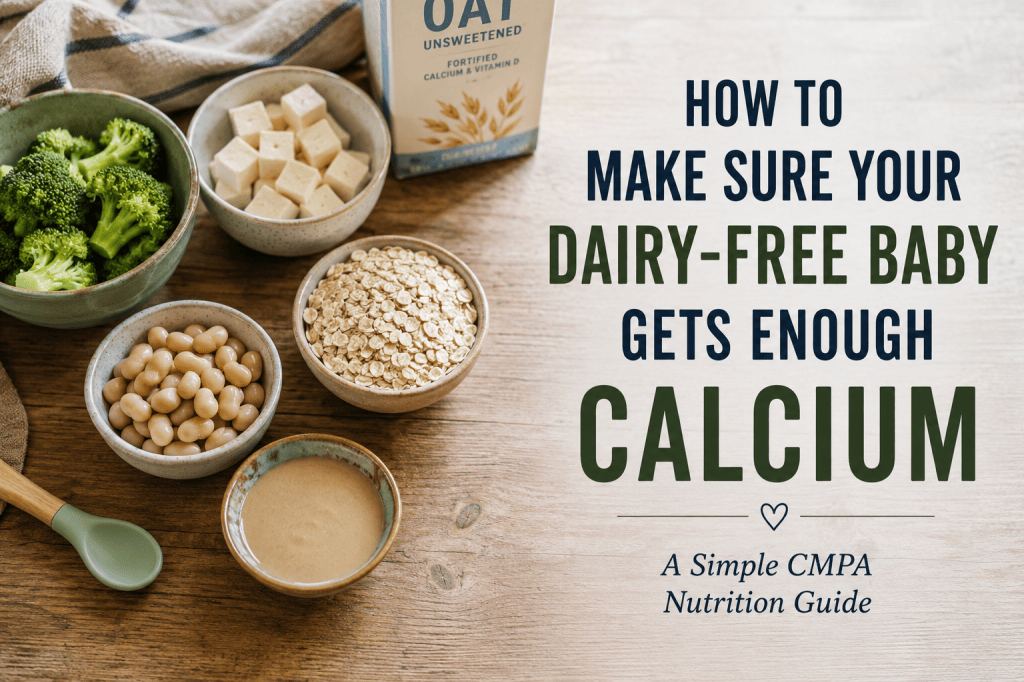
How to Make Sure Your Dairy-Free Baby Gets Enough Calcium
Once your baby has cow’s milk protein allergy, you get very good at thinking about what needs to come out of their diet. No milk. Check the yogurt. Check the cheese. Read the bread label. Ask what’s in the restaurant food. Check the crackers again because apparently milk can show up just about anywhere. But as your baby starts eating more solid food, another question becomes just as important: What needs to go back in? Dairy foods can provide several important nutrients, including calcium. If your baby needs to avoid cow’s milk protein, that doesn’t mean they’re destined to have a calcium-deficient diet—but it does mean you need to think about nutrition rather than focusing only on allergen avoidance. Fortunately, dairy isn’t the only source of calcium. Depending on your baby’s age, feeding method, foods already safely introduced, and individual nutritional needs, calcium can come from breast milk or appropriate infant formula, fortified foods, and naturally calcium-containing foods. The goal isn’t to find one magical dairy replacement. It’s to build a varied diet that provides the nutrients your growing baby needs.
👉 If you’re still figuring out what foods are available, start with [What Can My Baby Eat With CMPA? A Complete Dairy-Free Baby Food List].
Why Is Calcium Important for Babies?
Calcium is probably best known for its role in developing strong bones and teeth, but that’s not its only job. The body also uses calcium for normal muscle function, nerve signaling, and other important processes. Infancy and childhood are periods of rapid growth, which is why adequate nutrition matters so much. The reassuring part is that a baby doesn’t need to eat cheese or yogurt specifically to grow normally. They need the nutrients those foods can provide, and those nutrients can come from other appropriate sources when dairy needs to be excluded. That’s an important distinction. A dairy-free diet isn’t automatically nutritionally inadequate. A poorly planned dairy-free diet can be.
How Much Calcium Does a Baby Need?
Calcium needs change with age, and babies are different from toddlers and older children. During early infancy, breast milk or appropriate infant formula generally provides the majority of nutrition. Once complementary foods begin, solids gradually contribute more nutrients while breast milk or formula remains nutritionally important during the first year. After the first birthday, the overall diet changes again, which is when dairy-free nutrition may require more deliberate planning. Rather than trying to make every meal hit a calcium target, think about your baby’s overall intake across the day and week. If your baby has CMPA, especially if several foods are restricted, their pediatrician or pediatric dietitian can help determine whether their diet is meeting age-appropriate nutritional needs.
Breast Milk Still Provides Nutrition
If you’re breastfeeding a baby with CMPA, cow’s milk protein elimination from your own diet doesn’t mean your breast milk suddenly stops providing calcium to your baby. Your body regulates the calcium concentration of breast milk. The nutritional concern is also making sure you are getting enough calcium and other nutrients while following a dairy-free diet. That’s easy to overlook. Parents become so focused on protecting the baby from milk protein that their own diet gets pushed to the bottom of the priority list. If you’re breastfeeding and have eliminated dairy for an extended period, discuss your own calcium and vitamin D intake with your healthcare professional or dietitian as well.
👉 Read [The Cow’s Milk Protein Allergy Elimination Diet While Breastfeeding: A Complete Step-by-Step Guide] if you’re managing CMPA through your own diet.
What About Formula-Fed Babies With CMPA?
If your baby requires formula and has diagnosed CMPA, their healthcare professional may recommend an appropriate specialized infant formula. Infant formula is nutritionally designed to provide the nutrients babies need, including calcium. That means parents generally shouldn’t try to recreate formula nutrition themselves using ordinary plant-based beverages. This distinction is extremely important. Oat milk, almond milk, coconut milk, and other ordinary plant beverages aren’t interchangeable with infant formula. Before 12 months, don’t replace breast milk or appropriate infant formula with a regular plant beverage unless your baby’s healthcare professional has specifically directed otherwise.
👉 For the bigger milk discussion, read [What Milk Can a Baby With CMPA Drink? Formula, Breast Milk & Milk Alternatives Explained].
What Changes When Solids Begin?
Around the time complementary feeding begins, your baby starts experiencing foods that provide nutrients in addition to breast milk or formula. Initially, they may eat tiny amounts. That’s normal. Solids don’t suddenly replace their primary milk nutrition overnight. As intake gradually increases, however, you can start offering foods that contribute calcium alongside iron, protein, healthy fats, and other nutrients. This is where variety matters. Instead of trying to recreate a traditional dairy-heavy baby diet using specialty substitutes, you can build meals from naturally dairy-free foods and thoughtfully selected fortified products when appropriate.
👉 If you’re at this stage now, read [CMPA and Starting Solids: What Parents Need to Know Before Baby’s First Foods].
Dairy-Free Foods That Can Provide Calcium
Several non-dairy foods contain calcium, although the amount and how easily the body absorbs it can vary. Depending on your baby’s age, developmental readiness, allergies, and foods already introduced, calcium-containing options may include foods such as calcium-set tofu, certain beans, some leafy green vegetables, tahini or sesame products, and certain fish when developmentally appropriate and safely prepared. Fortified foods can also make a major contribution. The important word is appropriate. A list of calcium-rich foods for adults isn’t automatically a feeding list for a six-month-old baby. Texture, choking risk, sodium, other allergens, preparation, and developmental readiness all matter.
Calcium-Set Tofu
Tofu can be particularly useful in some dairy-free diets because certain types are made using calcium salts and can provide meaningful calcium. But not every tofu contains the same amount. Check the nutrition label rather than assuming all tofu is a major calcium source. You may see calcium listed very differently between two seemingly identical packages. Soy is also a common allergen. CMPA doesn’t automatically mean your baby needs to avoid soy, but soy should be considered separately based on your baby’s individual allergy history.
👉 Read [Do I Have to Cut Out Soy Too While Dairy-Free Breastfeeding? (What Most Moms Don’t Know)] if soy is another concern in your household.
What About Leafy Green Vegetables?
Some green vegetables contain calcium, but this is where nutrition lists can become misleading. A food containing calcium doesn’t necessarily mean your baby can realistically eat enough of it to meet their needs. Babies have tiny stomachs, and the amount of calcium absorbed from different foods varies. Vegetables such as broccoli and certain greens can absolutely contribute to a varied diet, but I wouldn’t build your entire calcium strategy around getting a baby to eat giant bowls of kale. Think of these foods as contributors, not necessarily one-for-one replacements for dairy.
Beans and Lentils
Beans and lentils are another useful part of many dairy-free diets. They can contribute protein, fiber, minerals, and some calcium while also expanding the number of foods and textures your baby experiences. Again, they’re not a magical milk replacement. That’s actually one of the themes I want you to take from this article: your baby doesn’t need one food that replaces everything cow’s milk would have provided. Nutrition can come from the entire diet. One food provides calcium. Another provides protein. Another contributes healthy fat. Fortified foods may fill another gap. That’s how normal diets work.
What About Sesame and Tahini?
Sesame-containing foods, including tahini, can contribute calcium depending on the product. However, sesame is also a major food allergen. Having CMPA doesn’t mean your baby is allergic to sesame, but it does mean you shouldn’t treat a calcium article as permission to introduce allergens without considering your baby’s individual history and feeding guidance. If sesame has been appropriately introduced and tolerated, it may become another useful ingredient in a varied dairy-free diet. Preparation matters too. Whole seeds and thick spoonfuls of nut or seed butter can present feeding concerns for babies, so use age-appropriate forms.
Can Babies Get Calcium From Fish?
Certain fish can provide calcium, particularly when edible soft bones are included, but this needs to be approached through the lens of infant feeding, not adult nutrition. Fish preparation, bones, sodium, mercury considerations, texture, and allergy introduction all matter. So while fish may eventually contribute calcium and other nutrients in a child’s diet, don’t hand your baby an adult serving of canned fish because an online list called it “high calcium.” The broader lesson applies to every food in this article: Nutritionally useful doesn’t automatically mean developmentally appropriate in every form.
Fortified Foods Can Be Extremely Helpful
Fortification is one of the reasons dairy-free eating today can be much easier nutritionally than parents sometimes assume. Certain foods and beverages have calcium added during manufacturing. Depending on the product, they may also contain vitamin D and other nutrients. But fortified doesn’t mean all products are nutritionally identical. One brand may contain substantial calcium while another contains very little. Some products may have added sugars or other ingredients you don’t want for your baby. Some aren’t designed for infants at all. Read the nutrition label. When you’re choosing a dairy alternative, the front of the package tells you what the company wants you to notice. The nutrition panel tells you what you’re actually getting.
Calcium Isn’t the Only Nutrient Dairy Provides
This is where simply asking “How do I replace calcium?” can become too narrow. Dairy foods can also contribute protein, fat, iodine, vitamin B12, riboflavin, vitamin D when fortified, and other nutrients. A product being calcium-fortified therefore doesn’t automatically make it nutritionally equivalent to cow’s milk. This becomes particularly important after infancy when families start considering what beverage should replace cow’s milk in a dairy-free toddler’s diet. We need to look at the whole nutritional profile, not just the calcium number printed on the label.
And Don’t Forget Vitamin D
Calcium and vitamin D are closely connected because vitamin D helps the body absorb calcium and supports bone health. Vitamin D recommendations for babies depend on feeding method, age, intake, and local medical guidance. Breastfed babies in particular are commonly given specific vitamin D supplementation recommendations. CMPA doesn’t eliminate the need to think about vitamin D. If you’re unsure whether your baby should be receiving vitamin D supplementation, ask their pediatrician rather than assuming a calcium-rich diet automatically covers it.
Don’t Turn Every Bite Into a Nutrition Calculation
Once you’re managing an allergy, it’s easy for feeding to become a spreadsheet in your head. Did that have enough calcium? Protein? Iron? Fat? Vitamin D? Did they eat enough? Did they drop half of it on the floor? Does the dog now have the most nutritionally balanced diet in the house? You don’t need to calculate the nutrient content of every spoonful. What matters is the overall pattern: appropriate milk feeding during infancy, varied complementary foods, thoughtful dairy-free substitutions, fortified foods when useful, and professional guidance when restrictions make nutrition complicated. That’s a much more realistic way to feed a baby.
The Best Dairy-Free Calcium Sources for Babies
Once you start looking beyond dairy, you’ll find calcium in more places than you might expect. The trick is understanding that not every calcium-containing food provides the same amount, and not every food is appropriate for every baby. Rather than trying to find one perfect replacement for yogurt or cheese, think in categories: your baby’s breast milk or appropriate formula, naturally calcium-containing foods, fortified foods, and eventually—when age appropriate—carefully chosen dairy-free milk alternatives. The combination matters much more than any single food.
Calcium-Set Tofu
If your baby tolerates soy, calcium-set tofu can be one of the more useful dairy-free calcium foods. The important detail is how the tofu was made. Products prepared with calcium salts may contain considerably more calcium than tofu made using other coagulants, so check the nutrition label rather than assuming every block of tofu provides the same amount. Tofu is also versatile. Depending on your baby’s developmental stage, it can be appropriately prepared and combined with vegetables, avocado, grains, or other foods your baby already tolerates. And remember: CMPA doesn’t automatically mean soy needs to be avoided.
Beans and Lentils
Beans and lentils aren’t usually the first foods people associate with calcium, but they can contribute to overall intake while providing other useful nutrients such as protein, fiber, iron, and other minerals. That’s exactly what we want from a dairy-free diet. Instead of asking, “What food replaces cheese?”, look for foods that contribute several useful nutrients across the day. Depending on your baby’s feeding abilities, beans can be mashed, blended, incorporated into other foods, or served in another developmentally appropriate form.
Broccoli and Other Vegetables
Certain vegetables can contribute calcium too. Broccoli is a particularly practical example because it can eventually become a normal part of family meals rather than a specialty “dairy-free” food. Some leafy greens contain calcium as well, although absorption differs between vegetables because naturally occurring compounds can affect how much calcium the body absorbs. You don’t need to memorize the chemistry. Just don’t assume that because a chart lists a vegetable as high in calcium, a few bites automatically provide the same nutritional contribution as a calcium-fortified food.
Variety wins again.
Sesame and Tahini
If sesame has been appropriately introduced and tolerated, tahini can be another useful ingredient in a dairy-free diet. It can be incorporated into foods rather than offered in a thick spoonful, which may not be appropriate for a young baby. Sesame is also a common food allergen, so introduction should follow the feeding guidance appropriate for your baby. One useful feature of foods such as tahini is that they can contribute energy and fat as well as minerals, which can be valuable when you’re trying to build nutritionally substantial dairy-free meals.
Fortified Cereals and Other Foods
Some cereals and other foods are fortified with calcium, iron, vitamin D, or additional nutrients. These can sometimes help fill nutritional gaps, but fortification varies dramatically by product. This is why I don’t want to give you a blanket rule like “Buy dairy-free cereal for calcium.” One cereal might provide substantial calcium. Another may provide almost none. Turn the package around and look.
How to Read Calcium on a Nutrition Label
Nutrition labels are one of the most useful tools you have here. Look for calcium in the nutrition information. Depending on where you live and the labeling format, you may see an amount, a percentage Daily Value, or both. For packaged foods you’re considering regularly, compare products side by side. If two dairy-free products look nearly identical but one is calcium-fortified and the other isn’t, that may matter when you’re trying to build a nutritionally adequate dairy-free diet. But don’t judge the product on calcium alone. Also look at things such as protein, fat, added sugars, sodium, vitamin D, and other relevant nutrients, particularly when you’re comparing beverages that may eventually play a substantial role in your child’s diet.
Why Plant Milks Are So Different
Walk down the dairy-free milk aisle and everything looks interchangeable. Oat milk. Almond milk. Soy milk. Coconut milk. Rice milk. Pea-protein beverages. Several blends. Nutritionally, they’re not interchangeable. One product may have substantial protein while another has almost none. One may be fortified with calcium and vitamin D while another isn’t. Some may contain significant added sugar. Others may be very low in calories or fat. That’s why choosing a dairy-free beverage based entirely on which carton looks healthiest isn’t a good strategy. And again, ordinary plant milk isn’t a replacement for breast milk or infant formula during the first year unless your baby’s healthcare professional has specifically directed otherwise.
What Happens After 12 Months?
After the first birthday, the conversation changes. For children without cow’s milk allergy, cow’s milk commonly becomes part of the diet. For a child who still has CMPA, families need to determine what should take its place nutritionally. That’s when choosing an appropriate alternative becomes more important. The best option depends on the child’s entire diet, growth, allergies, nutritional needs, and medical guidance. A pediatrician or pediatric dietitian can help you compare alternatives based on protein, fat, calories, calcium, vitamin D, iodine, and other nutrients rather than simply choosing whichever plant milk your family already drinks.
👉 We cover this in detail in [What Milk Can a Baby With CMPA Drink? Formula, Breast Milk & Milk Alternatives Explained].
Is Oat Milk a Good Source of Calcium?
It can be if it’s fortified, but oat milks vary. A fortified oat beverage may contain a meaningful amount of calcium, while another product may contain considerably less. It also doesn’t necessarily provide the same protein or overall nutritional profile as cow’s milk. So don’t ask only, “Is oat milk good?” Ask: Is this specific oat milk appropriate for my child’s age and nutritional needs? That’s a much better question.
What About Almond Milk?
The same principle applies. Some almond beverages are fortified with calcium and vitamin D, but many are relatively low in protein and calories compared with other options. That doesn’t make almond milk inherently “bad.” It means the nutritional profile matters when you’re deciding what role it should play in a young child’s diet. A beverage that’s perfectly reasonable as an occasional drink for an adult isn’t automatically an adequate primary milk alternative for a growing toddler.
What About Soy Milk?
Fortified soy beverages can have a nutritional profile that differs significantly from many other plant-based beverages, particularly when it comes to protein. But soy is also a common allergen, and some children with CMPA may need to avoid it too. If your child safely tolerates soy, that’s a different situation from a child with confirmed cow’s milk and soy allergies. This is why individualized recommendations matter so much.
What About Coconut Milk?
Coconut beverages can be fortified with calcium, but again, check the whole nutrition label. The protein content in particular can differ substantially from other milk alternatives. Also distinguish between canned coconut milk used in cooking and coconut beverages marketed as milk alternatives. They’re different products with very different nutritional profiles. The word “milk” on the package doesn’t make them nutritionally equivalent.
Don’t Forget to Shake Fortified Plant Milk
This is a surprisingly practical point for later. Some added minerals in fortified plant beverages can settle toward the bottom of the container. If you’re using a fortified beverage, follow the manufacturer’s instructions, which commonly include shaking before serving. Otherwise, what looks like a calcium-fortified drink on the label may not be distributed evenly throughout the carton. It’s a tiny habit, but an easy one.
Calcium and Vitamin D Work Together
Providing calcium is only part of the bone-health picture. Vitamin D helps the body absorb calcium and has important roles of its own. Babies may need vitamin D supplementation depending on their age, feeding method, intake, and medical guidance. This is particularly relevant for breastfed babies because healthcare organizations commonly recommend vitamin D supplementation during infancy under specific circumstances. Don’t assume that because you’re taking a vitamin D supplement yourself, eating a particular diet, or offering calcium-containing solids, your baby’s needs are automatically covered. Ask your pediatrician what your baby should receive.
Does My Dairy-Free Baby Need a Calcium Supplement?
Not automatically. A supplement shouldn’t be the first response simply because dairy has been removed. Whether supplementation is necessary depends on your baby’s age, breast milk or formula intake, solid-food diet, fortified foods, other allergies, growth, and individual nutritional needs. Some babies and toddlers can meet their needs through an appropriately planned diet. Others with significant restrictions may benefit from supplementation under professional guidance. If you’re worried about calcium intake, bring a typical day’s food and milk intake to your pediatrician or dietitian. That’s much more useful than simply asking, “Should I buy calcium drops?”
More Isn’t Better
Calcium is essential, but that doesn’t mean giving increasingly large amounts is beneficial. Supplements can contain concentrated nutrients, which is another reason not to guess at doses for a baby or toddler. If supplementation is recommended, use the product and amount recommended for your child rather than applying adult nutrition advice to a much smaller body.
What About Calcium for the Breastfeeding Mom?
If you’ve eliminated dairy from your own diet while breastfeeding, your nutrition matters too. Dairy foods can be a major calcium source in an adult diet, so removing them without replacing those nutrients can substantially change your intake. Look at your own regular foods. Are you drinking a fortified dairy-free beverage? Eating calcium-containing foods? Has your healthcare professional recommended supplementation? Are you getting adequate vitamin D? Your baby needs a healthy parent feeding them too.
👉 If you’ve recently gone dairy-free yourself, read [What Can I Eat While Breastfeeding Dairy-Free? A Complete Food List for Moms].
A Simple Dairy-Free Baby Breakfast
Once egg has been safely introduced and tolerated, a breakfast might include appropriately prepared egg, avocado, fruit, and another calcium-containing food depending on your baby’s age and diet. Or you might use oatmeal prepared in an age-appropriate way alongside fruit and a food that contributes calcium elsewhere during the day. The meal doesn’t need to look like: Milk + yogurt + cheese = calcium. That’s the mindset we’re trying to move away from.
👉 For more ideas, read [25 Dairy-Free Baby Breakfast Ideas for Babies With CMPA].
A Simple Dairy-Free Lunch
A lunch could combine an appropriate grain or starch with vegetables and a protein source your baby safely tolerates. Calcium-set tofu, beans, or another calcium-contributing food might fit depending on your baby’s age and allergy history. Add avocado, olive oil, or another appropriate source of fat when useful. Now you’re not just thinking about calcium. You’re building a meal containing energy, protein, fat, carbohydrates, vitamins, and minerals. That’s much closer to how we should think about nutrition.
A Simple Dairy-Free Dinner
Dinner doesn’t need to be a special “CMPA meal.” It might simply be a modified version of the family’s food: appropriately prepared meat, fish, tofu, beans, vegetables, potatoes, rice, pasta, or another food your baby safely eats—with cow’s milk ingredients left out. This is where dairy-free feeding becomes much easier. Instead of constantly asking, “What special thing do I feed my CMPA baby?”, you start asking: “How can I make our normal family meal work for them?” That’s a much more sustainable long-term strategy.
Snacks Can Contribute Too
As your baby grows into a toddler and snacks become more established, those eating opportunities can contribute nutrients too. A snack doesn’t need to be nutritionally empty just because yogurt and cheese aren’t available. Depending on age and foods safely introduced, fruit, appropriately prepared hummus or other bean spreads, fortified foods, avocado, or other nutrient-dense options can all become part of the rotation. Again, don’t try to cram every nutrient into every snack. Look at the entire day.
Don’t Forget Iron While Chasing Calcium
This is especially important during infancy. Parents managing CMPA can become so focused on replacing dairy that calcium takes over the entire nutrition conversation. But babies beginning solids also need adequate iron, and iron-rich complementary foods deserve deliberate attention. Meat, appropriately prepared beans and lentils, iron-fortified cereals, and other iron-containing foods may be useful depending on your baby’s diet. The goal is a balanced dairy-free diet, not simply a high-calcium diet.
Protein Matters Too
The same goes for protein. A dairy-free product isn’t automatically nutritious simply because it doesn’t contain milk. If you replace yogurt with something that contains almost no protein, replace cow’s milk later with a very low-protein beverage, and remove cheese without adding other protein sources, the overall diet changes significantly. Egg, meat, fish, beans, lentils, tofu, nut or seed products in developmentally appropriate forms, and other foods may contribute protein depending on your baby’s allergies and feeding stage Each restriction needs a nutritional replacement strategy—not necessarily a direct substitute.
Fat Matters for Growing Babies and Toddlers
Young children need dietary fat as part of normal growth and development. This is another reason comparing milk alternatives based solely on calcium can be misleading. Two beverages may contain similar amounts of added calcium but very different calories, protein, and fat. Your pediatrician or dietitian can help determine what overall nutritional profile is appropriate for your child, especially during the transition away from infant feeding.
The Best Dairy-Free Diet Doesn’t Look “Dairy-Free”
Eventually, this is where I want families to end up. Not with an entire pantry full of expensive specialty foods labeled VEGAN! DAIRY-FREE! ALLERGY FRIENDLY! But with a normal kitchen full of foods: Fruit. Vegetables. Beans. Lentils. Meat. Fish. Eggs if tolerated. Tofu if tolerated. Grains. Potatoes. Avocado. Appropriate nut and seed foods. Fortified foods where they’re useful. And yes, some dairy-free specialty products when they genuinely make life easier. CMPA requires avoiding cow’s milk protein. It doesn’t require building your child’s entire diet out of replacement products.
A Simple Dairy-Free Calcium Cheat Sheet
When you’re standing in the kitchen wondering whether your CMPA baby’s diet is “good enough,” remember that calcium doesn’t need to come from one perfect food. Depending on your baby’s age, feeding stage, allergies, and foods already safely introduced, calcium may come from breast milk, appropriate infant formula, calcium-set tofu, beans, certain vegetables, sesame or tahini, certain fish, fortified cereals, fortified foods, and—after infancy when appropriate—a carefully selected fortified milk alternative. You don’t need all of those every day. And you definitely don’t need to force a baby to eat a particular food because it’s on a high-calcium list. The goal is to create a varied pattern of eating where important nutrients show up repeatedly across the week.
What Should I Look for in a Dairy-Free Milk Alternative?
Once your child is old enough that a milk alternative is appropriate, don’t choose based only on the words “dairy-free” on the front. Turn the carton around. Look at the amount of calcium, whether it’s fortified with vitamin D, and the amount of protein, fat, calories, added sugar, and other important nutrients. Your child’s overall diet matters too, so the best choice for one dairy-free toddler may not necessarily be the best choice for another. Some plant beverages are nutritionally much closer to what you’re trying to replace than others. This is one area where asking your pediatrician or pediatric dietitian for a recommendation based on the specific products available where you live can be very useful.
Don’t Assume “Kids” Means Nutritionally Complete
Packaging can be convincing. A carton has a cartoon animal on it. It says “for kids.” Maybe there are pictures of calcium and vitamin D on the front. That still doesn’t tell you whether it’s appropriate as a major beverage in your child’s diet. Read the nutrition information and ingredients. Compare products. If you’re uncertain, take a picture of the nutrition label and ask your child’s healthcare professional or dietitian. Marketing is not nutritional guidance.
Common CMPA Nutrition Mistake #1: Focusing Only on What Baby Can’t Eat
When CMPA is first diagnosed, avoidance naturally takes priority. But as months pass and your baby starts eating more solids, the question needs to shift from:
“Does this contain milk?”
to:
“Does this diet provide what my baby needs?” Both questions matter. A meal can be perfectly dairy-free and nutritionally poor. A plate of fruit and dairy-free crackers may contain no cow’s milk protein, but that doesn’t automatically make it a balanced meal. Over time, think about protein, fat, iron, calcium, energy, vitamins, minerals, and variety in addition to allergen avoidance.
Common Mistake #2: Replacing Everything With Dairy-Free Processed Foods
Dairy-free cheese, yogurt alternatives, snack bars, cookies, and other specialty foods can absolutely make life easier. But “dairy-free” is an allergen statement, not a nutrition rating. Some replacement products are fortified and nutritionally useful. Others provide very little protein, calcium, or other nutrients. You don’t need to avoid them. Just don’t assume that a dairy-free cheese automatically provides what cow’s-milk cheese would have contributed nutritionally. Use replacements where they’re helpful, while building most of the diet around a variety of appropriate whole and fortified foods.
Common Mistake #3: Using Plant Milk Too Early
This one is important enough to repeat. During the first year, ordinary plant beverages such as oat, almond, coconut, or rice beverages generally shouldn’t replace breast milk or appropriate infant formula as the baby’s primary milk source unless a qualified healthcare professional has specifically directed otherwise. A carton can be fortified with calcium and still not provide the overall nutrition of infant formula or breast milk.
Calcium is only one nutrient.
👉 Read [What Milk Can a Baby With CMPA Drink? Formula, Breast Milk & Milk Alternatives Explained] before making a milk transition.
Common Mistake #4: Choosing a Milk Alternative Based Only on Calcium
Imagine two beverages both provide a similar amount of calcium. One contains substantially more protein, calories, and other nutrients. The other contains very little. They’re not nutritionally identical simply because the calcium number matches. This becomes especially important after the first birthday when a dairy-free beverage may become a regular part of your child’s diet. Don’t compare just one line of the nutrition label. Compare the whole product.
Common Mistake #5: Forgetting About Mom’s Nutrition
If you’re breastfeeding and have removed dairy from your own diet, don’t spend six months meticulously planning your baby’s nutrition while surviving on toast and coffee. Your diet matters. Long-term dairy elimination can remove foods that previously supplied a meaningful amount of calcium, vitamin D, iodine, protein, and other nutrients. Think about what you’re replacing too. Fortified plant beverages, appropriate foods, and supplementation when recommended can help, but your individual needs should be discussed with your own healthcare professional or dietitian.
Common Mistake #6: Adding More Restrictions Without Replacing Nutrients
A baby avoiding only cow’s milk may have a huge variety of foods available. A baby avoiding milk, soy, egg, wheat, peanuts, tree nuts, sesame, and several other foods has a much more complicated nutritional situation. Sometimes multiple food allergies genuinely require that level of avoidance. But each restriction makes thoughtful nutritional planning more important. If your baby’s list of excluded foods keeps growing, that’s a point where professional dietetic support becomes increasingly valuable.
👉 If you’re considering removing another major food because symptoms haven’t resolved, read [Baby Still Has CMPA Symptoms After Cutting Dairy? Here’s What to Check Next].
When Should I Ask for a Pediatric Dietitian?
You don’t need to wait until something is seriously wrong. A pediatric dietitian can be particularly useful if your baby has multiple food allergies, poor or uncertain growth, feeding difficulties, a very limited range of accepted foods, several nutritional restrictions, difficulty finding an appropriate milk alternative, or a diet you’re simply worried isn’t providing enough nutrition. They can look at what your child actually eats and determine where the gaps are. That’s much more useful than trying to compare your baby’s diet with a generic meal plan online.
What About a Very Picky Dairy-Free Toddler?
This is where CMPA can become challenging. A toddler may theoretically be able to eat 50 different calcium-containing foods and decide they’d personally prefer crackers. If your child is selective, focus on repeatedly offering appropriate foods without turning every calcium-containing bite into a battle. Fortified foods may become particularly helpful because they can provide nutrients in foods the child already accepts. If the diet becomes extremely narrow or you’re worried about growth or nutritional adequacy, bring that concern to your pediatrician rather than trying to solve it by hiding increasingly large amounts of kale in everything.
What If My Baby Doesn’t Like Tofu?
Then your baby doesn’t have to eat tofu. Seriously. No single food is mandatory just because it’s convenient nutritionally. Maybe your child gets calcium from other foods and fortified products. Maybe tofu comes back into the rotation months later. Maybe they never particularly like it. The goal is adequate overall nutrition—not completing a checklist of “perfect CMPA foods.”
Frequently Asked Questions About Calcium and Dairy-Free Babies
Can a Baby Get Enough Calcium Without Dairy?
Yes, it’s possible to meet calcium needs without cow’s-milk dairy. During infancy, breast milk or appropriate infant formula plays an important nutritional role. As complementary feeding progresses, naturally calcium-containing and fortified foods can contribute additional calcium. Children with significant dietary restrictions may benefit from individualized guidance from a pediatrician or pediatric dietitian.
Does Breast Milk Have Enough Calcium if Mom Is Dairy-Free?
Breast milk contains calcium even when the breastfeeding parent doesn’t consume dairy. Your body regulates breast-milk calcium rather than simply transferring whatever amount of calcium you ate that day. However, your own calcium intake still matters for your health, particularly during a prolonged dairy-free diet. Discuss your calcium and vitamin D needs with your healthcare professional if you’re breastfeeding while avoiding dairy.
Does Formula Provide Calcium?
Infant formula is designed to provide essential nutrients, including calcium. Babies with CMPA who require formula may need a specialized formula recommended by their healthcare professional. Ordinary plant milk shouldn’t be treated as a homemade substitute for appropriate infant formula.
Can My CMPA Baby Drink Oat Milk?
Age matters enormously. Ordinary oat beverages generally shouldn’t replace breast milk or appropriate infant formula as the primary milk source during the first year unless specifically directed by your baby’s healthcare professional. For older children, whether a particular oat beverage is an appropriate choice depends on its nutritional profile and the child’s overall diet.
Is Oat Milk High in Calcium?
Some oat beverages are fortified with substantial calcium. Others aren’t. Check the specific nutrition label rather than assuming all oat milk provides the same amount.
Is Almond Milk Good for a Dairy-Free Toddler?
Some almond beverages are calcium- and vitamin-D-fortified, but they can be relatively low in protein and calories compared with other options. Whether almond milk is appropriate as a regular beverage depends on the child’s overall diet and nutritional needs. Discuss the best alternative with your child’s healthcare professional.
Is Soy Milk Better for CMPA?
There isn’t a universal “best milk” for every child with CMPA. Fortified soy beverages may provide more protein than many other plant beverages, but soy is also an allergen and isn’t appropriate for every child. If your child tolerates soy, their pediatrician or dietitian can help determine whether a fortified soy beverage is appropriate after infancy.
What If My Baby Has CMPA and Soy Allergy?
That removes one common dairy alternative, but it doesn’t mean adequate nutrition is impossible. The combination does make choosing formula, complementary foods, and eventually milk alternatives more complicated, so professional nutritional guidance becomes particularly valuable. Don’t assume almond, oat, coconut, or another beverage automatically provides an equivalent nutritional replacement.
Does My Dairy-Free Baby Need a Calcium Supplement?
Not necessarily. Supplementation depends on your child’s age, diet, milk intake, growth, other allergies, fortified-food intake, and individual nutritional needs. Don’t give a baby concentrated calcium supplements simply because dairy has been removed without first discussing whether supplementation is actually necessary and what amount is appropriate.
Does My Baby Need Vitamin D Too?
Vitamin D is important for calcium absorption and bone health. Recommendations for vitamin D supplementation during infancy depend on feeding and other factors. Ask your baby’s pediatrician whether supplementation is recommended and what amount is appropriate.
What Are Some Easy Dairy-Free Calcium Foods?
Depending on age, preparation, allergy history, and developmental readiness, foods such as calcium-set tofu, certain beans, some vegetables, tahini or sesame products, certain fish, and calcium-fortified foods may contribute calcium. Remember that the amount varies considerably between foods and products, so a food containing some calcium isn’t necessarily a major source.
Is Dairy-Free Yogurt a Good Calcium Source?
It depends entirely on the product. Some dairy-free yogurts are fortified with calcium and vitamin D. Others contain very little. Protein, fat, added sugar, and other nutrients also vary. Check the nutrition label rather than assuming “yogurt alternative” means nutritionally equivalent to dairy yogurt.
Is Dairy-Free Cheese High in Calcium?
Again, it depends. Some products are fortified while others provide relatively little calcium or protein. Dairy-free cheese can be useful for taste, texture, and convenience without necessarily being a major nutritional replacement for cow’s-milk cheese.
Eventually, Dairy May Come Back
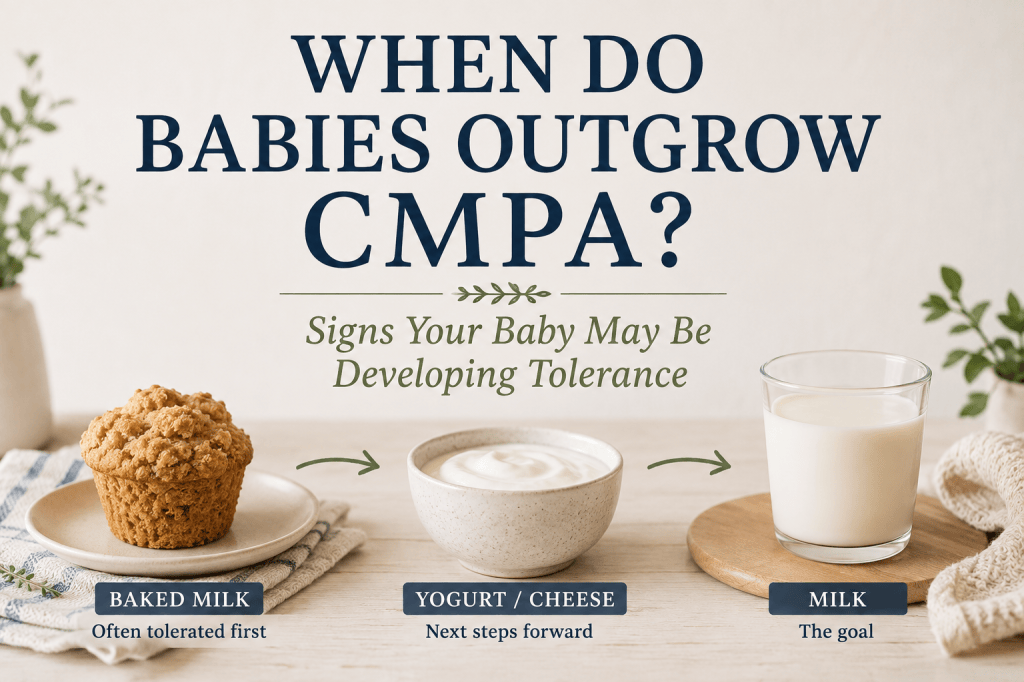
One thing worth remembering is that your child’s dairy-free nutritional plan may not be permanent. Many children with CMPA eventually develop tolerance to cow’s milk protein. When and how dairy should be reassessed depends on your child’s allergy type and history. Until then, the goal is to provide an adequate diet without cow’s milk protein. And if tolerance eventually develops, dairy may become another available food rather than something that needs replacing forever.
👉 Read [When Do Babies Outgrow CMPA? Signs Your Baby May Be Developing Tolerance] to understand what that next stage can look like.
Final Thoughts
Removing dairy from your baby’s diet doesn’t mean removing calcium. During infancy, breast milk or an appropriate infant formula remains an important source of nutrition. As complementary foods become established, calcium can also come from appropriately prepared foods such as calcium-set tofu, beans, certain vegetables, sesame products, fortified foods, and other sources depending on your baby’s allergies and feeding abilities. After infancy, choosing a milk alternative requires more than finding a carton that says “dairy-free. Look at calcium—but also look at protein, fat, calories, vitamin D, added sugar, and the rest of your child’s diet. And don’t become so focused on calcium that you forget iron, protein, healthy fats, energy, vitamin D, and dietary variety. Your CMPA baby doesn’t need a perfect replacement for every dairy food. They need a balanced diet that provides the nutrients those foods would otherwise have contributed. If your baby’s diet is becoming increasingly restricted, you’re concerned about growth, or you simply aren’t confident they’re getting what they need, ask their pediatrician about working with a pediatric dietitian. Food allergy management should keep your child safe. It should also help them grow.
You May Also Enjoy
👉 What Can My Baby Eat With CMPA? A Complete Dairy-Free Baby Food List
👉 What Milk Can a Baby With CMPA Drink? Formula, Breast Milk & Milk Alternatives Explained
👉 CMPA and Starting Solids: What Parents Need to Know Before Baby’s First Foods
👉 25 Dairy-Free Baby Breakfast Ideas for Babies With CMPA
👉 Do I Have to Cut Out Soy Too While Dairy-Free Breastfeeding? (What Most Moms Don’t Know)
👉 Baby Still Has CMPA Symptoms After Cutting Dairy? Here’s What to Check Next
👉 When Do Babies Outgrow CMPA? Signs Your Baby May Be Developing Tolerance
Medical Disclaimer
The information in this article is intended for educational and informational purposes only and isn’t a substitute for individualized medical, nutritional, allergy, or feeding advice. Babies and young children have specific nutritional requirements, and those needs can become more complicated when one or more major foods are eliminated. Do not replace breast milk or appropriate infant formula with ordinary plant-based beverages during infancy unless your child’s qualified healthcare professional has specifically recommended doing so. The suitability of milk alternatives, fortified foods, vitamin or mineral supplements, and allergen-containing foods depends on the child’s age, growth, overall diet, allergies, medical history, and individual nutritional needs. If your baby or toddler has CMPA, multiple food allergies, feeding difficulties, growth concerns, or a significantly restricted diet, discuss their nutrition with their pediatrician and consider individualized guidance from a qualified pediatric dietitian. Never delay or disregard professional medical advice because of information you have read on this website





Leave a comment